
2.9 Million Parcels Isn’t “Charity Success,” It’s a National Alarm Bell
// NO DESCRIPTION DATA
The number is massive, and it should make people uncomfortable
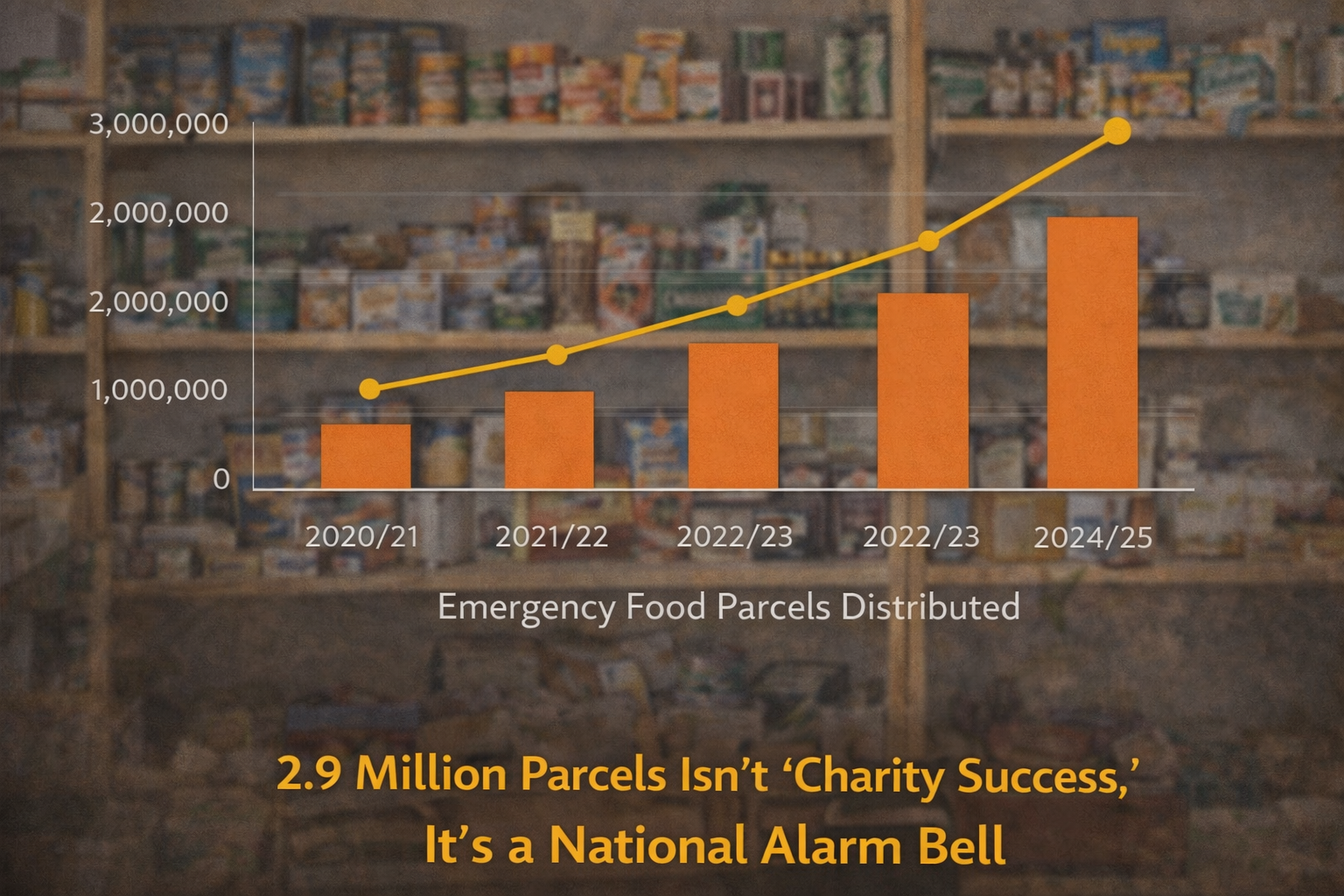
Trussell reports that food banks in its community distributed 2.9 million emergency food parcels in 2024/25.
That is not a “seasonal blip.” That’s a parallel welfare system.
Food poverty is bigger than food banks
The House of Commons Library briefing puts 2023/24 household food poverty at 7.5 million people (11%), including 18% of children, and notes 2.89 million parcels distributed in 2023/24.
So parcels are huge, and still not the full picture.
Official measures show food security slipping
The UK Food Security Report 2024 notes the proportion of food secure households declined from 92% (FYE 2020) to 90% (FYE 2023).
A two-point shift sounds small until you realise it represents a lot of households.
Why “more donations” isn’t the plan
Emergency food is essential, but it’s not a long-term strategy. The system fails when:
- food aid becomes normal
- demand rises faster than community capacity
- volunteers burn out
- quality and consistency become harder to guarantee
Charity can catch people. It cannot replace incomes, housing stability, or predictable support.
Where Feed & Flow is different
Feed & Flow’s model is to channel corporate ad revenue into community food infrastructure: food banks and pantries, breakfast clubs, and community kitchens.
And it commits to operating inside a Glass Box, publishing grants, overhead, and impact metrics once operational.
That combination matters because trust is fuel. If you want consistent support, you need consistent funding and visible accountability.