
Return to Stream
Log_ID: appliaClass: Open
System EntryEst. Time: 5m
Appliance Poverty: When a Broken Fridge Turns Food Into a Daily Emergency
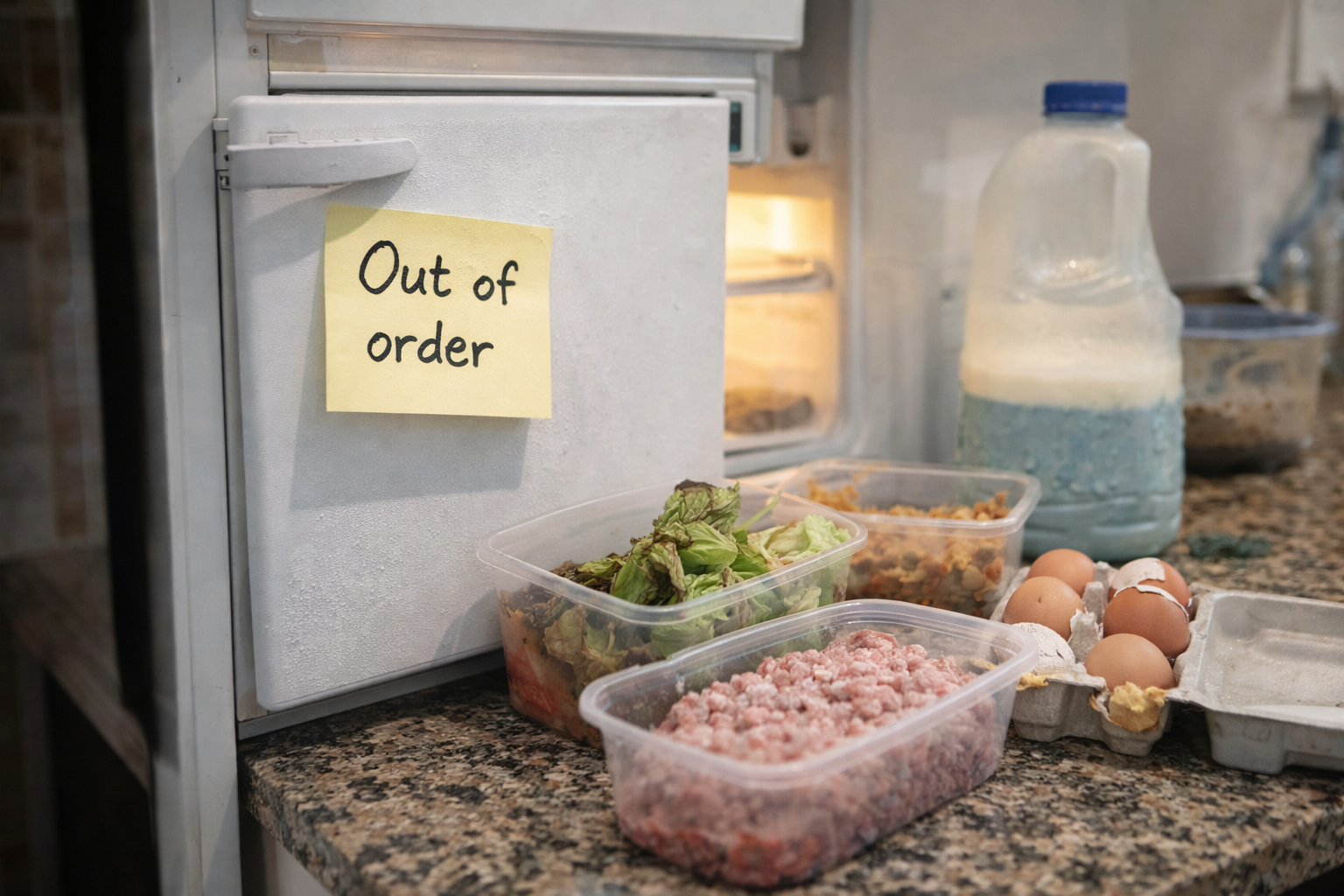
FILE_1
// NO DESCRIPTION DATA
Fig 1.0Visual Record
Why a fridge is a poverty line
A working fridge affects:
- whether fresh food is viable
- whether bulk buying is possible
- whether leftovers can reduce waste
- whether school lunch prep is realistic
- whether food parcels help or spoil quickly
Without a fridge, people are forced into:
- daily small purchases
- more reliance on ultra-processed shelf-stable food
- higher total spend due to lack of storage
- increased waste and shame
It becomes expensive to be poor, again.
Why this gets missed by “food only” support
Traditional food support often assumes storage and cooking exist.
But for a household with:
- a broken fridge
- a faulty cooker
- unsafe electrics
- landlord delays
- food parcels can become stressful rather than helpful.
If you cannot store what you are given, support becomes another problem to manage.
What stabilising support looks like
In appliance poverty cases, the most effective interventions are often:
- rapid repair support
- grants for essential white goods
- access to community cooking and meal provision
- cash-first support that allows the household to choose workable food
This is where local crisis funds and partner networks matter. Food stability requires functional home infrastructure.
How Feed & Flow responds
Feed & Flow supports projects that recognise “food” is not only food. It is the system that makes eating possible.
The best local models combine:
- practical home support
- dignified choice-based food help
- advice and referral pathways
- stability planning rather than endless emergency loops
If the household can store and cook again, hunger risk drops sharply.