
The Attendance Fine Spiral: When Penalties for Missing School Take Food Off the Table
// NO DESCRIPTION DATA
School attendance
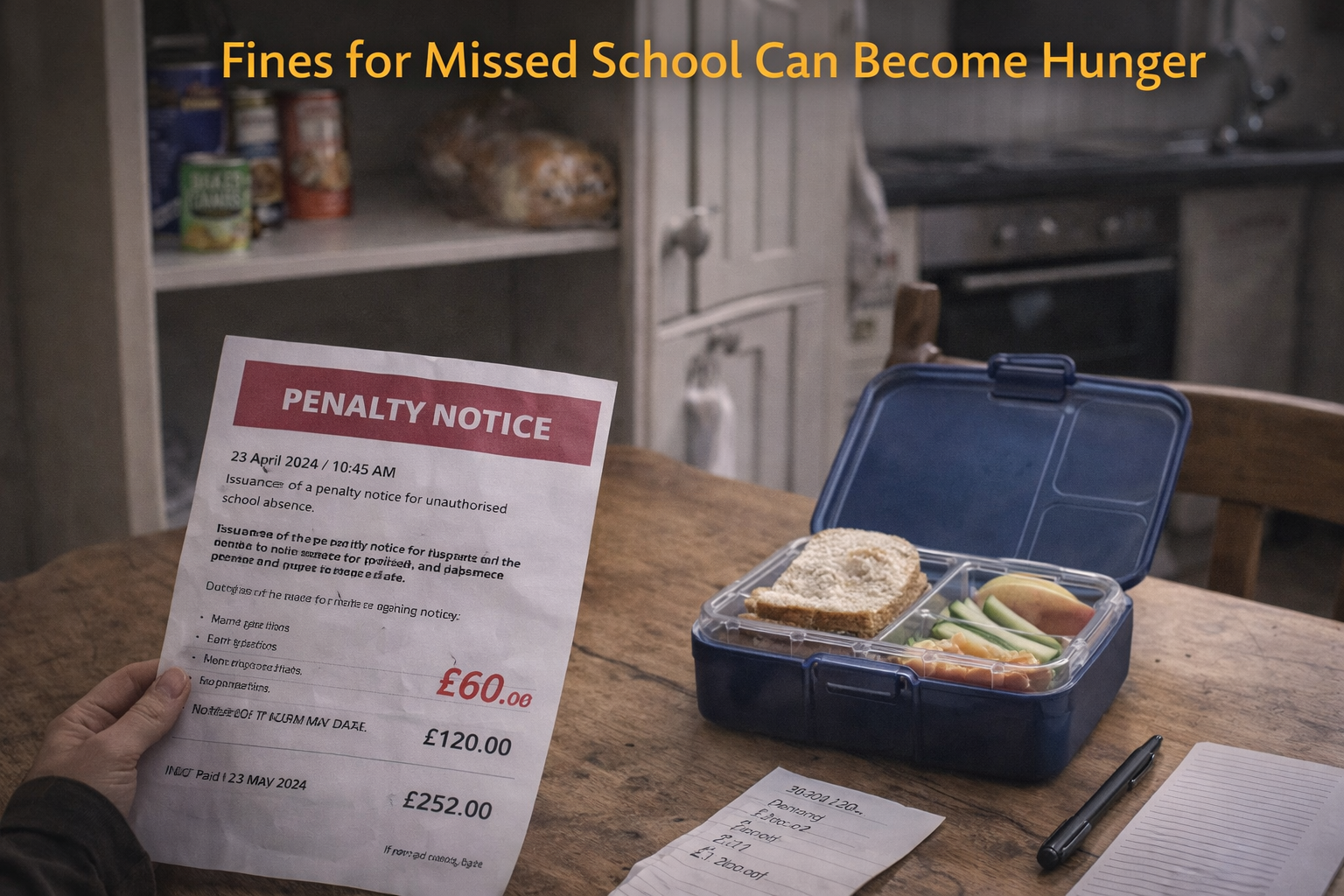
School attendance is important. But the way penalties land can create a brutal side effect: fines that come straight out of the food budget.
For low-income households, a “penalty notice” is not an inconvenience. It’s a week of food.
Why Families Miss School More Than People Admit
Not every absence is a holiday. Many are poverty-linked:
- child illness that spreads through the household
- mental health days
- caring responsibilities
- transport problems
- unstable housing and disrupted sleep
- parents juggling work and appointments
Families already under pressure tend to have more disruption. Then the system punishes disruption with a bill.
Fines Don’t Teach Budgeting. They Strip Capacity
A fine doesn’t create stability. It removes it.
If the household budget is already tight, the money doesn’t come from a spare pot. It comes from groceries, heating, travel, or debt repayment. Many parents will cut their own food first to protect children’s meals. That’s how adult hunger increases quietly.
This Also Makes Absence Worse
Here’s the loop nobody wants to say out loud: fines can worsen the conditions that cause absence.
Less food means less energy, more stress, more illness vulnerability, and worse concentration. Families spiral, not because they don’t care, but because capacity gets stripped every time they’re already down.
The Shame Barrier Makes This Harder
Parents often don’t talk about this. They fear judgement. They fear being labelled irresponsible. So they absorb it privately, cut meals, borrow money, and try to survive until the next shock.
What Feed & Flow Can Focus On
Feed & Flow can treat school-related penalties and pressures as a hunger trigger, not just an education issue. The goal isn’t to excuse poor attendance. It’s to recognise that punishing poverty can create deeper poverty, and hunger is one of the first outcomes.
If the system wants children in school, it should not push households into hunger in the process.