
Baby Formula Pressure: When The First Year Becomes A Financial Trap
// NO DESCRIPTION DATA
Baby Formula
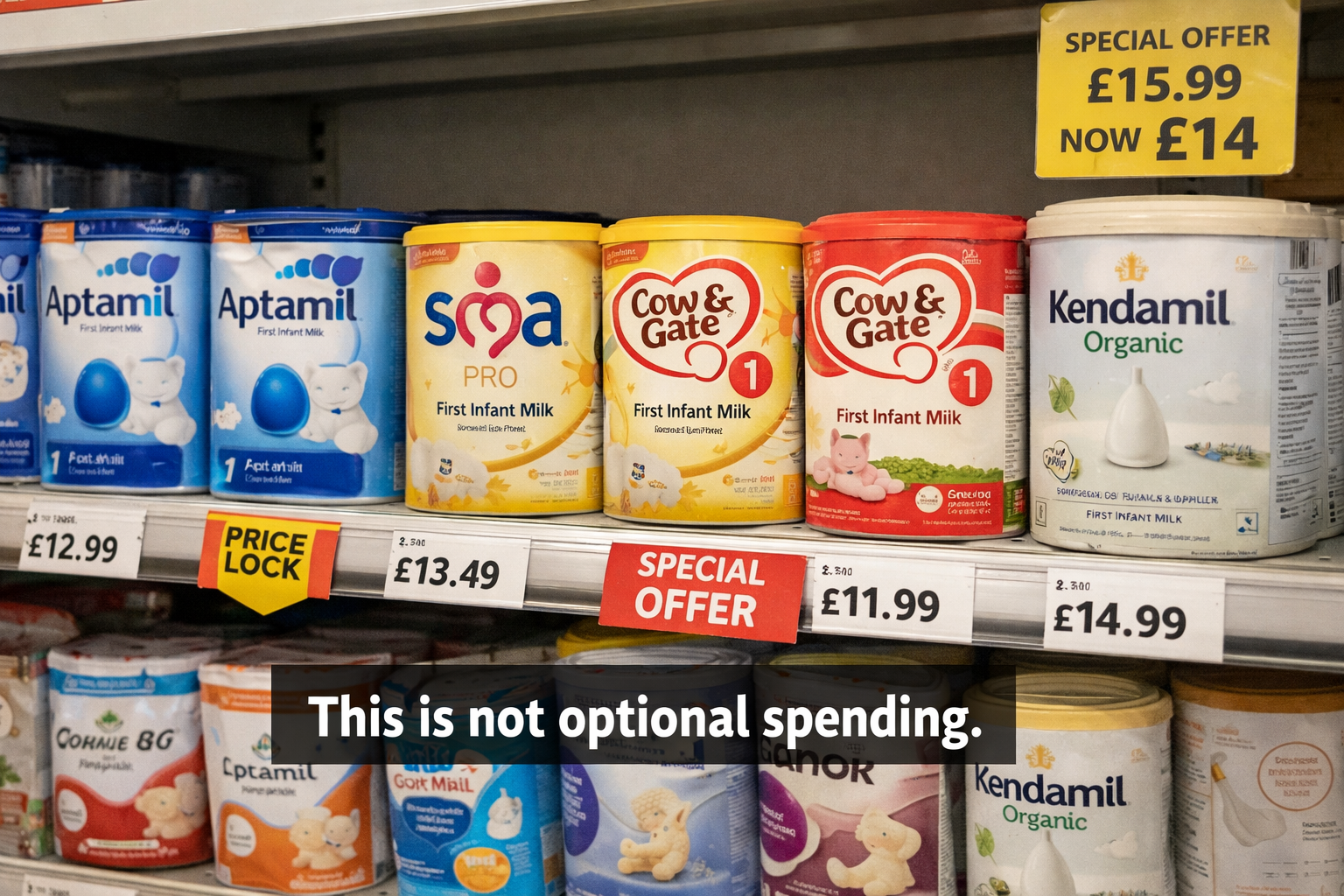
There are very few things a parent can “cut back on” in the first year.
If a baby needs formula, it is not a lifestyle choice. It is a necessity. And when prices rise, families do not have the option to pause demand.
The UK Competition and Markets Authority has investigated the infant formula market, and multiple reports have highlighted price pressures and concerns about how the market functions.
Feed & Flow pays attention to formula costs because infant nutrition is one of the fastest ways household budgets collapse into crisis.
Why formula costs hit harder than most items
Food inflation is painful, but formula is uniquely intense because:
- Babies consume it daily
- Demand is predictable and constant
- Parents will sacrifice their own food first
- The purchase cycle is relentless
- Marketing creates confusion about “premium” needs
Even small price movements become huge across a year.
The confusion problem: parents are sold anxiety
A market built on fear is not a fair market.
Parents are often led to believe that more expensive brands mean better outcomes, even when products meet nutritional standards. The CMA has discussed ways to help parents make cheaper choices more easily, including changes to how formula is displayed and purchased.
When families are in stress, they do not want to experiment. They stick with what feels “safe,” even if it costs more.
Why this becomes a food insecurity driver
Formula pressure pushes households into hard trade-offs:
- Parents skipping meals
- Cutting fresh food first
- Delaying bills
- Borrowing and building debt
- Needing crisis help sooner
And once debt starts, it compounds. That is how a “baby cost” becomes a wider hunger story.
The Healthy Start connection
Healthy Start is one of the few direct supports that can help, but as discussed in other Feed & Flow work, uptake gaps mean many eligible families miss out.
This creates a double injustice: the families who most need support are often the ones least likely to receive it smoothly.
What community-level support should look like
This is sensitive territory. Support must be safe, legal, and dignity-first.
Effective local approaches often include:
- Signposting to Healthy Start and early years support
- Practical budgeting and advice referrals
- Support for parents navigating the stress and stigma
- Wrap-around provision that reduces pressure on the household food budget
- Community hubs that normalise asking for help early
The goal is not to judge feeding choices. The goal is to prevent formula costs from tipping families into hunger.
Where Feed & Flow sits in this
Feed & Flow exists to strengthen food support across the UK. Early years is a priority because it is where prevention matters most and where costs can spiral fastest.
When parents are forced into crisis by necessities, the system is broken. Supporting babies is not optional. The support around them shouldn’t be optional either.