
The Benefit Cap Doesn’t “Encourage Work,” It Shrinks Food Budgets
// NO DESCRIPTION DATA
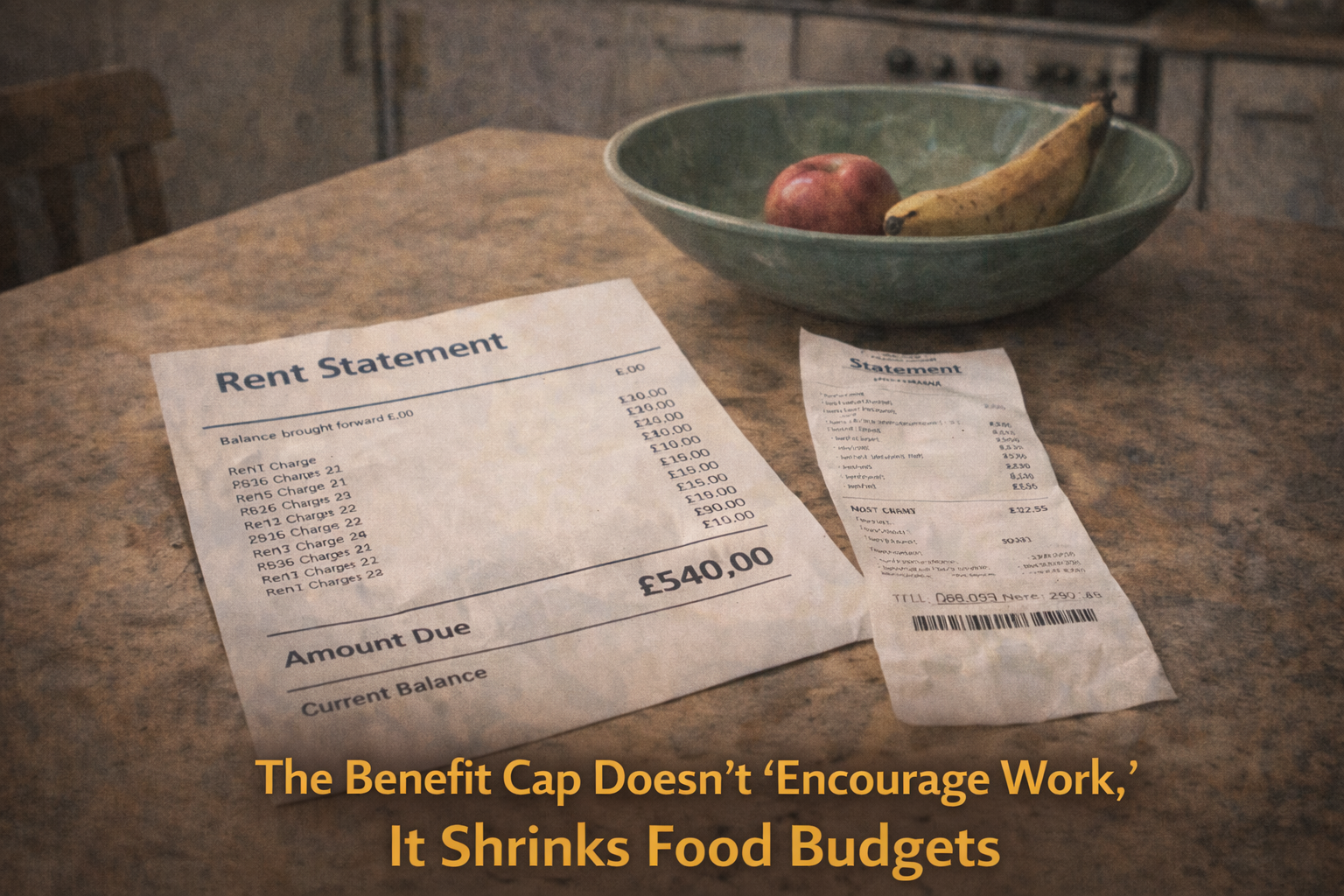
The benefit cap hits food first because rent is non-negotiable
When a household’s support is capped, the money still has to go somewhere. For most families, rent gets paid first. That leaves food, toiletries, travel, and energy to fight over whatever’s left.
This is why welfare policy shows up in food bank queues. It isn’t “bad budgeting.” It’s maths.
Food banks see the benefit cap as a real driver of crisis
In written evidence to Parliament, Trussell-linked food banks reported that the benefit cap reducing income is an issue for 65% of food banks, with 46% calling it a major issue.
That is not a fringe complaint. That’s frontline signal.
The scale of food poverty is bigger than parcels
The House of Commons Library briefing puts household food poverty at 7.5 million people (11% of the UK population) in 2023/24, including 18% of children. It also notes 2.89 million emergency food parcels in the same year.
Parcels are the visible tip. Food insecurity is the whole iceberg.
What “cap pressure” looks like in real life
It’s predictable:
- more rent arrears and “catch-up” payments
- supermarket downtrading and skipped meals
- kids eating less at home to stretch dinner
- debt and deductions stacking on top
Households don’t need lectures. They need breathing room.
Where Feed & Flow fits
Feed & Flow is building a pipeline from corporate ad revenue to community food banks and pantries, school breakfast clubs, and community kitchens.
That matters because the cap creates gaps that local projects end up patching anyway.
And if you’re going to patch the gap, do it properly:
- food support that is consistent, not random
- partnerships with organisations already embedded locally
- transparent reporting of what went where and what it achieved
Feed & Flow already commits to a “Glass Box” transparency model, publishing grants, overheads, and impact metrics once operational.