
Breakfast Clubs Help, But Hunger Doesn’t End at 9am: The Case for Wraparound Food Support
// NO DESCRIPTION DATA
Breakfast is a strong intervention, but it is not the whole story
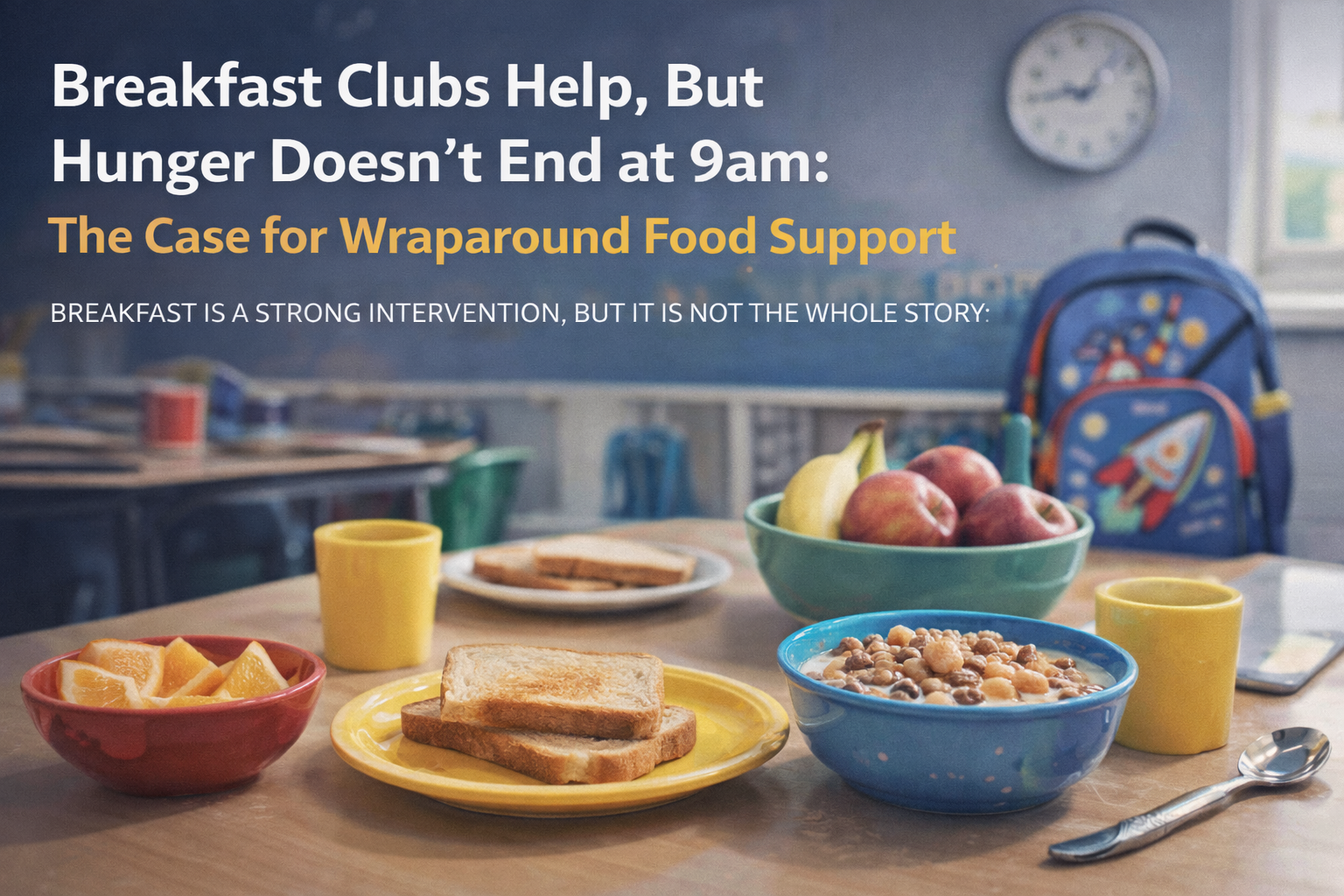
Free breakfast clubs can be powerful because they do something rare in social policy: they deliver nutrition directly to children, consistently, in a place they already go.
Government guidance now points to a national rollout from April 2026, building on early adopters.
And the programme has already delivered millions of meals through the early adopter scheme.
That is real impact. But Feed & Flow focuses on what happens next.
The gap is everything outside the breakfast window
A child can have breakfast at school and still experience food insecurity because:
- the household shop is short
- dinner portions shrink
- weekends stretch budgets
- school holidays remove routine and structure
- packed lunches become “whatever is cheapest”
This is why we think in systems, not single interventions. Breakfast clubs lower the risk, but they cannot carry the full weight of poverty.
Why wraparound models work better
Feed & Flow backs projects that link:
- schools
- community food support
- advice services
- health and wellbeing support
Because hunger rarely arrives alone. It shows up with rent stress, debt letters, benefit issues, and unstable housing.
When schools can connect families to local support without stigma, you reduce repeat crises.
What wraparound support can look like in practice
- Lunchbox support: discreet help with packed lunch basics
- Family pantry models: low-cost choice-based shops connected to schools
- Holiday coordination: partnerships that align school holiday food with local provision
- Early help pathways: family support teams who can connect food with advice, not judgement
Why this also protects learning and wellbeing
Food is not separate from education. It affects:
- concentration
- attendance
- behaviour
- sleep and stress
This is not about blaming parents. It is about reality: when food prices stay high, household slack disappears. UK food inflation has remained significant even as headline inflation moves around.
Feed & Flow’s role
Feed & Flow exists to strengthen what holds families up:
- funding local partners who already have trust
- supporting coordination, not duplication
- covering the boring costs that make programmes actually run
Breakfast matters. But the goal is bigger: fewer children living in a constant state of food stress, morning to night, term time to holidays.