
Radical Transparency for Charities: Why the “Glass Box” Model Should Be Normal
// NO DESCRIPTION DATA
Trust is now a requirement, not a nice bonus
People do not hate charities. People hate uncertainty.
When budgets are tight, donors become more skeptical. When scandals happen elsewhere, everyone in the sector pays the trust tax. So charities need systems that prove they are real, not vibes.
The public is tired of vague impact language
A lot of charity communication still sounds like:
- “making a difference”
- “raising awareness”
- “supporting communities”
That language is not enough anymore. People want numbers, allocation rules, and outcomes.
What “Glass Box” transparency actually means
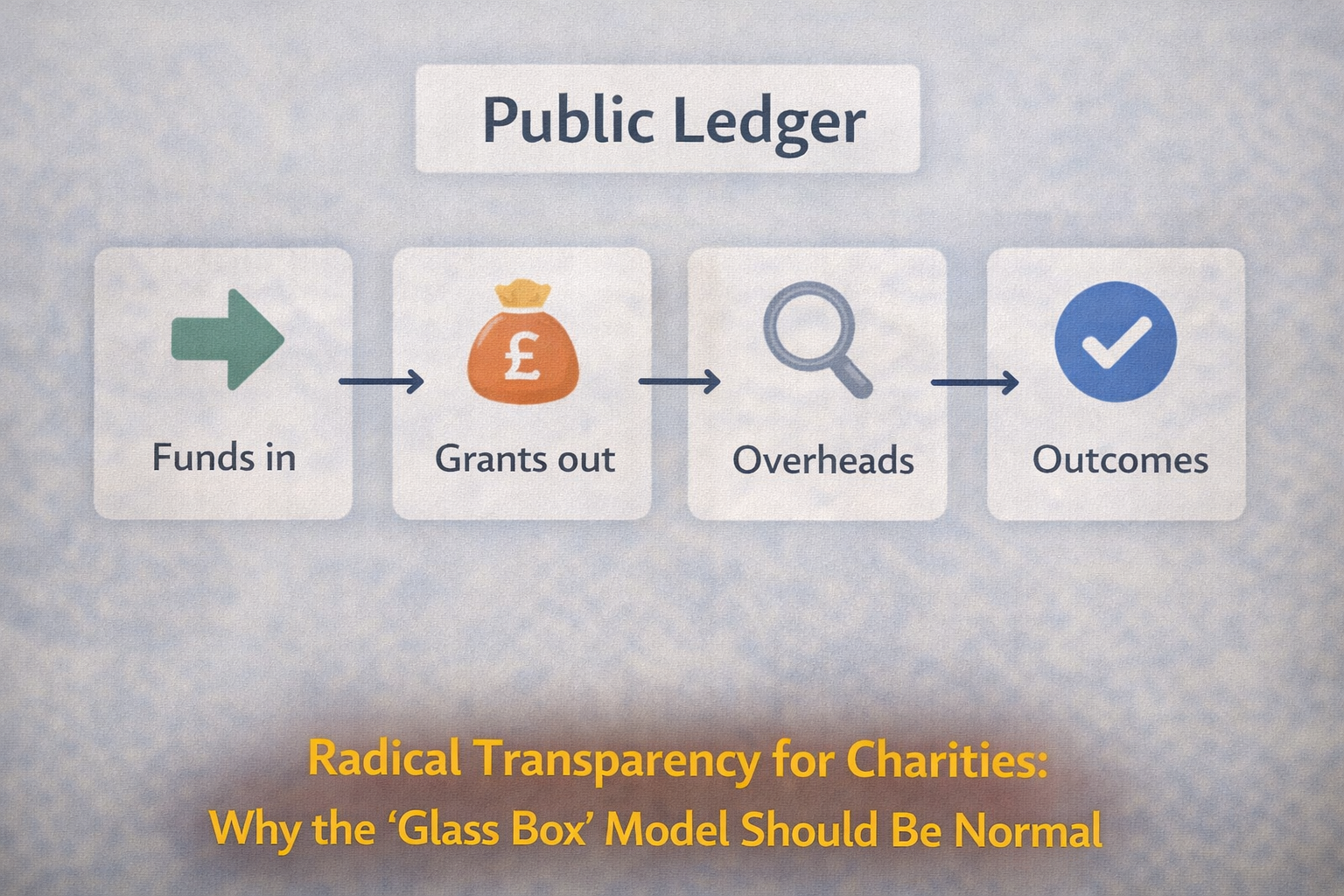
A Glass Box model is simple:
- publish where money comes from
- publish where it goes
- publish overhead and governance
- publish what outcomes happened
- keep it continuous, not annual
It reduces the need for faith. It replaces it with evidence.
Why this changes giving behaviour
When people can see the flow of funds:
- donations rise because confidence rises
- partnerships become easier
- critics lose oxygen
- the whole model becomes more scalable
Transparency is not marketing. It is infrastructure for trust.
Where Feed & Flow fits
Feed & Flow’s Glass Box approach is a commitment to publish grants, overhead, and impact metrics once operational. That sets a standard worth defending, because it makes the mission harder to fake and easier to trust.