
Climate Shocks and Hunger: Why Food Insecurity Is Now a Resilience Problem
// NO DESCRIPTION DATA
Food insecurity is usually discussed like it’s a personal budgeting failure.
“People should manage better.”
“Families need better planning.”
“Just cook from scratch.”
But the UK’s hunger problem is shifting into something colder and more structural: resilience.
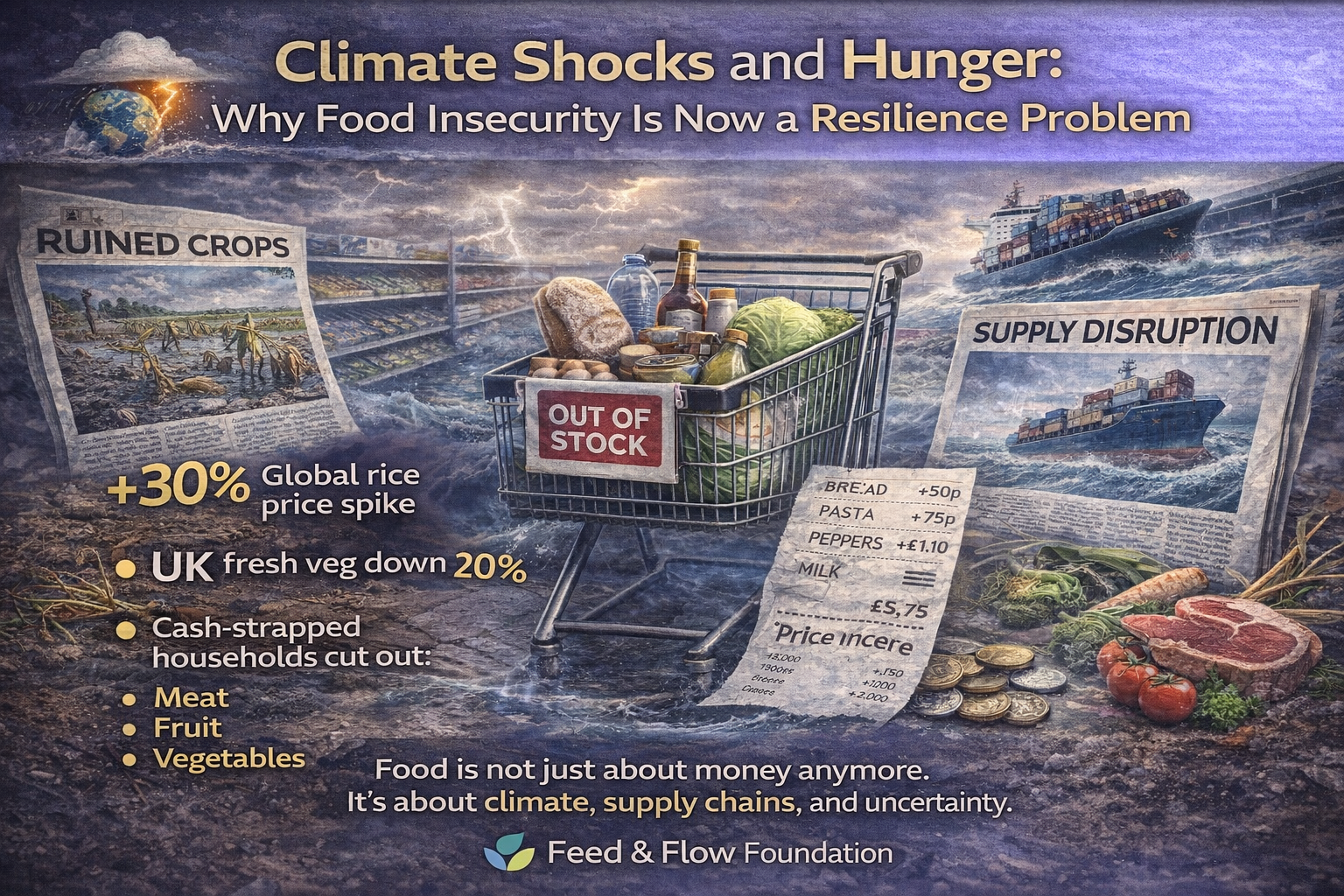
Because hunger doesn’t only come from low income. It comes from instability. When prices spike, supplies wobble, or essentials become unpredictable, households already close to the edge fall straight through it. UK government reporting has linked rising food insecurity to the combined pressure of climate disruption, inflation and supply chain strain.
And the scary part is this: resilience gaps don’t show up as one dramatic collapse.
They show up as quiet household decisions:
- skipping fresh food because it spoils too fast
- buying shelf-stable items even when they’re less healthy
- reducing meal sizes
- cutting out “optional” nutrition like fruit, protein, and variety
That’s not a food preference. That’s survival behaviour.
The UK food system relies on stability that many households don’t have
The public conversation often treats food as a simple transaction: buy food, eat food.
But low-income households experience food as a risk management problem:
- What if prices rise again next week?
- What if the shop doesn’t have what we usually buy?
- What if energy costs make cooking too expensive?
- What if a bus fare makes the “cheapest shop” unreachable?
When people live in constant uncertainty, they make decisions that maximise certainty, not health.
Why shocks hit low-income households first
If you have spare cash, disruption is annoying.
If you don’t, disruption is catastrophic.
Even small shocks create instant consequences:
- A £10 food price rise becomes “no packed lunch.”
- A delayed payment becomes “nothing fresh this week.”
- A missed appointment becomes “extra costs and fewer meals.”
Food insecurity is often a cash flow issue first, and a food issue second.
What resilience-focused food support should look like
Resilience support isn’t only handing out more parcels.
It’s strengthening the whole household’s ability to keep eating consistently.
That means funding the things that make food support stable:
- predictable supply (so families can rely on what’s available)
- choice-based support (so people can pick what actually works)
- local coordination (so gaps aren’t duplicated while other streets get nothing)
- emergency flex (so help arrives before crisis becomes hunger)
What Feed & Flow is building for
Feed & Flow exists to reduce hunger and the instability behind it.
That means supporting projects that keep families steady, not just fed for one day.
If you want to reduce food insecurity long-term, you don’t just ask:
“Did we give out food?”
You ask:
“Did we reduce the household’s risk of hunger returning next week?”