
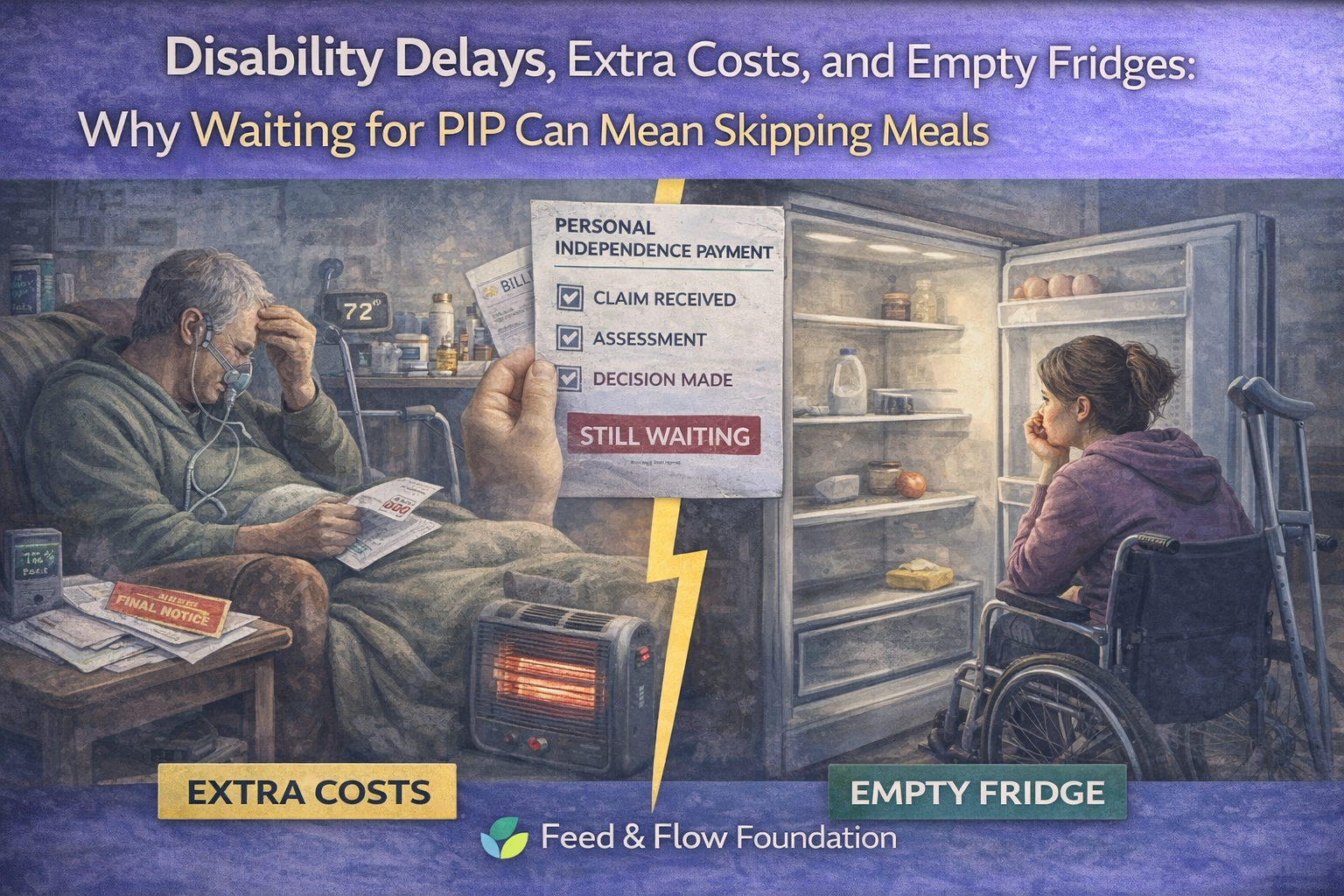
Disability Delays, Extra Costs, and Empty Fridges: Why Waiting for PIP Can Mean Skipping Meals
// NO DESCRIPTION DATA
Food insecurity
Food insecurity is not evenly distributed. Disabled people are hit harder because they often face a brutal combination:
- higher living costs
- reduced earning power or unstable work
- long waits for support
- systems that treat delays like inconvenience instead of danger
Disability has extra costs people do not see
The cost is not only medical. It is day-to-day living:
- heating needs
- specialist diets
- transport
- equipment
- accessible options that cost more
Scope documents how disability-related extra costs affect basics like heating and food, and how those pressures shape everyday life.
Delays turn vulnerability into crisis
When disability support is delayed, households cannot simply “hold on”.
A delay can mean:
- debt
- food bank referrals
- rationing meals
- skipping essentials to pay rent
The Public Accounts Committee has scrutinised DWP service performance, including experiences of delays and the real harm poor service can cause to claimants.
The food system is harder to use when your body is already under strain
Food insecurity for disabled people is not just affordability. It is access:
- shopping trips may be physically exhausting
- cooking may require equipment or energy
- “cheap options” may be unsafe or inappropriate
- online shopping requires fees and digital access
So the same crisis costs more and takes more out of the person living it.
What good support looks like in disability-linked hunger
It looks like dignity plus practicality:
- flexible help (cash-first, vouchers where needed)
- support that understands medical needs
- coordination with advice services
- funding local projects that can adapt quickly for mobility and dietary requirements
How Feed & Flow responds
Feed & Flow backs projects that treat disability-linked hunger as a systems problem:
- funding models that allow choice and medical safety
- support for “hidden costs” that make food usable (delivery fees, cooking equipment, energy top-ups)
- linking food support with wider stability support
If support ignores disability realities, it accidentally excludes the people who most need it.