
When Food Worry Never Switches Off: Why Feed & Flow Focuses On Stability, Not Just Emergency Help
// NO DESCRIPTION DATA
When food worry never switches off
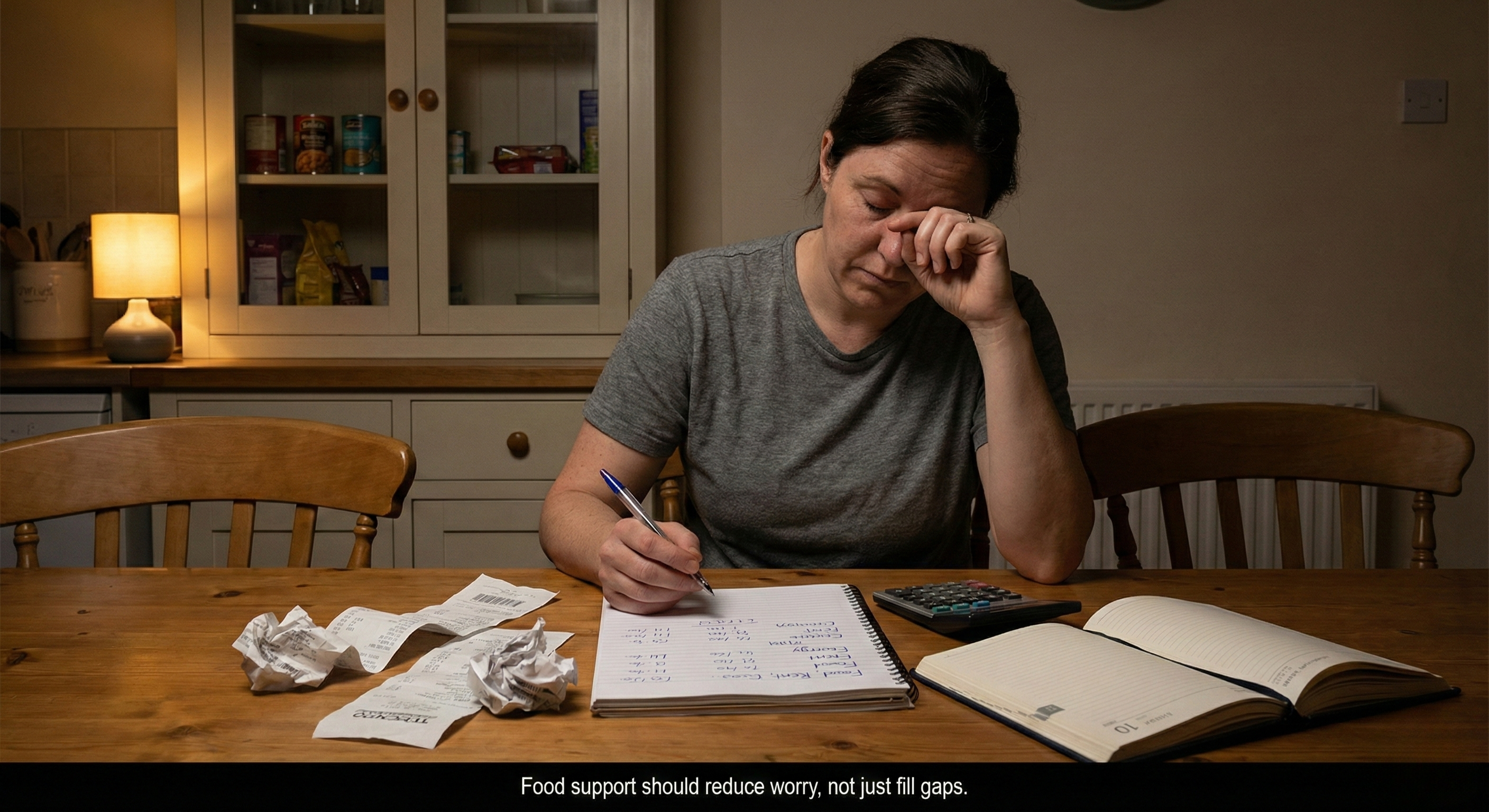
Food insecurity is not only about the moment a cupboard is empty or the fridge looks bare. For many people in the UK, the pressure starts long before that point. It shows up as constant mental arithmetic, trade offs, quiet anxiety and the feeling that things could tip into crisis at any time.
Feed & Flow Foundation was created to support practical food initiatives, but behind that is a clear belief: reducing hunger also means reducing the ongoing stress around food. Emergency help matters, yet families and individuals also need stability, predictability and the sense that support will still be there next week.
This post looks at why Feed & Flow is interested in the mental load of food insecurity, and how the foundation aims to back projects that offer more than one off relief.
The mental load behind food insecurity
When budgets are tight, food becomes part of a constant balancing act. People are not simply choosing meals. They are:
- Counting days until the next payment
- Deciding which bills can be delayed
- Checking prices in multiple shops to stretch the same amount
- Thinking about packed lunches, school meals and evening food at the same time
- Hiding worry from children or other family members
Food poverty in the UK often means:
- Going to bed thinking about food
- Waking up thinking about food
- Spending the day managing or hiding a shortfall
This mental load affects sleep, concentration, mood and relationships. It is not separate from food insecurity, it is part of it.
Feed & Flow Foundation understands that strong food support systems should aim to reduce that load, not only respond when it becomes unmanageable.
Why one off support is not enough
Emergency parcels, crisis grants and short term donations are important. They keep people going when there are no options left. But if support only appears in irregular bursts, the underlying stress remains.
Without predictable support, people still live with questions like:
- Will there be help next month, or is this a one time fix
- Will the project I rely on still be open
- Will there be enough food when I get to the front of the line
- Will I have to tell my story again to a new organisation
Feed & Flow Foundation wants to help build more stable and reliable food support, where possible. That means backing projects that focus on regular access, not just emergency response.
What stability in food support can look like
Stability does not mean that every project has to be large or complex. It can include:
- A food bank with consistent opening hours and clear communication
- A community kitchen that serves a weekly meal at the same time and place
- A school or community programme that offers breakfast on set days
- A local initiative that provides small but regular food top ups for households under pressure
These reliable patterns help people:
- Plan meals and spending with more confidence
- Build routines that include safe, stigma free food support
- Reduce the constant fear of “what if it all disappears”
Feed & Flow Foundation will look for projects that combine practical food provision with clear structures that support ongoing access.
Supporting projects that understand pressure, not only hunger
The best positioned groups to reduce the mental load around food are those that already understand the wider pressures people face. These include:
- Food banks that offer listening spaces or signposting alongside parcels
- Community kitchens that create calm, welcoming environments, not rushed queues
- School and family projects that treat food support as normal, not exceptional
- Small grassroots organisations that know the stories behind the statistics
Feed & Flow Foundation will prioritise partnerships with organisations that:
- Take time to understand the situations people are in
- Design services that minimise shame and repeated retelling of difficult experiences
- Recognise emotional strain as part of food insecurity, not separate from it
Food support that respects emotional reality is more likely to be used, trusted and sustained.
How funding can strengthen long term support
Short term grants can help start or rescue food projects, but they do not always allow for long term thinking. Feed & Flow Foundation aims to use its resources to help projects:
- Plan beyond the next month or quarter
- Keep essential staff or coordinator roles in place
- Cover quiet but critical costs such as rent, utilities or insurance
- Stabilise core stock and supply where it is under constant strain
As Freee Water CIC grows and begins to donate a share of its profits, Feed & Flow will have the potential to support more sustained, multi year work in some areas.
That link between brand funded hydration and food support is part of a wider effort to turn concern into long term capacity.
Listening as conditions change
The mental load of food insecurity is affected by wider shifts, such as:
- Changes in benefits, wages or working patterns
- Rising or falling energy and housing costs
- Local closures of shops, services or public spaces
- Regional differences in how the cost of living crisis is experienced
Feed & Flow Foundation will need to listen as these conditions change. Stability in food support does not mean resisting change, it means adapting in ways that keep people supported without constant shocks or surprises.
The foundation will:
- Keep talking to partners about what people are facing
- Adjust priorities as patterns of need move or deepen
- Share learning about what reduces stress for people in practice
The aim remains steady, even as details shift: support that reduces the worry, not only fills a fridge once.
From crisis to a more secure baseline
In an ideal future, fewer people in the UK will experience food insecurity at all. Until then, there is work to do in making food support systems as humane, predictable and steady as possible.
Feed & Flow Foundation wants to be part of that shift. By backing projects that value stability, respect and emotional reality, the foundation can help move some people from constant crisis management towards a more secure baseline.
Hunger is a physical issue. Food worry is a mental one. Addressing both is part of the same mission.