
From Crisis To Resilience: How Feed & Flow Thinks Beyond Emergency Food Aid
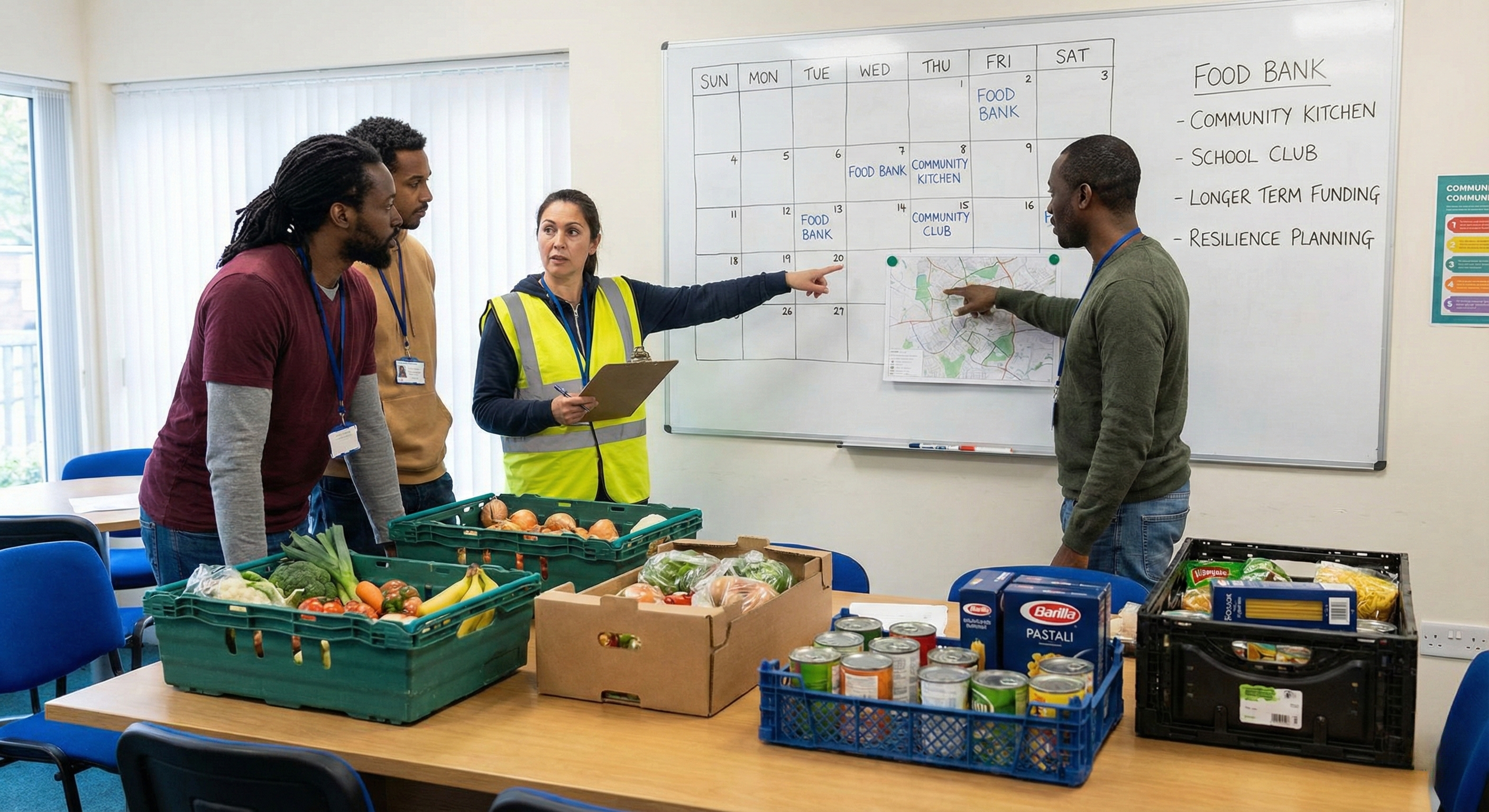
// NO DESCRIPTION DATA
Food Banks
Food banks and community kitchens across the UK were not designed to be permanent infrastructure. Many started as short-term responses to local need, often run by volunteers with borrowed space and donated stock.
Years later, a large part of the country now relies on this patchwork for basic food security.
Feed & Flow Foundation recognises the urgency of emergency food aid. People need to eat today. But the charity is also looking further ahead. Its goal is to help communities move from constant crisis management towards greater resilience.
This post explores what that means in practice and how Feed & Flow plans to support it.
The limits of permanent emergency
Emergency food provision is vital, but it has limits:
- It is often dependent on unpredictable donations
- Volunteers can become exhausted or overwhelmed
- Premises may be temporary or insecure
- Projects struggle to plan beyond the next funding round
For people using these services, life can feel like a long series of short-term fixes:
- One parcel, one week at a time
- Holiday schemes that start and stop
- Support that changes when a grant ends
Feed & Flow Foundation does not expect individual projects to solve structural issues alone. But it does believe food support can be more stable, more predictable and better connected than it is today.
Resilience as a guiding idea
For Feed & Flow, resilience in the UK food context means:
- People have regular, reliable ways to access enough nutritious food
- Communities have multiple forms of support, not just one overstretched food bank
- Local projects are rooted, funded and connected enough to weather shocks
Those shocks might include:
- Sudden price spikes
- Local job losses
- Changes in benefits or policy
- Extreme weather that affects supply or transport
Resilience does not mean no one will ever need help again. It means when pressure rises, communities are better prepared, less fragile and less dependent on last-minute improvisation.
How Feed & Flow can support resilience
Feed & Flow Foundation plans to take several approaches that lean towards resilience rather than constant firefighting.
1. Multi-year support where possible
Short grants can kick-start good ideas, but stability often requires multi-year backing. As resources grow, Feed & Flow aims to:
- Offer longer-term funding commitments to well-run projects
- Pair direct food support with small amounts for core costs
- Help groups plan beyond the next three or six months
This will not always be possible at the start, but it is the direction of travel.
2. Supporting a mix of project types
Resilient local food support rarely comes from a single organisation. Feed & Flow looks to back:
- Food banks that handle immediate crisis
- Community kitchens that provide regular meals and social connection
- School and family projects that support children over the long term
- Micro projects that fill specific gaps in estates, towns or villages
The aim is a network, not a single pillar. When one part is under pressure, others can help absorb the strain.
3. Linking food support with other help
Food is often the first visible symptom of deeper financial pressure. Resilience improves when people can:
- Access budgeting, debt or benefits advice alongside food support
- Get signposted to mental health, housing or employment services
- Build relationships that make it easier to ask for help early
Feed & Flow does not intend to run every form of support itself. Instead, it can:
- Fund projects that collaborate with advice agencies and local services
- Encourage shared spaces where food support and other help sit side by side
- Back coordinators or connectors who link people to what exists already
Climate, cost of living and the future of food security
The UK’s food system is exposed to climate breakdown, global supply disruptions and energy costs. These pressures are likely to make food more volatile in the years ahead.
That means:
- Price spikes may happen more often
- Some foods may become harder to source consistently
- Stress on low-income households may intensify
Feed & Flow Foundation’s link with Freee Water CIC is part of its long-term thinking. As Freee Water grows and begins to share surplus, part of the funding base for food support will come from:
- Brand funded hydration in public spaces
- Surplus generated by a trading social enterprise, not only donations
This model cannot fix climate or global markets, but it can add one more stable pillar under UK food support, independent of short-cycle fundraising.
Learning and adaptation over time
Resilience is not a fixed state. It is a process of learning and adjusting. Feed & Flow plans to:
- Gather simple data from funded projects: demand patterns, costs, gaps
- Listen to communities about what is missing or working well
- Adjust funding priorities as conditions change
Examples might include:
- Shifting more support towards areas facing repeated local shocks
- Increasing backing for projects that reduce isolation alongside hunger
- Supporting pilots that test new models such as community food co-ops or shared growing schemes where appropriate
The key is to avoid locking into one static idea of “how food aid should look” and instead keep asking: what will make people less vulnerable in five or ten years’ time?
The role of emergency help in a resilient system
Moving towards resilience does not mean abandoning emergency responses. Crises will continue to happen. Feed & Flow expects to:
- Maintain capacity for rapid grants or targeted support during spikes
- Prioritise areas hit by sudden closures, disasters or systemic failures
- Work with partners who can respond quickly on the ground
The difference is that emergency help will sit within a wider, more stable framework, not stand in for it.
Building something that lasts
Feed & Flow Foundation is still in its early stages. Much of the work to come will involve listening, adjusting and learning alongside communities and partner organisations.
The long-term goal is clear:
- Help more people in the UK access enough good food
- Support local projects that are stable, connected and respectful
- Build funding streams and relationships that can withstand future shocks
Emergency food aid saves people from immediate harm. Resilient systems aim to reduce how often those emergencies happen in the first place.
Feed & Flow wants to be part of that long-term shift, one partnership, one grant and one neighbourhood at a time.