Fuel Poverty Meets Food Poverty: Why Cooking Costs Are Part Of The Hunger Story
// NO DESCRIPTION DATA
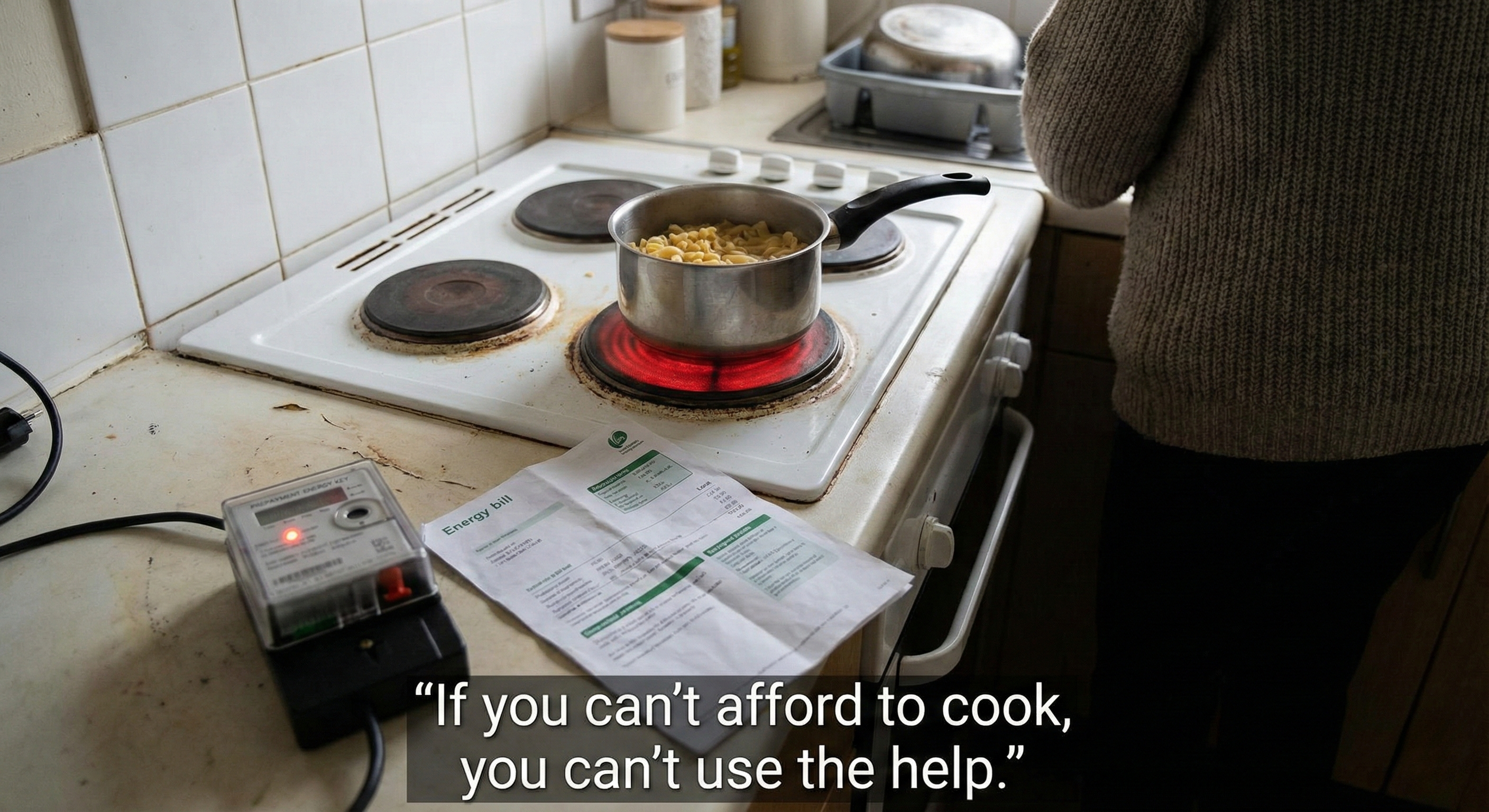
Food insecurity in the UK is not only about food. It is also about whether someone can afford to cook.
When energy bills rise, households do not just cut back on heating. They change what they eat, how they eat, and whether they can safely prepare food at all. That means hunger can show up even when food is technically available.
Feed & Flow Foundation takes fuel poverty seriously because it directly shapes food choices, nutrition, and dignity.
When the oven becomes a luxury
A lot of food support assumes people have full use of a kitchen. In reality, many households face limits like:
- Avoiding the oven because it is expensive to run
- Using a single hob ring only
- Skipping batch cooking
- Relying on kettles and microwaves
- Eating cold meals because cooking feels unaffordable
This shifts diets toward ultra-processed foods, cheap snacks, and whatever is quickest. It can also worsen health conditions, especially for children, older people, and people managing long-term illness.
Food parcels can fail without cooking capacity
Traditional food parcels often include items that require:
- A working cooker
- Time
- Electricity or gas
- Adequate utensils and storage
For households living in temporary accommodation, overcrowded homes, or places with broken appliances, “help” can become impractical.
Feed & Flow’s approach is to support food projects that understand this reality and design support around it.
What practical support can look like
Projects tackling fuel-related food insecurity often focus on:
- Ready-to-eat or low-energy meal options
- Community kitchens and hot meal services
- Slow cooker loan schemes with safe guidance
- Cooking clubs that reduce isolation and build confidence
- Advice partnerships that help people access energy support
These approaches protect dignity because they reduce the gap between receiving food and actually being able to use it.
Why this matters for dignity
When someone cannot cook, they lose control of basic daily life.
That can mean parents skipping meals, households relying on takeaways they cannot afford, or people avoiding support entirely because it feels embarrassing. Food insecurity becomes a stress loop.
Feed & Flow backs solutions that reduce shame and increase stability.
How this connects to Feed & Flow’s wider model
Feed & Flow is being built to strengthen UK food support through practical funding, coordination, and long-term resilience. As Freee Water CIC develops its revenue model, Feed & Flow is positioned as one route where future surplus can support real community needs.
Cooking is a basic function, not a privilege. Food support that ignores energy reality is incomplete.