
Holiday Hunger Isn’t “Summer Hardship,” It’s an Access Problem the HAF Programme Still Can’t Fully Solve
// NO DESCRIPTION DATA
HAF exists because holidays are expensive for low-income families
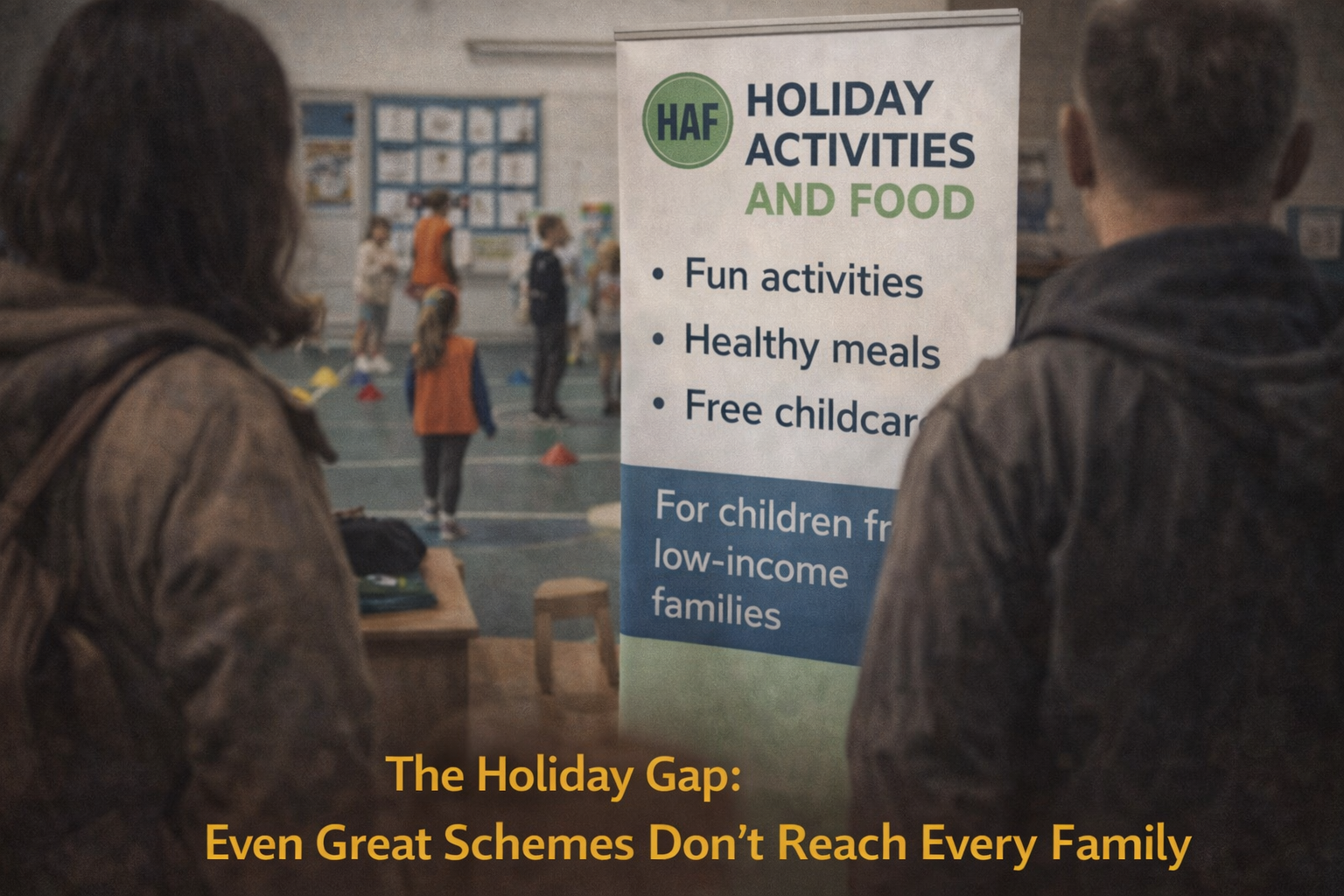
In England, the Holiday Activities and Food (HAF) programme provides healthy meals, activities, and free childcare places for children from low-income families.
It’s a smart idea. But “exists” is not the same as “reaches everyone who needs it.”
The scale is big, but gaps remain
Government guidance notes that since 2022, HAF has provided 15.6 million HAF days. Across the 2023 to 2024 academic year, almost 5 million HAF days were provided during winter, Easter, and summer delivery.
So the programme is doing work.
But delivery is local, and that’s where access breaks.
Eligibility and local variation create confusion
Local authority pages show the typical eligibility focus: school-aged children (Reception to Year 11) receiving benefits-related free school meals.
The Local Government Association also highlights HAF being primarily targeted at benefits-related FSM children.
Real-world barriers include:
- parents not knowing it exists
- deadlines and voucher systems
- limited places and booking friction
- variation between councils
- stigma and fear of “being seen”
Why access is the whole game
Holiday hunger is rarely about “no food in the country.”
It’s about:
- cost spikes when school meals stop
- childcare costs jumping
- lack of structured days
- transport barriers to provision
A scheme can be generous and still fail if access is messy.
Where Feed & Flow can add value
Feed & Flow’s blueprint includes support for school breakfast clubs and community food provision.
That can complement HAF with:
- local partners filling the “missed families” gap
- community kitchens and pantries operating outside limited HAF slots
- signposting that is human, not just a web page
- “Glass Box” transparency so donors and partners see real outcomes