
Healthy Start, Missing Families: Why Early Years Support Fails Without Uptake
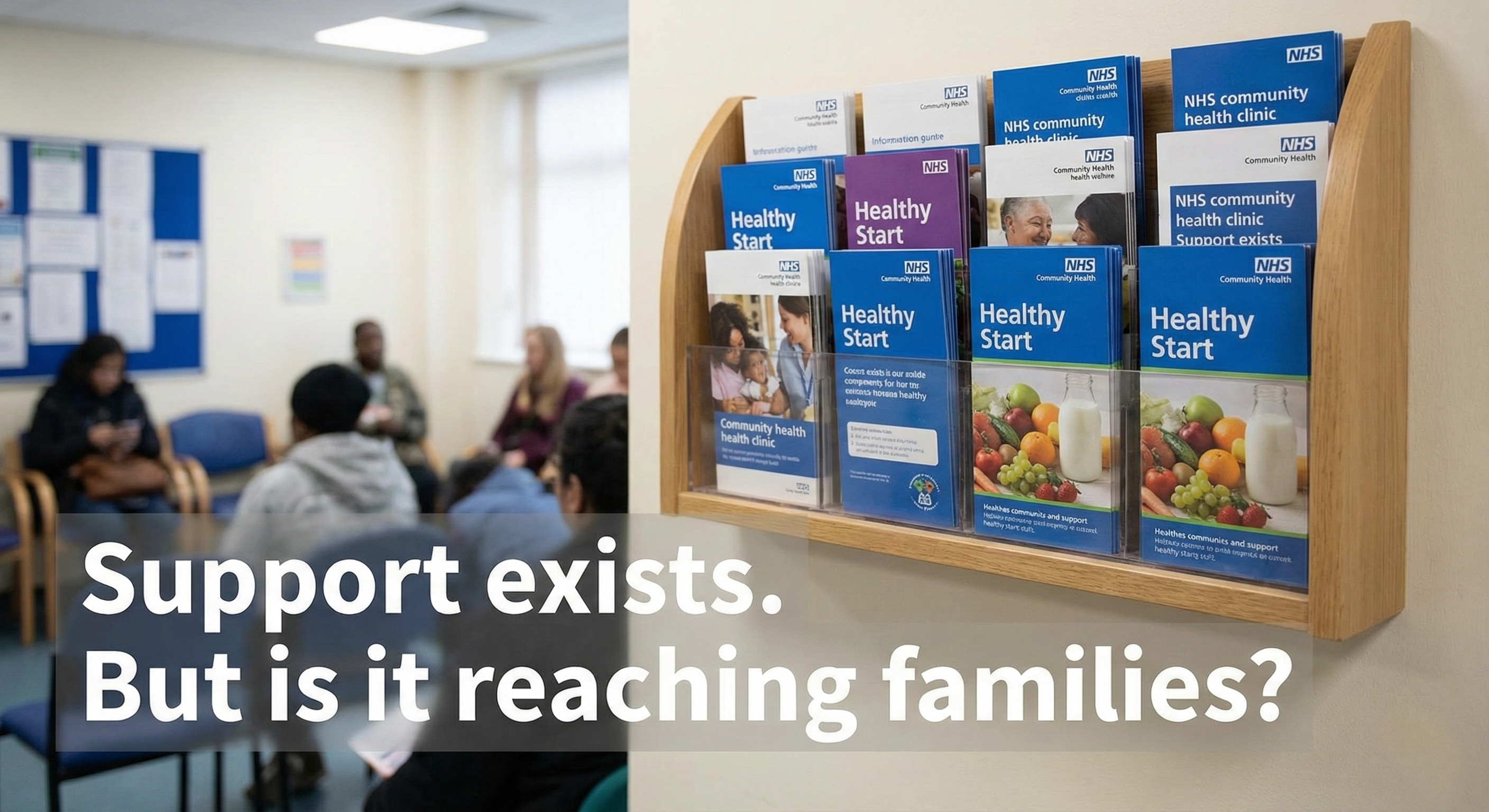
// NO DESCRIPTION DATA
Healthy Start
The UK already has a tool designed to support nutrition in pregnancy and early childhood: Healthy Start.
The problem is not only the value of the support. It is whether families actually receive it. Multiple briefings and official figures show uptake is far from universal, meaning many eligible families miss help that could directly reduce food insecurity during the earliest years.
Feed & Flow cares about early years because hunger in the first years of life carries long-term consequences. If we want fewer families entering crisis support later, we need fewer families falling through cracks early.
What Healthy Start is meant to do
Healthy Start supports eligible pregnant people and families with young children with help to buy basic nutritional staples.
It is not a luxury scheme. It is supposed to protect early years nutrition during the exact period when household budgets are most stretched and needs are highest.
The uptake gap is the real story
In April 2024, official figures cited uptake around 62.4% across England, Wales and Northern Ireland, meaning a large share of eligible families were not receiving the support.
When a family misses Healthy Start, it is not because they “do not deserve it.” It is often because:
- They do not know it exists
- They assume they are not eligible
- The application feels confusing
- Their life is already chaotic
- They struggle with digital access
- Language and trust barriers exist
This is what “support exists but people can’t reach it” looks like in the early years context.
Why low uptake becomes higher food insecurity
Early years budgets are unforgiving.
Formula, nappies, transport, energy costs, rent. Everything stacks. When families lose access to support they are entitled to, the gap shows up somewhere. Often it shows up in food.
Low uptake also creates geographical unfairness. Some areas do better because local services promote the scheme actively, while other areas quietly under-serve families.
What effective local improvement looks like
The best improvements are not fancy. They are persistent, human, and embedded where families already go.
Examples include:
- Midwives and health visitors actively signposting
- Children’s centres doing assisted applications
- GP practices placing support prompts in waiting rooms
- Community connectors helping families apply
- Schools and nurseries sharing simple eligibility checks
- Local campaigns that normalise “this is for you”
Uptake can be improved. It is not a mystery problem.
How Feed & Flow approaches early years support
Feed & Flow backs food projects and community support that reduces the early years nutrition gap.
That can include:
- Supporting local partners that actively improve scheme uptake
- Funding projects that fill nutritional gaps when families are missing support
- Strengthening referral pathways between services and food projects
- Ensuring dignity and choice so families do not avoid help
Early years is where prevention is most powerful. If a family is stable at the start, the need for emergency support later is lower.
The goal is simple: support should not only exist. It should land in the hands it was designed for.