
The HFSS Ad Curfew Is Real. The “Cheap Calories” Machine Won’t Stop Without Access to Better Food
// NO DESCRIPTION DATA
Advertising less healthy foods
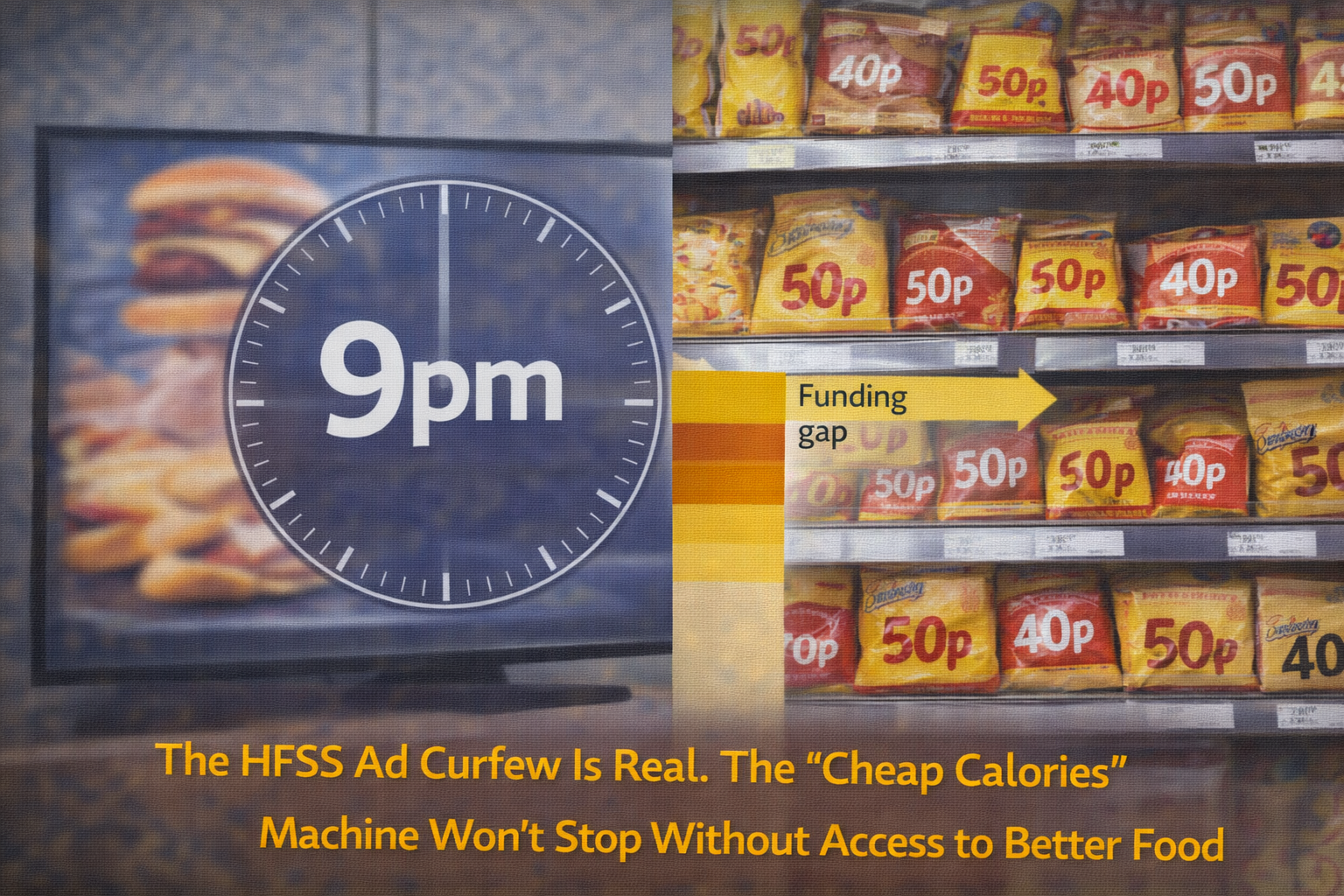
The UK is tightening rules on advertising for less healthy food, including limits on TV scheduling and paid online ads. This is real policy with real dates, not “someday maybe.”
That matters. Marketing shapes what children ask for and what families default to. But there’s a trap here.
Advertising limits don’t create affordable alternatives
If a household is food insecure, fewer ads for junk doesn’t magically make fresh food affordable, reachable, or practical.
Food insecurity is often driven by tight budgets, time pressure, cooking access, and housing instability. Marketing restrictions may reduce some pressure, but they don’t resolve the reason “cheap calories” win in the first place.
The policy gap: demand shaping vs supply reality
Ads shape demand. Hunger is shaped by supply conditions: income, rents, benefits, transport, cooking access, and local food availability.
So if we treat ad restrictions like “problem solved,” we’ll miss the real need: access to decent food that fits real life.
What communities actually need alongside ad rules
- Convenient, local options that don’t punish people with higher prices
- Programs that protect family food budgets during predictable pressure points
- Choice-based models that preserve dignity and reduce waste
Where Feed & Flow fits
Feed & Flow can use this moment to communicate something simple and honest: “Marketing reform helps, but families still need access.” That’s a strong narrative for supporting local partners that provide practical food support and coordination without pretending it’s a nationwide fix.