
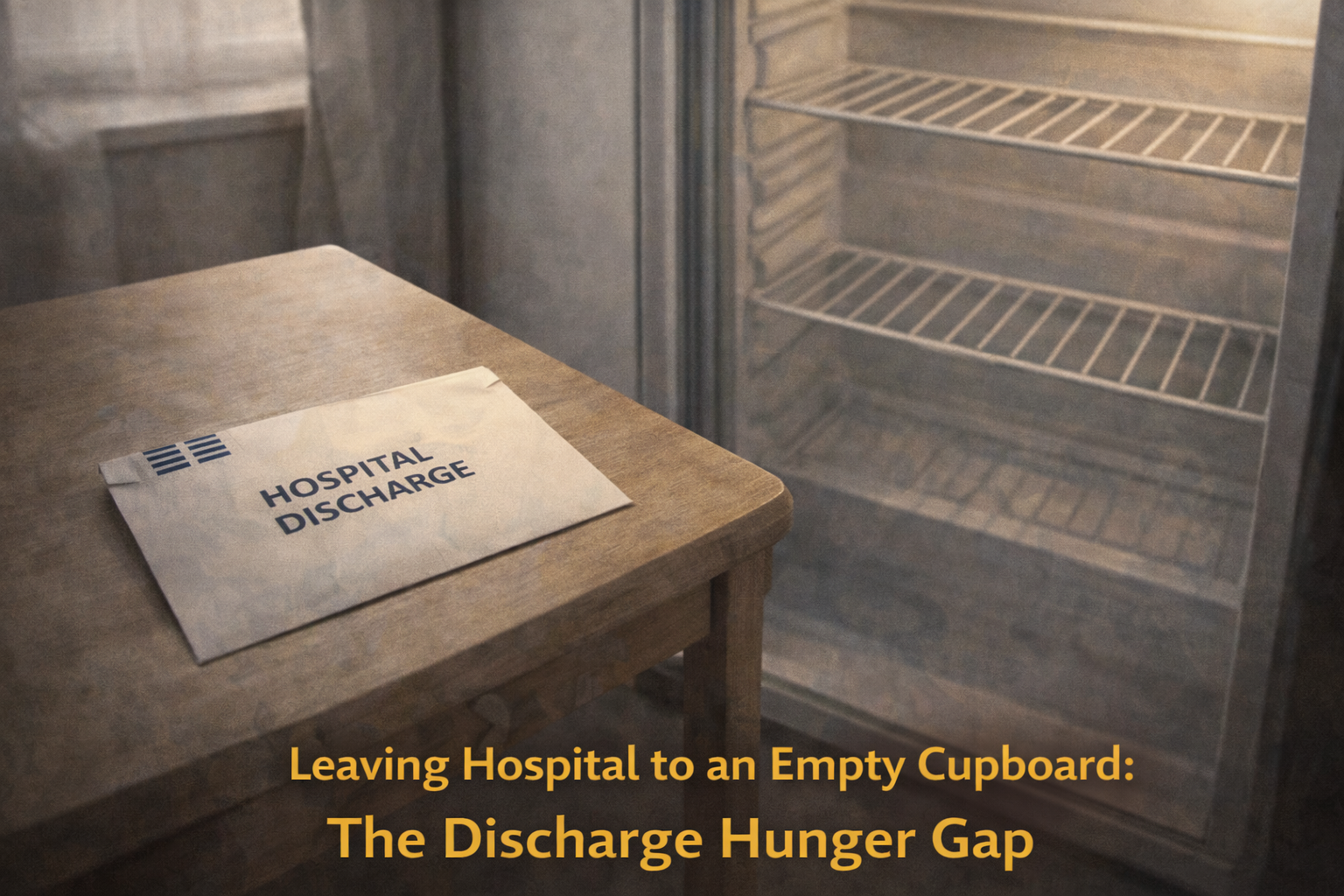
Leaving Hospital to an Empty Cupboard: The Discharge Hunger Gap
// NO DESCRIPTION DATA
Recovery needs food, not just a leaflet
Hospitals can stabilise a person medically.
But recovery continues at home.
If home means:
- no food
- no energy to cook
- no money left after bills
- the recovery plan fails immediately.
The NHS has highlighted how food insecurity affects health outcomes and pressures services.
The discharge cliff is real
People leave hospital and immediately face:
- empty cupboards
- no transport to shops
- no energy for cooking
- medication that requires food
That is a setup for relapse.
Some NHS trusts have started working with charities to provide short-term food parcels to bridge this gap.
Why hospitals can’t solve it alone
Hospitals are not food agencies.
They’re emergency healthcare systems.
So the real fix is partnership:
- hospital identifies risk
- local network provides short-term food support
- wider support routes get activated fast
This is exactly the “join the dots” approach that makes local food systems resilient.
Where Feed & Flow fits
Feed & Flow’s model funds impact nodes that keep community support alive and scalable.
A discharge-support link can be built through:
- food banks and pantries
- community kitchens
- micro-grants to local organisations doing rapid response
What success looks like
Not “big numbers” on a poster.
Success is:
- fewer people leaving hospital into crisis
- fewer repeat emergencies triggered by hunger
- faster stability after discharge
Food is not optional in recovery.
It’s part of the treatment environment.