
How Feed & Flow Decides Where To Help: Data, Local Insight And Fair Funding
// NO DESCRIPTION DATA
How Feed & Flow decides where to help
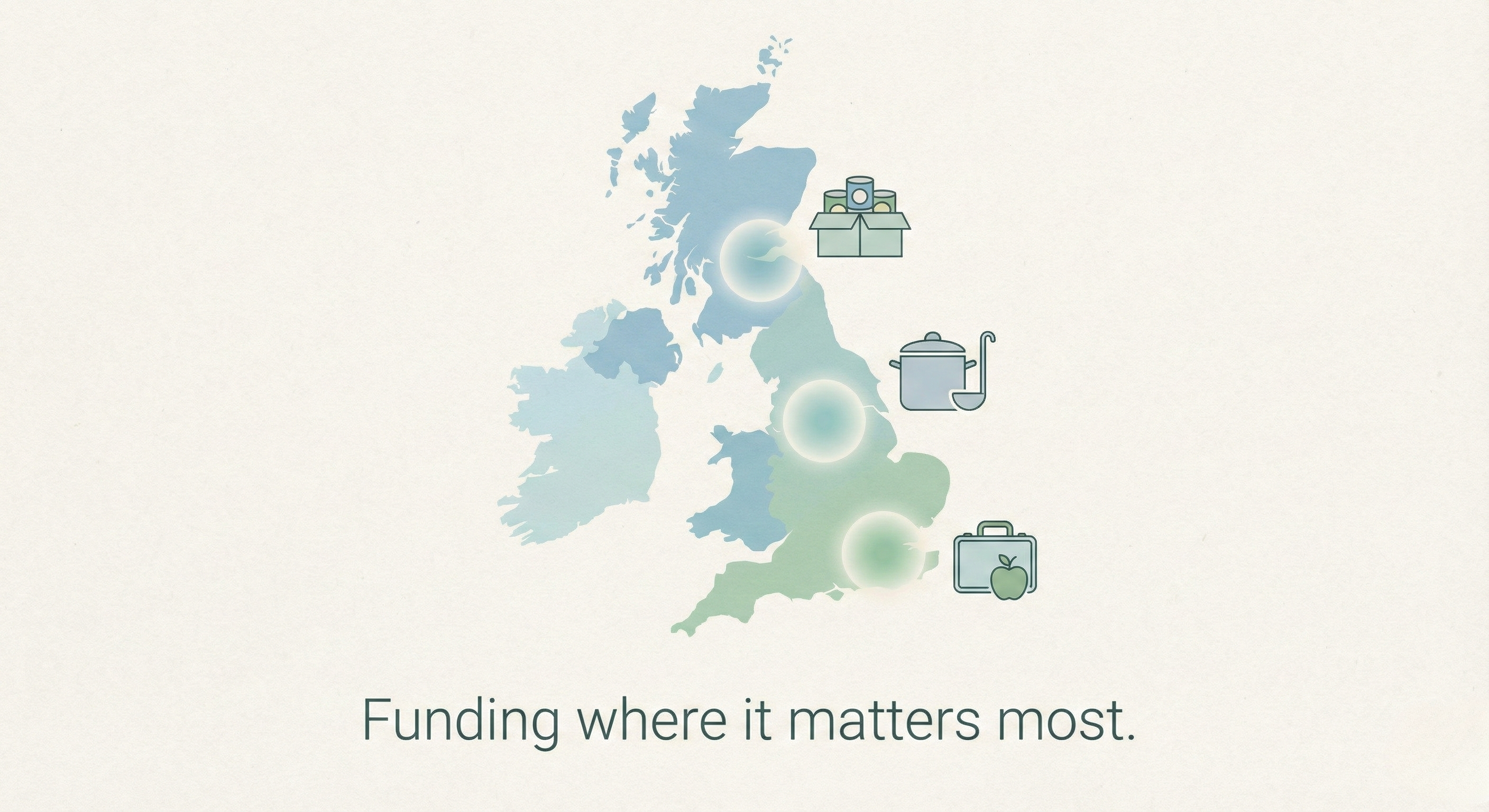
Feed & Flow Foundation exists to support food projects across the UK, but it cannot be everywhere at once. Food insecurity looks different from place to place, and good intentions are not enough. Where funds go, and how those decisions are made, matters just as much as how much support is available.
This post explains how Feed & Flow Foundation aims to decide where and how to help, using a mix of data, local insight and fair funding principles. The goal is simple: make sure that food support reaches the people and communities who need it most, in ways that actually work on the ground.
Starting from the reality of UK food insecurity
Food insecurity in the UK does not follow a single simple pattern. It shows up in:
- Cities with high housing and transport costs
- Towns and rural areas with fewer affordable shops or services
- Communities where wages and benefits do not match basic living costs
- Places with high demand for food banks, community kitchens and school food support
Feed & Flow Foundation looks at a combination of national and local indicators, including:
- Levels of deprivation and income inequality
- Reported demand at food banks and community food projects
- School and community reports on hunger and missed meals
- Cost of living pressures such as rent, energy and transport
This broad picture helps the foundation understand where UK food poverty and food insecurity are most acute, but it is only the starting point.
Why local insight matters as much as data
Numbers can show trends, but people on the ground know what is really happening. Feed & Flow Foundation intends to make local insight a central part of funding decisions by:
- Listening to established food banks, food hubs and community kitchens
- Speaking with grassroots organisers running small but vital projects
- Taking input from schools, family centres and trusted local groups
- Paying attention to what residents, volunteers and frontline workers say
Local organisations understand:
- Which estates, streets or neighbourhoods are under the most pressure
- Where families are quietly struggling but not yet connected to support
- How cultural, language or transport barriers affect access to food
- What has already been tried and what has actually worked
By combining local knowledge with wider UK food insecurity data, Feed & Flow Foundation can direct food support funding in a way that respects reality, not just statistics.
Clear principles for fair funding
To keep decisions fair and focused, Feed & Flow Foundation is developing a set of funding principles that guide where support goes. These are likely to include:
- Focus on food: projects must directly address food poverty, food insecurity or access to nutritious food
- Practical impact: funding should support real activity, such as food parcels, cooked meals, school food projects or local food access schemes
- Community connection: preference for organisations rooted in the communities they serve, with trust and local relationships
- Good governance: basic structures must be in place to handle funds safely and responsibly
- Balance: over time, funding should reach a range of areas and project types, not just one region or model
These principles help the foundation stay consistent and clear about why certain food projects receive support.
Different types of support for different needs
Not every area needs the same kind of food support. Feed & Flow Foundation will consider which type of project makes most sense in each context, for example:
- Food banks where emergency parcels are in high demand
- Community kitchens and shared meals where loneliness and isolation are key issues
- School and family projects where children are going without regular, nutritious food
- Micro grants for local food projects where small, flexible funding can unlock quick action
The foundation’s role is not to force one model onto every community, but to back the approaches that are already working or have strong local backing.
How the link with Freee Water supports long term planning
Feed & Flow Foundation is designed to grow alongside Freee Water CIC, a UK community interest company making water free at the point of use through brand funded eco water cartons and reusable bottles. As Freee Water scales and begins to generate surplus, a defined share will be donated to Feed & Flow.
This link matters for funding decisions because it creates:
- A potential long term, repeat source of income for food projects
- The ability to plan support for communities over years, not just months
- A cycle where free hydration and food support reinforce each other
Feed & Flow remains fully independent as a charity, with trustees overseeing every funding decision. The Freee Water partnership is a way to support sustainable, fair funding for UK food support, not to control how that support is delivered.
Transparency and learning as part of the process
Deciding where to help is not a one-off task. It is an ongoing process that needs honesty and adjustment. Feed & Flow Foundation intends to:
- Publish updates on where food support funding is going
- Share the criteria and thinking behind major decisions
- Listen when partners and communities say something is not working
- Adapt future funding choices based on what has been learned
UK food insecurity and food poverty will not be solved quickly. But by using data, local insight and clear funding principles, Feed & Flow Foundation can play a responsible role in strengthening food support where it is needed most.