
Inflation Slows, But Hunger Doesn’t: The “Prices Stayed High” Problem in UK Food Insecurity
// NO DESCRIPTION DATA
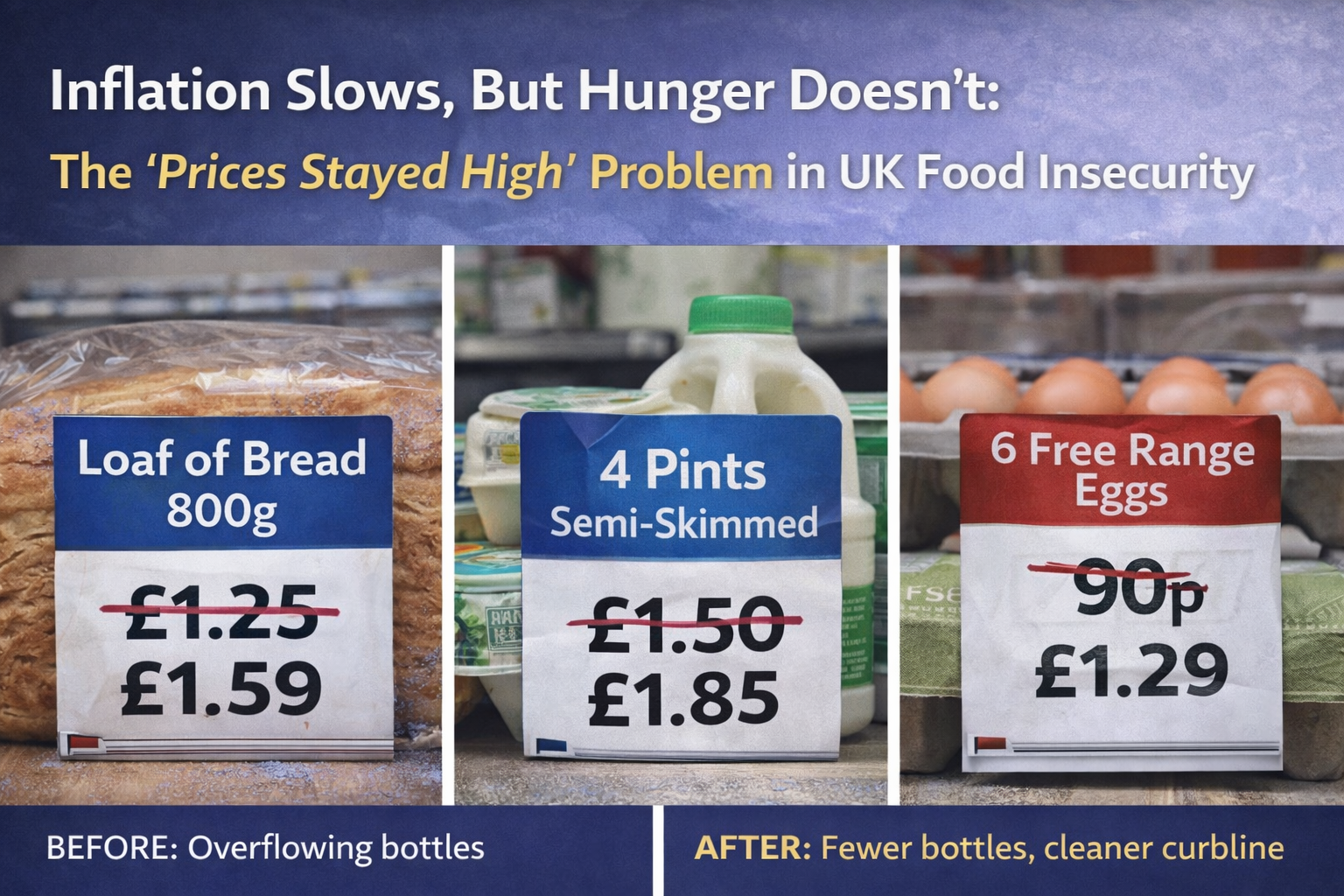
When people say “inflation is down,” they mean something very specific
Lower inflation does not mean prices dropped. It means prices are rising more slowly.
For households already at the edge, “less fast” is not relief. If your budget was broken at last year’s prices, it stays broken when prices hold high.
ONS data shows food and non-alcoholic beverage prices still rising year-on-year in late 2025.
Why high prices create quiet rationing
People adapt in ways that are invisible:
- smaller portions
- fewer fresh items
- fewer meals with protein
- more ultra-processed calories
- “making it last” so children eat first
These decisions reduce nutrition, increase stress, and make illness more likely.
The system-level signal: emergency provision stays near record levels
If prices were truly “back to normal,” emergency food aid would fall sharply. Instead, it remains very high.
Trussell’s network distributed around 2.9 million emergency food parcels in 2024/25.
That is not a fringe statistic. It is a sign that household budgets are still failing.
What Feed & Flow funds in a high-price world
When high prices are the baseline, food support needs to shift from “one-off crisis help” to “stability building.”
That includes:
- supporting pantries and social supermarkets that stretch budgets with choice
- cash-first pilots where appropriate, delivered through trusted partners
- funding the operating costs that keep local food support consistent (rent, refrigeration, transport, staff time)
- supporting coordination so families do not get bounced between services
The goal is not just feeding people this week
The goal is reducing the number of households who reach crisis next month.
Inflation statistics describe the economy. Feed & Flow exists for the household reality underneath it.