
Managed Migration to Universal Credit Can Create a Paperwork Hunger Cliff
// NO DESCRIPTION DATA
Food Insecurity
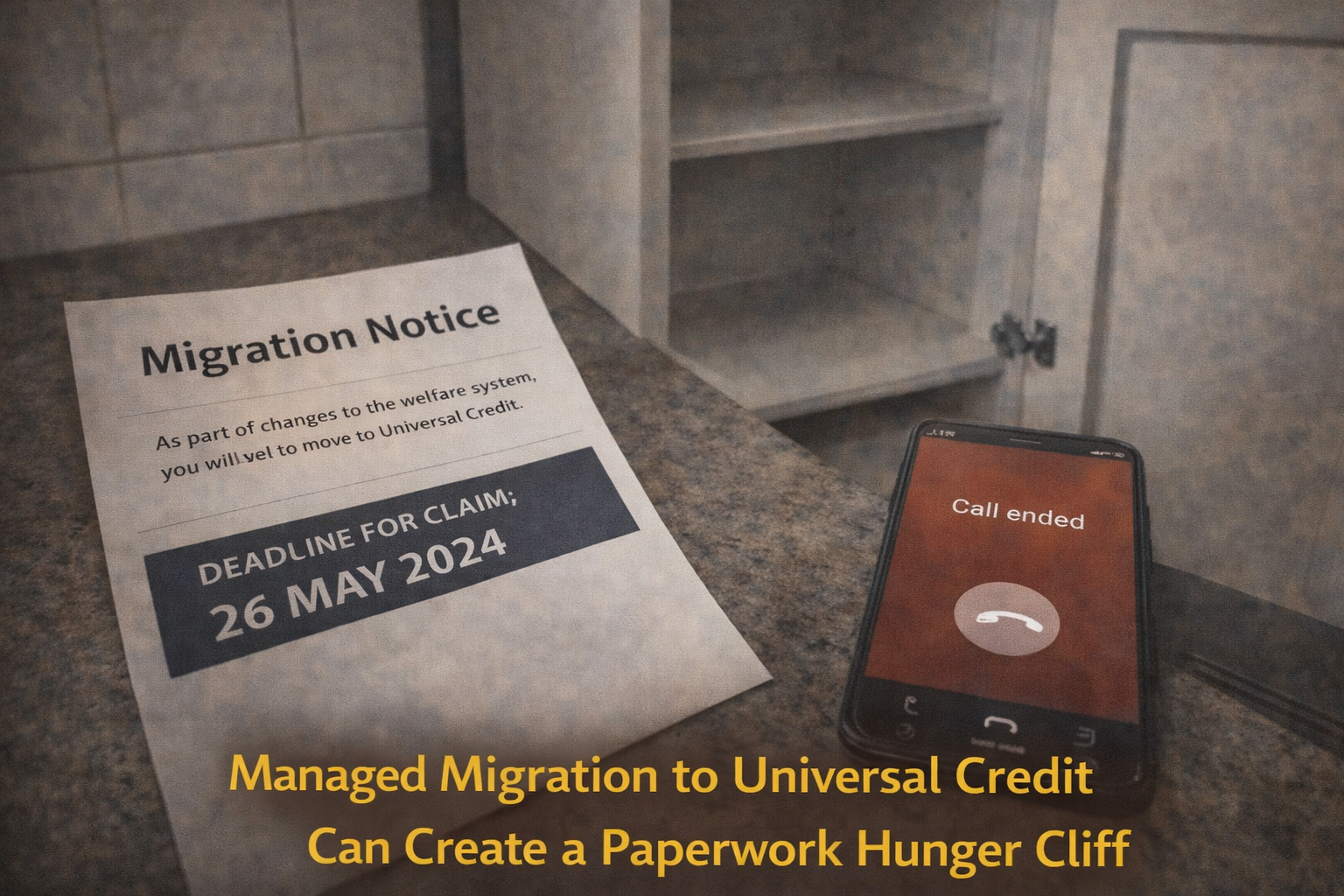
Some households don’t become food insecure because prices rise. They become food insecure because a letter arrives, a deadline passes, and income drops.
What managed migration actually means
The plan has been to move remaining claimants from legacy benefits to Universal Credit by set timelines, effectively completing the rollout and closing old systems.
For claimants, this is not a “system tidy-up.” It is a high-risk change moment.
Transitional protection exists, but only if you do the process correctly
The government guidance explains that a top-up can apply when the new entitlement is lower, but it depends on receiving a migration notice and claiming by the deadline.
That is a giant “if” for people dealing with:
- disability
- caring responsibilities
- unstable housing
- language barriers
- digital exclusion
Why the hunger impact shows up fast
When income is disrupted, food is the most flexible spend. People cut there first because rent, council tax, and fuel are not optional.
So a paperwork failure becomes:
- fewer meals
- cheaper food
- skipped nutrition
- crisis borrowing
What Feed & Flow can do that policy cannot do quickly
Feed & Flow’s “Glass Box” approach is explicitly about transparency and measurable support, with the goal of keeping crisis support honest and visible.
On the ground, the response is:
- fund partners who can provide immediate food support
- connect households to advice support so the income cliff is prevented
- focus on stability, not one-off parcels
Managed migration is supposed to be administrative. For a lot of families, it becomes an income shock. And income shocks create hunger.