
The Monthly Payday Trap: Earnings Instability Creates “End of Month Hunger” Even for Working Households
// NO DESCRIPTION DATA
“Working” doesn’t mean “stable” anymore
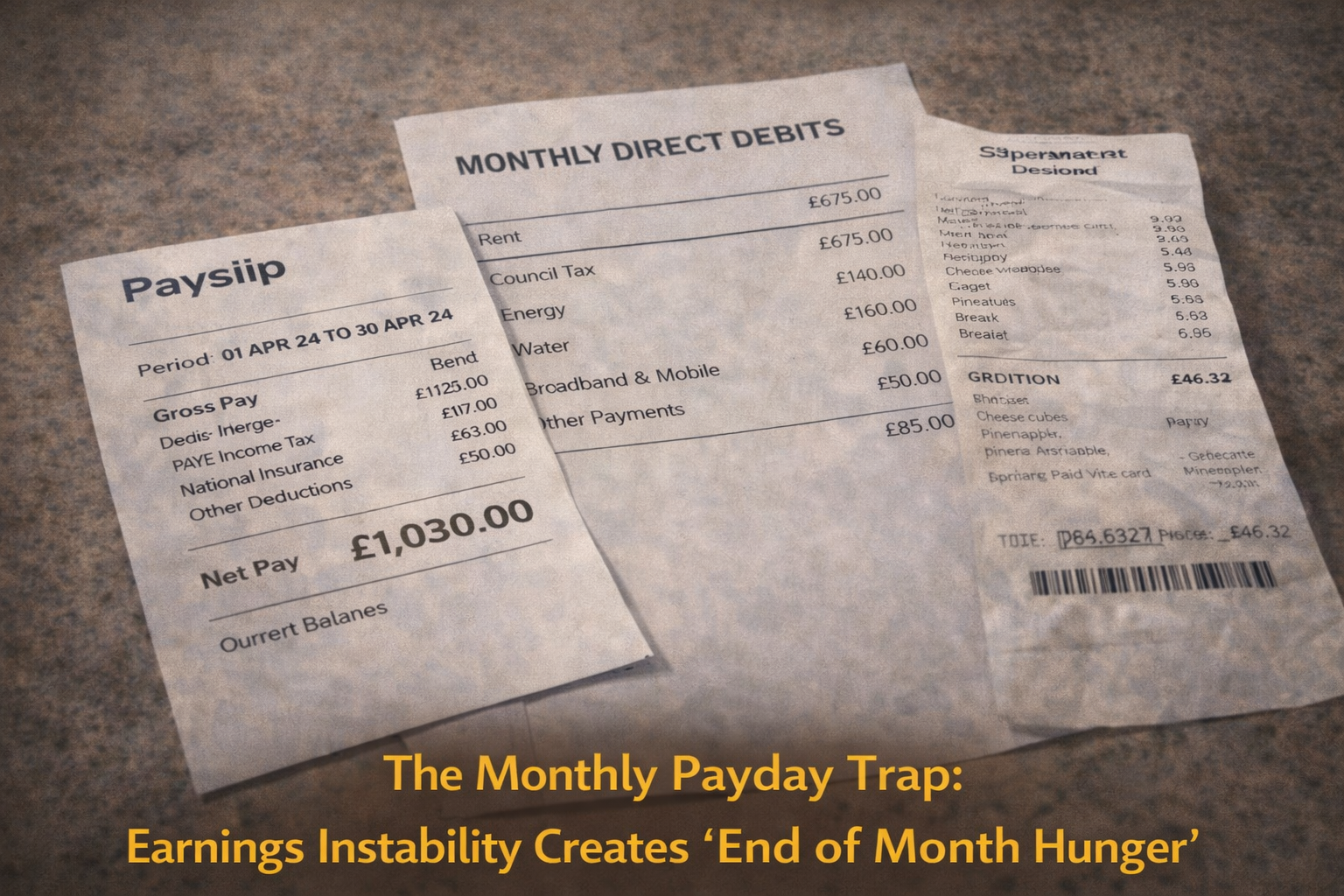
A lot of hunger is created by instability, not laziness. People can work and still get hit by volatile income, variable hours, and unexpected deductions.
The Resolution Foundation reported around one-in-seven (2.7 million) employees experience “major earnings instability,” defined as multiple months where earnings swing by at least 25% above or below their average.
Volatility makes budgeting impossible
A tight budget assumes consistency. Volatility kills consistency.
Nest Insight’s work on income volatility describes millions affected, with volatility interacting with poverty and extra “premiums” that make essentials cost more.
So people end up:
- using credit for groceries
- skipping meals near month-end
- choosing cheaper, worse diets
- relying on emergency help intermittently
The “end of month” pattern is a design flaw
Monthly pay works fine if:
- your hours are guaranteed
- your bills are predictable
- you have savings
If not, the end of the month becomes a cliff edge. Hunger shows up in predictable cycles.
What prevention looks like in practice
Prevention isn’t a slogan. It’s mechanisms:
- small flexible support that stops a spiral
- choice-based food access (pantries, not just parcels)
- quick routes into wider advice and entitlements
- local systems that know who’s at risk before the crisis peaks
Where Feed & Flow fits
Feed & Flow is explicitly building support routes into:
- food banks and pantries
- school breakfast clubs
- community kitchens
That mix matters because volatility creates intermittent need. People don’t need “one big rescue.” They need a reliable floor.