
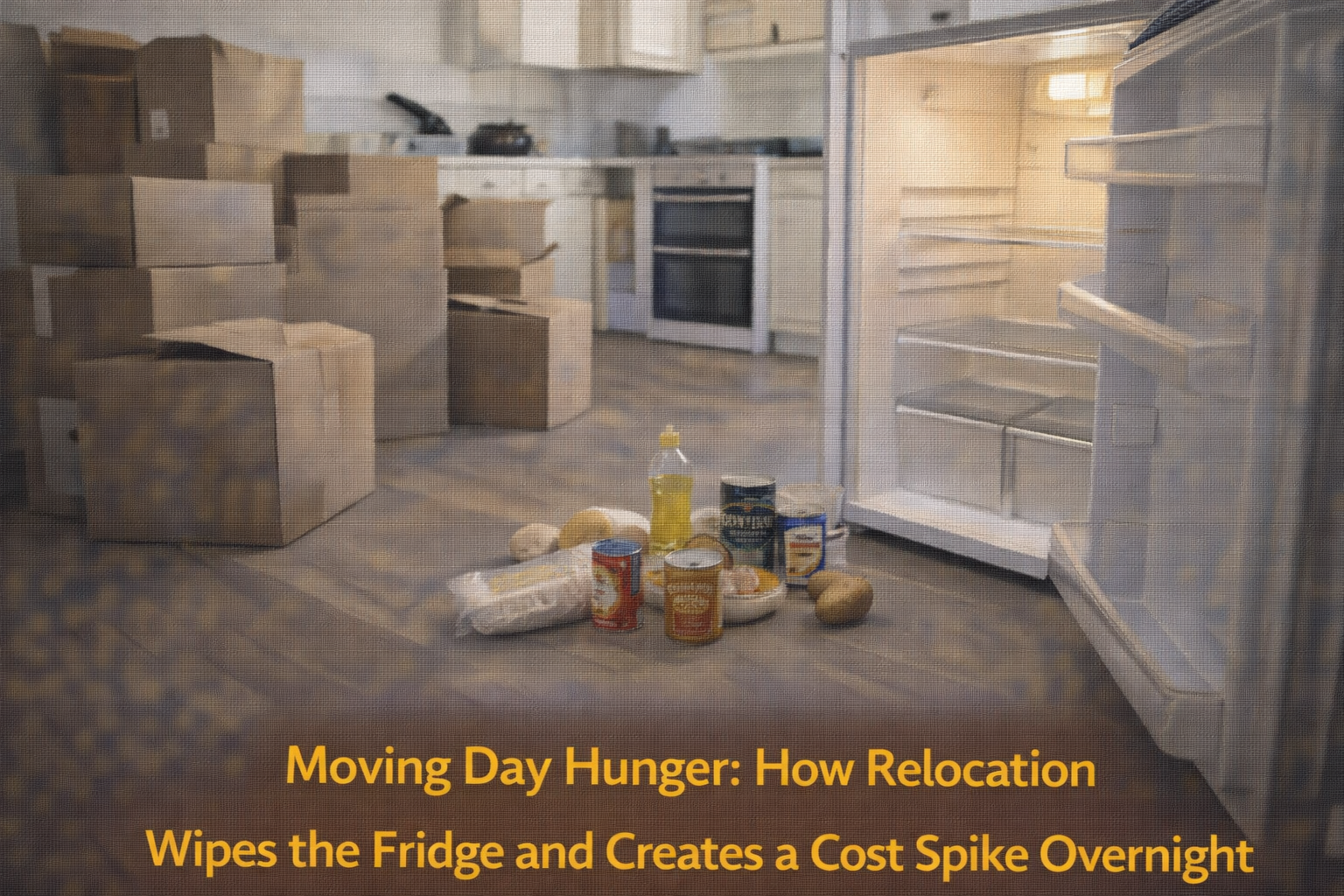
Moving Day Hunger: How Relocation Wipes the Fridge and Creates a Cost Spike Overnight
// NO DESCRIPTION DATA
Moving
Moving is expensive for everyone. For low-income households, moving can trigger immediate food insecurity. The fridge gets emptied. Frozen food gets lost. Pantry items get binned or left behind. Cooking gear goes missing. The first week becomes a reset you can’t afford.
This is a hunger mechanism that rarely shows up in policy conversations.
The Fridge Reset Is a Real Financial Hit
A household might have built up basics over time: oil, spices, rice, cereal, tinned food, condiments, freezer meals. Then one forced move wipes it out. People arrive at a new place with almost nothing usable and a pile of other costs landing at the same time.
Even when someone receives support with housing, they often do not receive support for restarting a functioning kitchen.
Temporary Gaps Become Real Hunger Fast
Relocation often comes with delays that break routine: waiting for keys, waiting for electricity setup, waiting for appliances, waiting for money to land, waiting for transport. Those gaps turn into missed meals quickly, especially for families with children.
It’s not that food doesn’t exist. It’s that the infrastructure around food collapses for a few days, and low-income households can’t absorb that shock.
Why This Is Easy to Miss
On paper, moving looks like a life admin event. In reality, it can be a food emergency. People may not ask for help because they assume hunger during a move is “their fault” for not planning perfectly. But many moves are unplanned, forced, or time-compressed.
When the system treats relocation as routine, it misses the hunger risk embedded inside it.
Feed & Flow Can Treat Relocation as a Predictable Trigger
This is a place where prevention works. If you know a household is moving, you can predict the spike: food loss, cooking disruption, and a short-term gap where everything is harder.
Support that bridges that first week can prevent hunger from starting in the first place. Because the move isn’t just moving furniture. It’s moving someone’s ability to eat normally.