
Malnutrition Doesn’t Always Look Like Hunger: The Older Adult Food Crisis Behind Closed Doors
// NO DESCRIPTION DATA
Older people can be hungry without looking “in crisis”
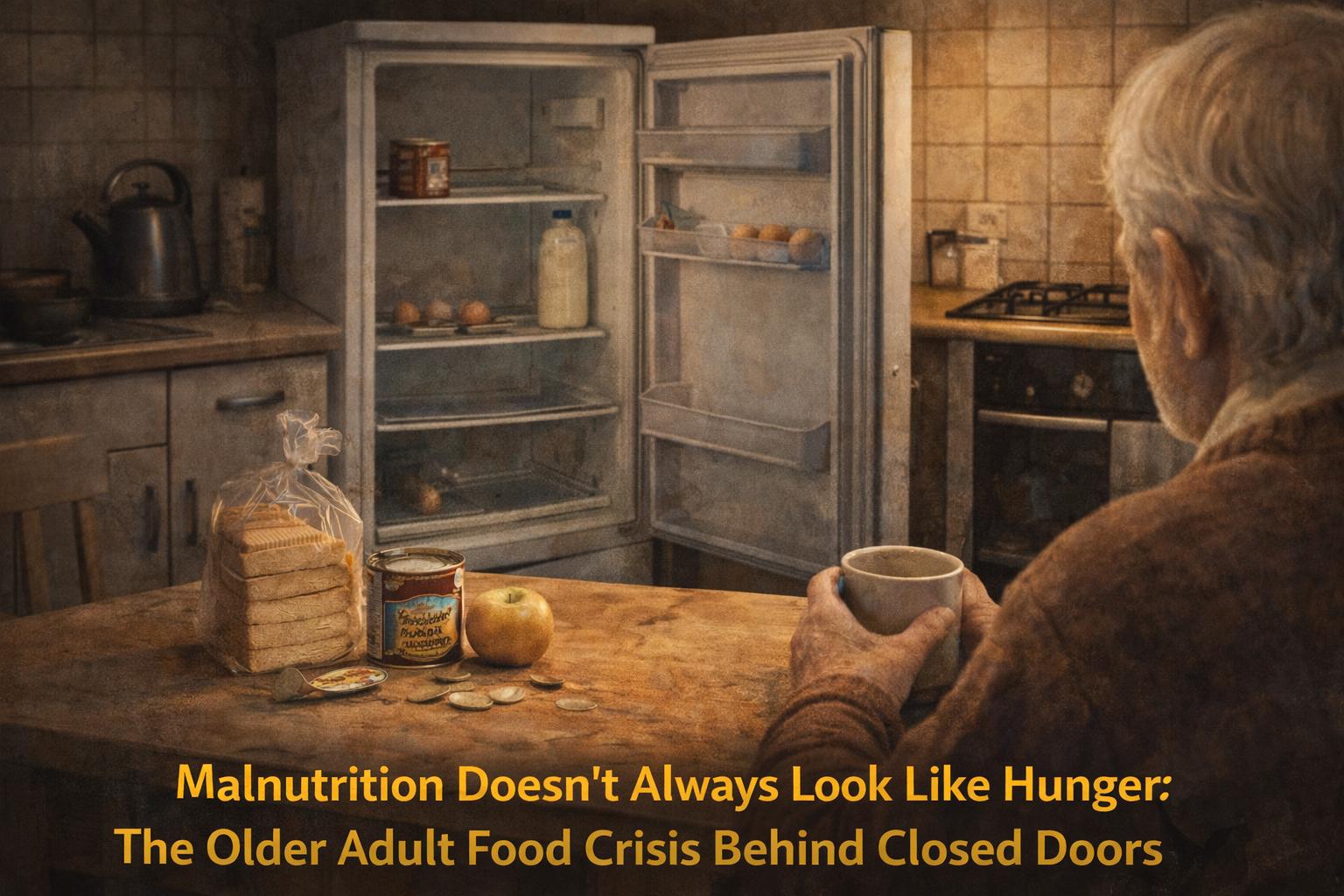
Older adult hunger doesn’t always look like empty cupboards.
It often looks like:
- smaller meals
- less protein
- fewer fresh foods
- repeating cheap basics
- “I’m fine” while getting weaker
The Malnutrition Task Force estimates around one in ten people over 65 are malnourished or at risk of malnutrition, and that it increases hospital admissions.
That’s not rare.
That’s structural.
Cost-of-living pressure pushed older adults into food cutbacks
Age UK research found 4.2 million people over 60 cut back on food and groceries to make ends meet.
That includes people who have worked their whole lives and still ended up rationing basics.
Why older adult hunger is often invisible
Three reasons it stays hidden:
- Pride and reluctance to ask
- Isolation and fewer support touchpoints
- Declining energy, mobility, or appetite
It becomes a slow slide, not a sudden crash.
Malnutrition is not just “not eating enough”
It can be:
- missing key nutrients
- relying on beige foods
- skipping meals because cooking feels too hard
- eating less to save money for heating
And that leads to:
- frailty
- falls risk
- slower recovery
- higher healthcare use
Food access gets harder when life gets smaller
For older adults, food insecurity is often shaped by:
- transport limits
- rising delivery fees
- smaller local shop options
- fatigue
- confusing systems
“Just go shopping” becomes a weekly obstacle course.
What good support looks like for older adults
Support needs to be:
- consistent (not one-off)
- low-stigma
- easy to access
- coordinated with other needs (benefits, heating, health)
It should reduce decision fatigue, not add paperwork.
What Feed & Flow can do here
Feed & Flow can support older adults by strengthening neighbourhood support:
- link older adults to consistent food help
- build referral partnerships with GPs, housing teams, community orgs
- prioritise dignity and choice
- treat malnutrition prevention as resilience, not charity
Because waiting until someone collapses is not a strategy.