
The Online Grocery Barrier: Minimum Spends and Delivery Fees That Quietly Push People Into Hunger
// NO DESCRIPTION DATA
Online grocery
Online grocery shopping is sold as convenience. For some households, it’s not convenience, it’s necessity: disability, caring responsibilities, rural living, poor transport, or health conditions make in-person shopping hard.
But online grocery often comes with two hidden barriers:
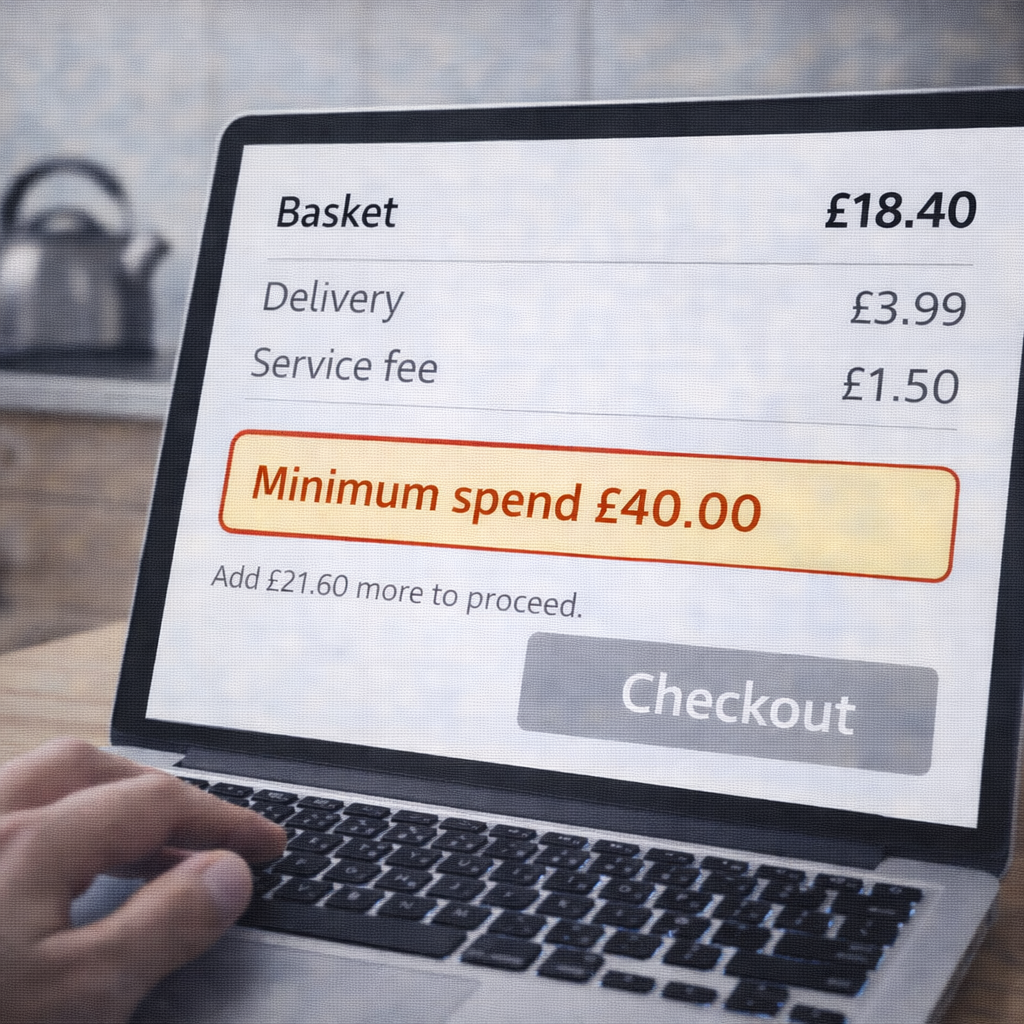
- minimum basket thresholds
- delivery and service fees
Charities and consumer research have repeatedly raised concerns that these added costs and thresholds can disproportionately hit older and lower-income shoppers.
Why this becomes a hunger issue
If you can’t hit the minimum spend, you may have to:
- buy extra you don’t need (waste risk)
- delay shopping (food runs out)
- switch to expensive local shops
- rely on ultra-processed top-ups instead of real meals
That’s how a delivery policy becomes a food security issue.
Minimum spends punish small households and irregular incomes
If you’re one person, or a parent trying to stretch a budget week-to-week, forcing a larger basket pushes people toward worse choices: bulk cheap calories, fewer fresh options, and unstable meal planning.
The digital barrier isn’t just “no internet”
You already have a post about digital exclusion. This is the next layer: even when you can access online shopping, the commercial terms can still exclude you.
Where Feed & Flow can act realistically
This topic is ideal for local partnerships:
- community pantry models that reduce the need for large weekly spends
- coordinated delivery support through local projects
- targeted funding for the people most blocked by the last-mile costs
And it fits Feed & Flow’s “support local projects, publish transparent reporting” positioning without pretending it’s a national infrastructure replacement.