
Pantries and Social Supermarkets: Why Choice-Based Models Build Stability
// NO DESCRIPTION DATA
Food clubs
Traditional food parcels solve an immediate shortage. They do not always solve the long-term pattern.
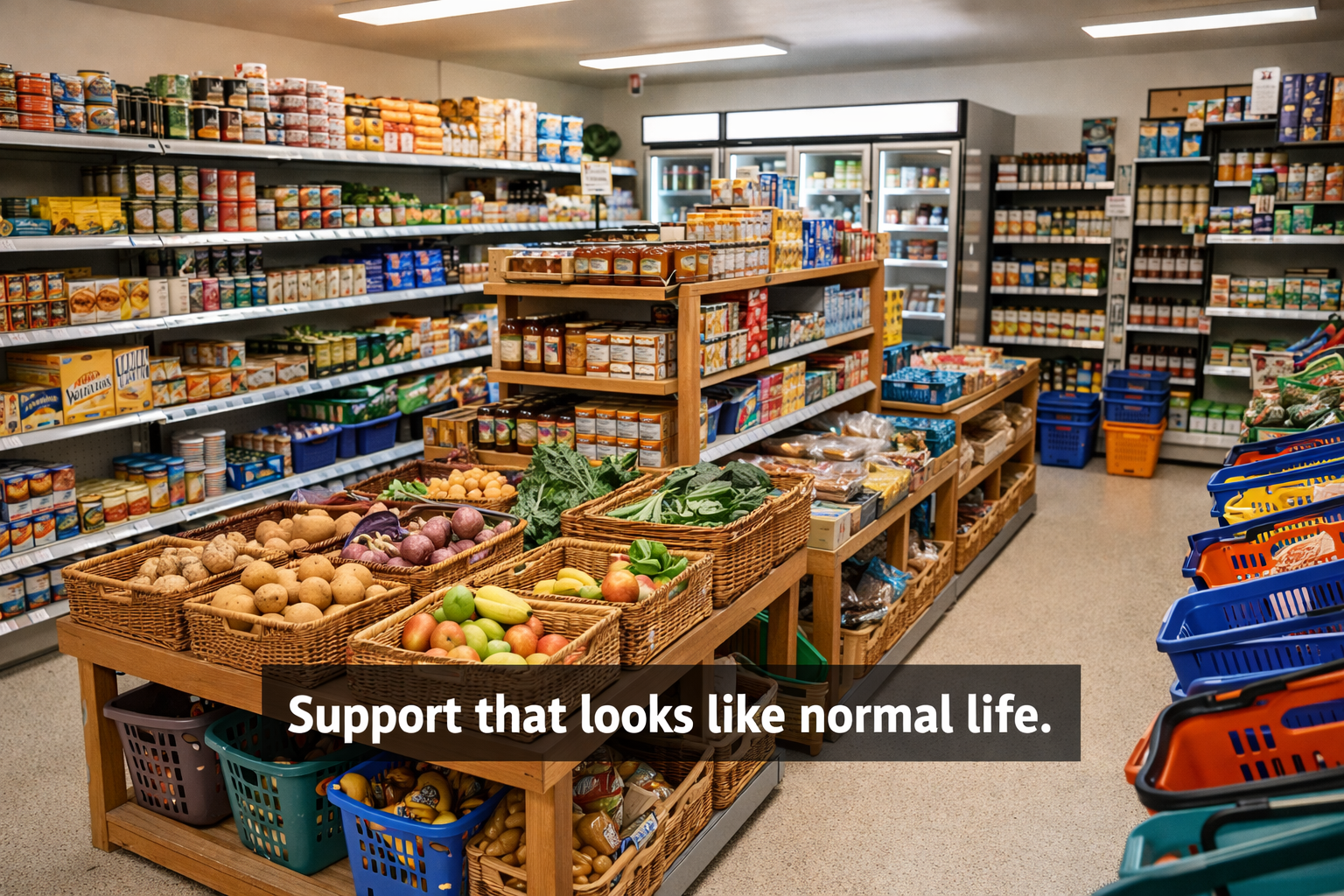
Across the UK, a growing number of communities are building “food clubs,” pantries, and social supermarkets that work differently. They offer a retail-like environment, low-cost access, and more choice. Research has examined these models through themes like access, dignity, and choice.
Feed & Flow is interested in these models because they can reduce stigma and increase stability.
Why choice changes everything
Choice is not just a comfort. It is function.
When people can choose:
- They can match food to their household needs
- They waste less
- They cook more effectively
- They feel less shame
- They are more likely to keep engaging early, before crisis
Choice-based systems move food support closer to normal life, which matters for dignity.
Why the “shop-style” environment reduces stigma
Stigma is one of the biggest barriers to accessing help.
If a system feels like a queue, a charity handout, or a public label of hardship, people delay. Delay makes crisis worse.
A pantry or social supermarket model can feel more like:
- A community membership
- A place to browse
- A normal interaction
- A consistent routine
That difference matters more than many people realise.
The stability advantage
Stability comes from consistency.
These models often support households by:
- Offering predictable access (weekly or monthly routines)
- Reducing the shock of sudden shortages
- Allowing households to plan meals
- Linking people into other support services
Some pantry models explicitly aim to bring people in through food, then connect them to wider support and referrals.
What can go wrong if the model is under-funded
Choice-based models still need resources.
Risks include:
- Low variety leading to poor experience
- Inconsistent stock creating frustration
- Volunteer burnout
- Rising demand outpacing capacity
- Facilities costs that projects cannot cover
This is where targeted funding and operational support can make the difference between a good idea and a sustainable service.
How Feed & Flow supports this lane
Feed & Flow can support pantry and social supermarket approaches by:
- Funding the operational basics projects often struggle to cover
- Supporting quality and consistency, not only quantity
- Helping projects build wrap-around support links
- Backing models that reduce stigma and increase stability
Food support should not trap people in emergency mode. It should help households regain control. Choice-based models are one path toward that.