
Persistent Absence Is a Poverty Signal: The Attendance Data Is Quietly Telling You Who’s Hungry
// NO DESCRIPTION DATA
Attendance is not only about discipline
When a child is repeatedly missing school, it is often framed as parenting, motivation, or behaviour.
The data tells a harsher story: disadvantage tracks strongly with absence.
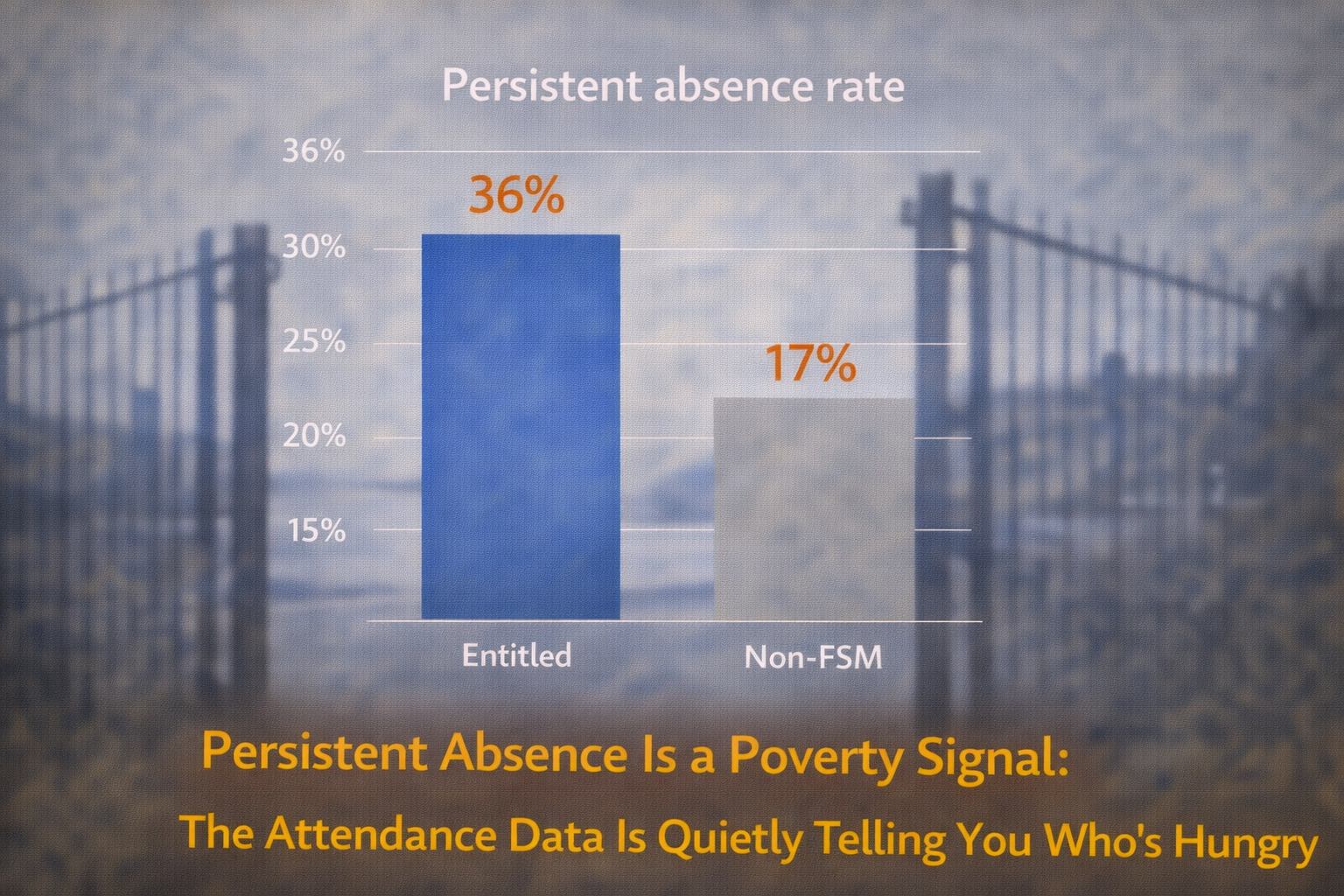
The FSM gap is not subtle
Official attendance statistics show that pupils eligible for free school meals have much higher overall absence and persistent absence than those not eligible.
Independent analysis also highlights severe absence gaps tied to FSM eligibility.
That is not “kids being lazy”. That is families under strain.
Hunger is one of the mechanisms behind the numbers
Hunger does not always mean literal starvation. It can mean:
- no breakfast
- inconsistent evening meals
- stress and sleep disruption from household instability
- embarrassment and withdrawal
- low energy and illness susceptibility
All of that can increase absence, especially when combined with housing stress, transport costs, and mental load.
Why breakfast clubs matter, but are not the whole fix
Breakfast provision helps, but it should be framed correctly:
- it reduces friction on the day
- it creates routine and a reason to arrive
- it removes stigma when it is universal or normalised
Feed & Flow’s blueprint explicitly includes support for school breakfast clubs.
Done right, that is not charity theatre. It is attendance stability infrastructure.
A practical takeaway for Feed & Flow partners
Attendance patterns can help target support without humiliating families:
- partner with schools to identify pressure points (without naming and shaming)
- align food support with known “spike” periods (end of month, winter, return-to-school)
- integrate signposting to wider help through trusted school channels