
The Pest and Damp Tax: When Mould and Infestations Destroy Food and Create Hunger
// NO DESCRIPTION DATA
Food insecurity
Food insecurity is made worse by something that sounds like it belongs in a horror film, but is actually common: damp and pests.
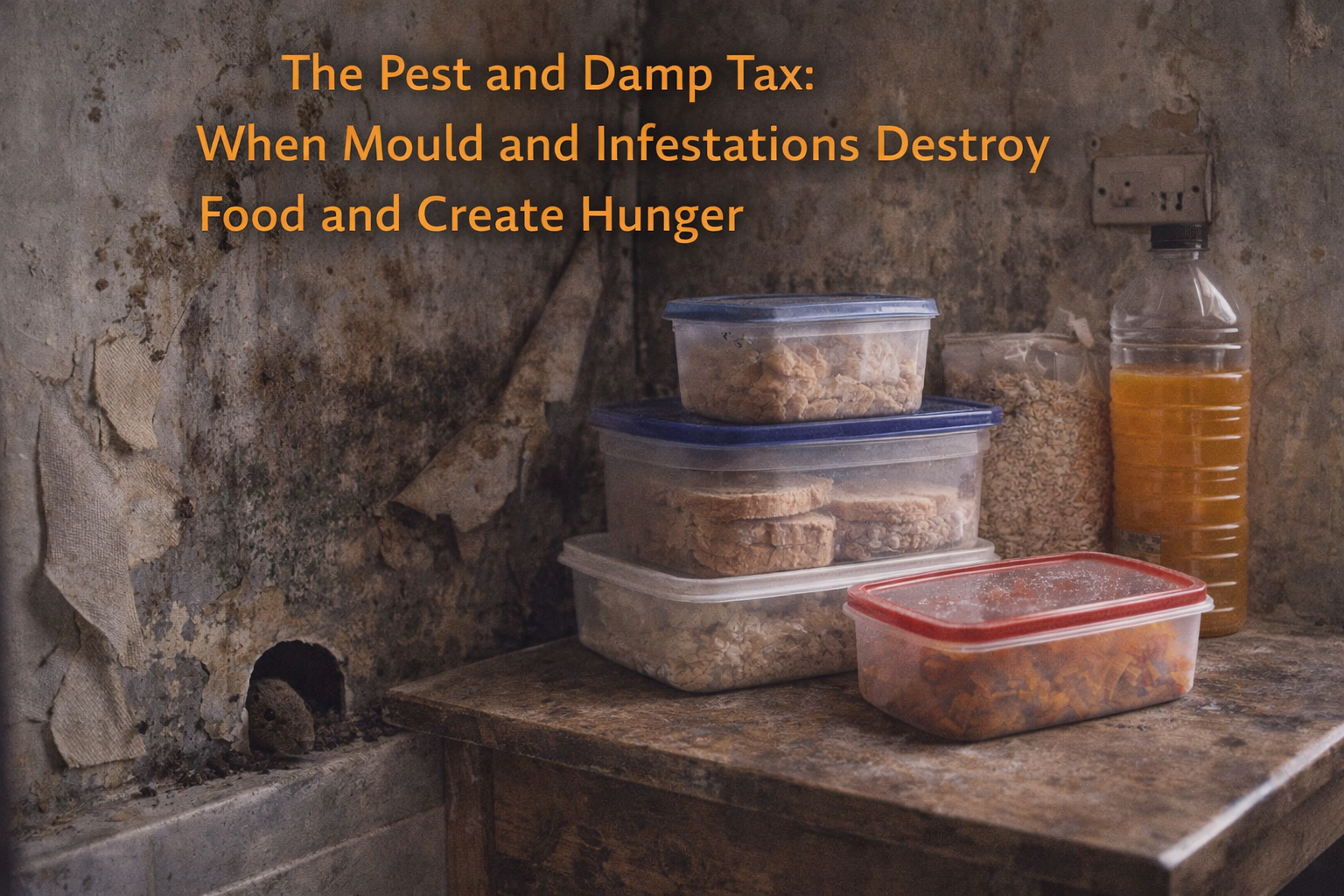
When a home has mould, mice, rats, cockroaches, or persistent damp, food becomes harder to store safely. Items get contaminated. Packaging gets chewed. Cupboards smell. People throw food away “just in case.”
That waste is unaffordable when budgets are already tight.
Bad Housing Creates Food Waste You Can’t Afford
Higher-income households can replace ruined food. Low-income households can’t.
So people take risks:
- eating food they’re not confident about
- cutting off affected parts
- skipping meals after binning contaminated items
- buying smaller amounts more often to avoid loss
All of those increase cost and stress.
Storage Becomes a Safety Problem
If pests get into cupboards, families start storing food in bedrooms, bags, or improvised containers. That reduces routine and increases clutter. Damp makes it worse by accelerating spoilage. The household becomes a place where food feels fragile.
This is hunger by environment.
The Psychological Load Is Heavy
Living with pests and damp isn’t just gross. It’s exhausting. People feel ashamed. They avoid inviting anyone over. They stop feeling in control. That stress reduces planning capacity, which further worsens food stability.
What Feed & Flow Can Recognise
Feed & Flow can treat housing conditions as food conditions. If someone’s environment destroys food, then “food support” needs to adapt: packaging choices, storage advice that’s realistic, and connections to wider support for housing issues.
Because you can’t build food security in a home that keeps eating the food first.