Proof Before Help: Why Referral Systems Can Miss People Right at Crisis Point
// NO DESCRIPTION DATA
Food support in the UK
The UK has built a lot of food support around one idea: if someone is in crisis, they can be referred.
That can work. But it also creates a serious problem. The people most in need of urgent help are often the least able to navigate systems that require proof, appointments, vouchers, forms or perfect timing.
Hunger does not wait politely while admin catches up.
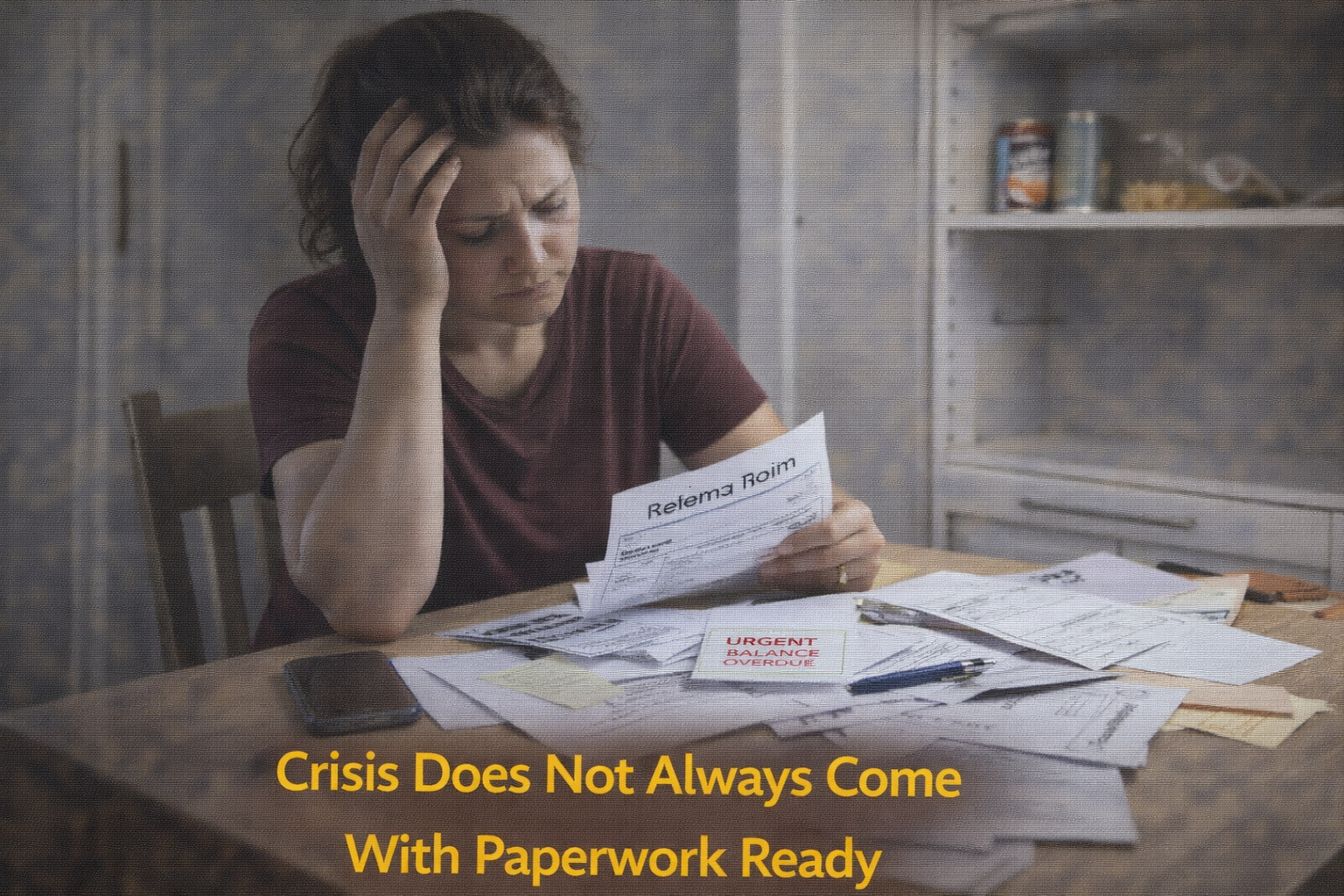
Crisis Does Not Always Come With Paperwork Ready
A person can be short on food for all kinds of reasons. Wages did not land. Benefits were delayed. Rent swallowed the week’s money. A relationship broke down. An emergency cost hit at the worst possible time.
In those moments, people are often tired, embarrassed, stressed and trying to solve ten things at once. Asking them to prove hardship before they can eat may sound reasonable from a systems point of view, but it can feel impossible from their side.
Some people do not know where to go. Some do not have the right documents. Some cannot get an appointment quickly. Some are put off by the shame of having to explain themselves to multiple people before support arrives.
Gatekeeping Can Turn Delay Into Hunger
Referral systems are often designed to manage demand and target help. Fair enough. But there is a risk when the system becomes harder to access than it needs to be.
Every extra step creates drop-off. Every delay increases stress. Every confusing instruction raises the chance that someone simply gives up and tries to cope alone.
That matters because a lot of food insecurity stays hidden. People borrow. They skip meals. They water things down. They tell themselves they will sort it tomorrow. By the time many people ask for help, they are already deep in crisis.
A rigid front door can miss them exactly when speed matters most.
Dignity Matters as Much as Delivery
There is also a human issue here.
Support works better when people do not feel interrogated. Hunger already comes with shame. Systems should reduce that burden, not increase it. The more complicated the route to help becomes, the more likely people are to feel that support is conditional on proving they are desperate enough.
That is not how dignity works.
Feed & Flow’s approach should always recognise that people do not become “worthy” of food only after navigating a perfect process. Crisis support needs good judgement, yes. But it also needs trust, flexibility and an understanding that real life is messy.
The Best Help Reaches People Before the Drop
A strong food support system does not just react to visible crisis. It catches people earlier, with less friction and less shame.
That means simpler routes in. Better partnerships. Smarter signposting. Flexible responses. And a constant awareness that hunger gets worse with every unnecessary delay.
Because when someone is running out of food, the question should not be whether they can complete the process.
It should be how quickly the system can meet them where they are.