
School Food Standards Exist. Hunger Still Gets Through
// NO DESCRIPTION DATA
The UK has rules for school food
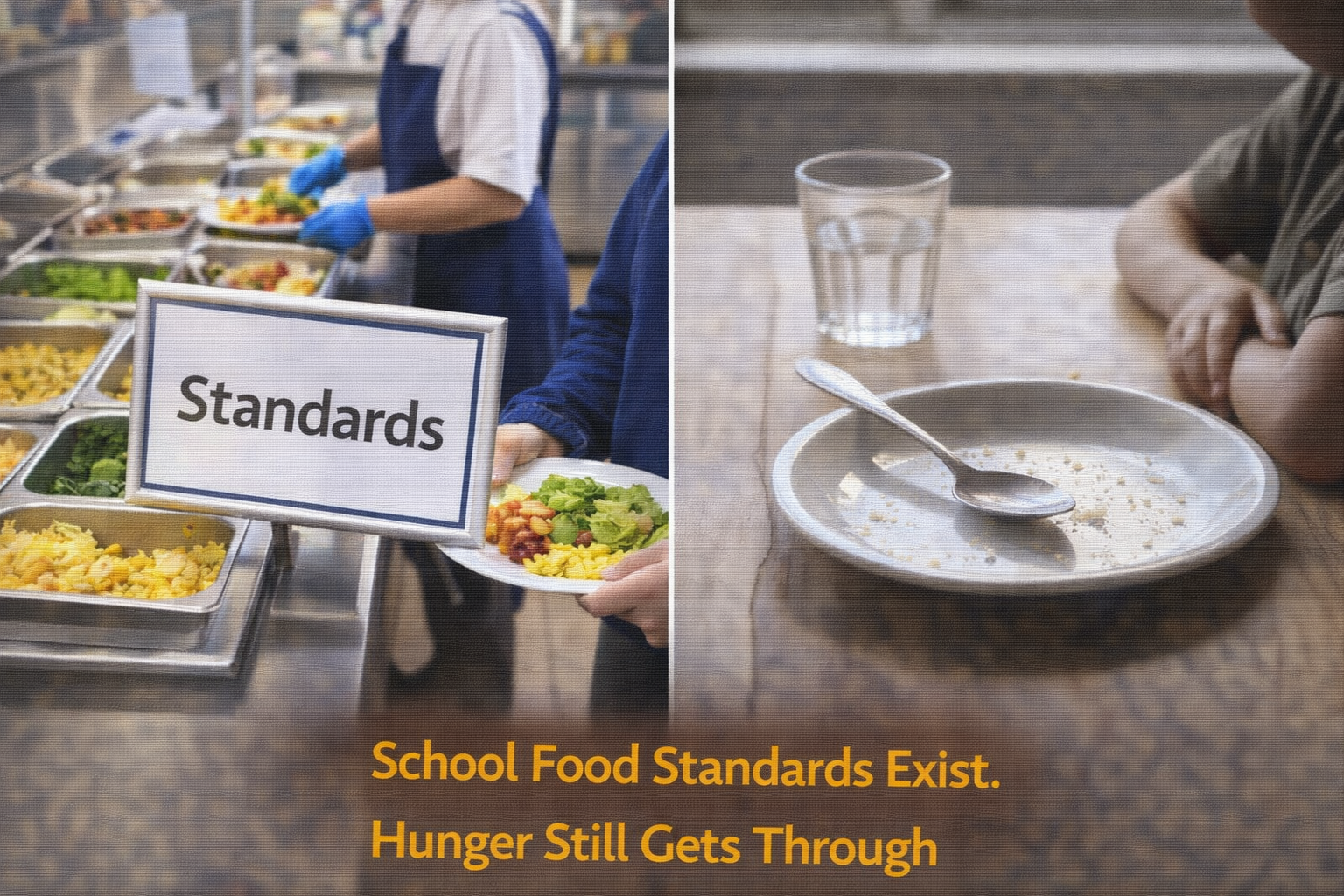
There are published school food standards intended to help children develop healthy eating habits and support learning and energy through the day.
On paper, this looks like the system has nutrition handled.
Standards don’t solve access
Standards govern what is served in school. They do not guarantee that a child:
- Ate breakfast
- Has food at home
- Will eat over weekends and holidays
- Can access culturally appropriate or medically suitable meals
So hunger slips through the gaps around the standards.
The “school day” is only part of the week
A child can be “fed at school” and still be living in food insecurity. That’s why breakfast clubs matter, not as a nice add-on, but as stabilising infrastructure.
Where Feed & Flow comes in
Feed & Flow’s model is built around reinforcing the local network: food banks/pantries, breakfast clubs, and community kitchens.
That matters because the most dangerous hunger is the hunger that happens outside the visible systems.
The point isn’t perfection, it’s fewer gaps
This is not about pretending standards are useless. It’s about admitting that hunger is an access problem across time: mornings, weekends, holidays, and crisis moments.
Support that fills those gaps is how you stop “school food” becoming a comforting story that hides real hunger at home.