
£2.61 Doesn’t Buy a Lunch: The School Meal Funding Gap No One Wants to Say Out Loud
// NO DESCRIPTION DATA
School Meals
School meals are treated like a moral issue (“kids should eat”), but they’re also a maths issue: does the funding cover the meal?
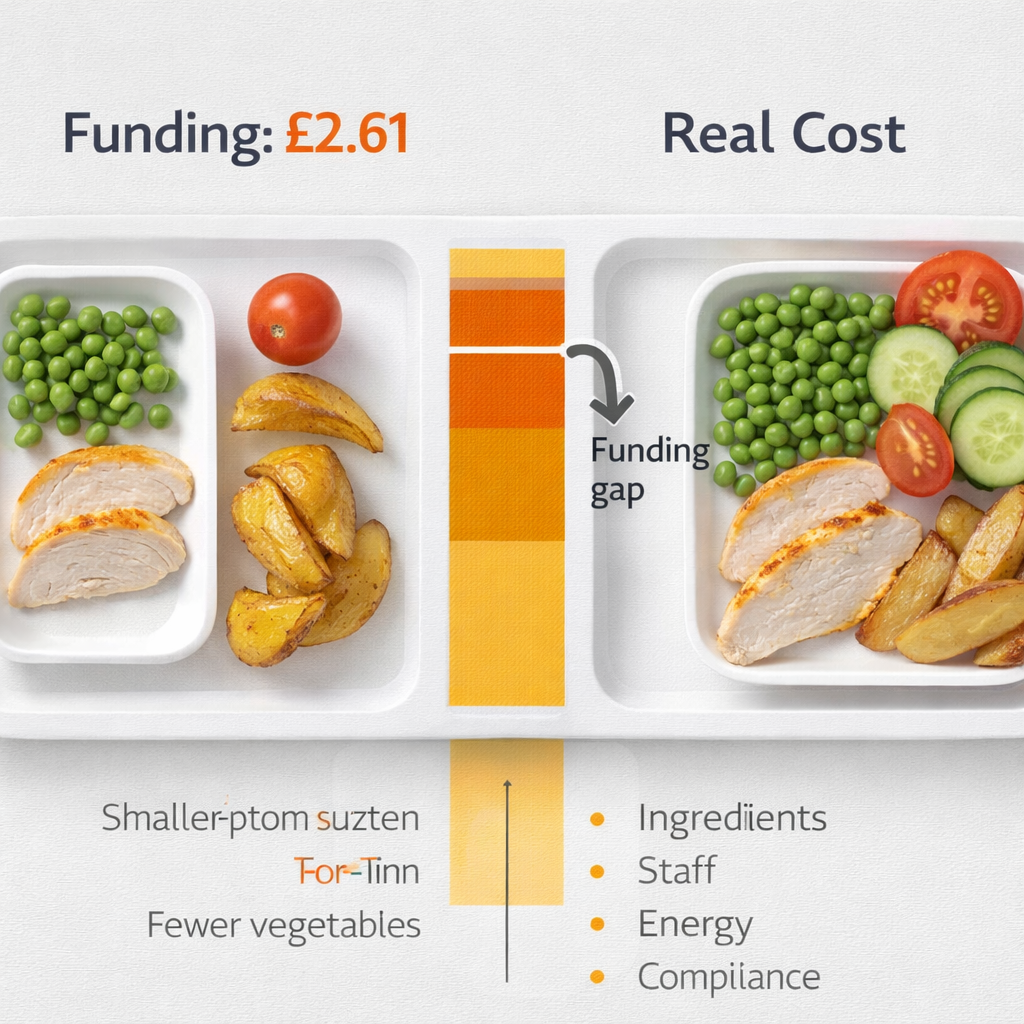
A core example is Universal Infant Free School Meals. The per-meal funding rate is publicly documented, and it’s the kind of number that looks fine until you try to buy ingredients, staff time, energy, delivery, and compliance with it.
The quiet reality: schools subsidise meals
When funding doesn’t match costs, schools and caterers either subsidise from other budgets, cut quality, reduce portions, or simplify menus in ways that hit nutrition.
And because food inflation has been brutal over the last few years, the pressure compounds. Even where funding rises, the lived reality for kitchens is still: “make it work.”
Quality is not optional, but it is often unfunded
Schools still have nutritional standards to meet. That’s good. But when the budget is tight, you get a drift toward cheaper calories and away from the consistent fresh options that actually support health.
This creates a nasty contradiction: we want children to have nutritious meals, while the system quietly pressures providers to cheapen the plate.
Why this matters to hunger, not just menu debates
When meals become lower-quality or less filling, families notice. Kids still come home hungry. Households then backfill with cheap snack calories. That’s how hunger becomes a health issue even when “a meal” technically existed.
What Feed & Flow can do with this topic
You don’t have to pretend you can fix national funding. You can do what charities actually can do: fund or support local partners that protect meal quality, breakfast provision, and holiday provision, then show the receipts with transparent reporting.