
Security Tags on Basics Are a Poverty Signal: When Shopping Becomes Surveillance
// NO DESCRIPTION DATA
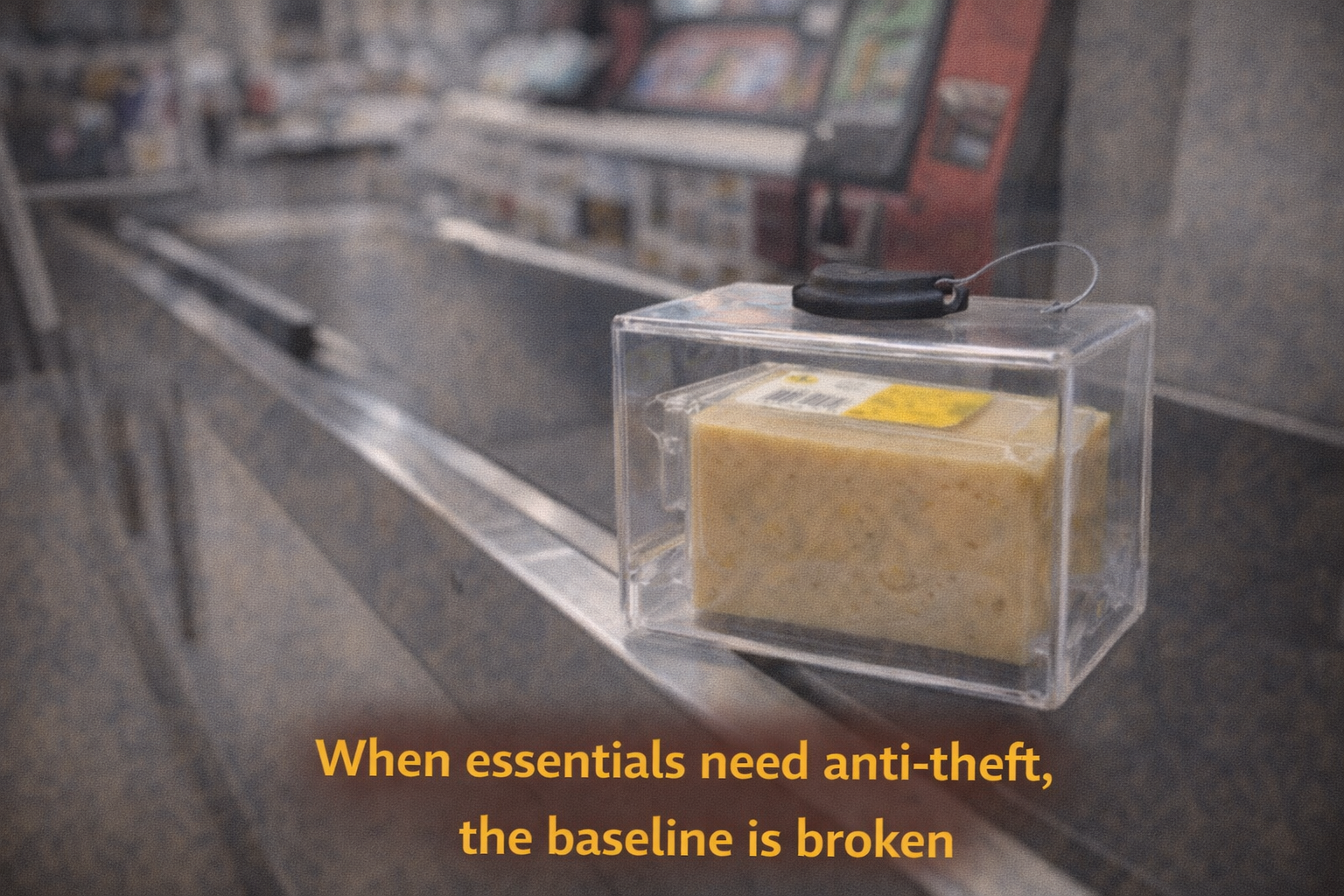
When essentials get tagged, something has shifted
Security tags on basics are not just a retail choice. They are a sign of economic pressure showing up in daily life.
The public reads it instantly: food is expensive enough that even essentials are treated like high-risk items.
The hidden damage is social, not just financial
When stores increase surveillance, the experience changes:
- people feel watched
- anxious shoppers avoid going in
- families buy less, more often
- people downshift into cheaper calories
- shame increases, and support becomes harder to access
Even if someone has never stolen anything, the environment becomes more hostile and less human.
This pushes the “small shop, small pack” penalty
When people avoid big supermarkets or can’t do full shops, they fall into:
- convenience store prices
- smaller packs with worse unit prices
- fewer fresh options
- inconsistent meals
That accelerates food insecurity without a single dramatic “event.”
What prevention actually looks like
The real solution is not more policing. It is fewer households reaching the edge.
Prevention means:
- stable food access in communities
- support that doesn’t rely on shame
- models that restore choice and predictability
Where Feed & Flow fits
Feed & Flow funds frontline food infrastructure through local partners. That matters because the job is not to judge behaviour. The job is to reduce the pressure that makes food insecurity normal.