
The Sunday Night Cliff: When Weekend Gaps Turn Into Monday Hunger
// NO DESCRIPTION DATA
Food Insecurity
Food insecurity often spikes at the point where support systems pause: weekends.
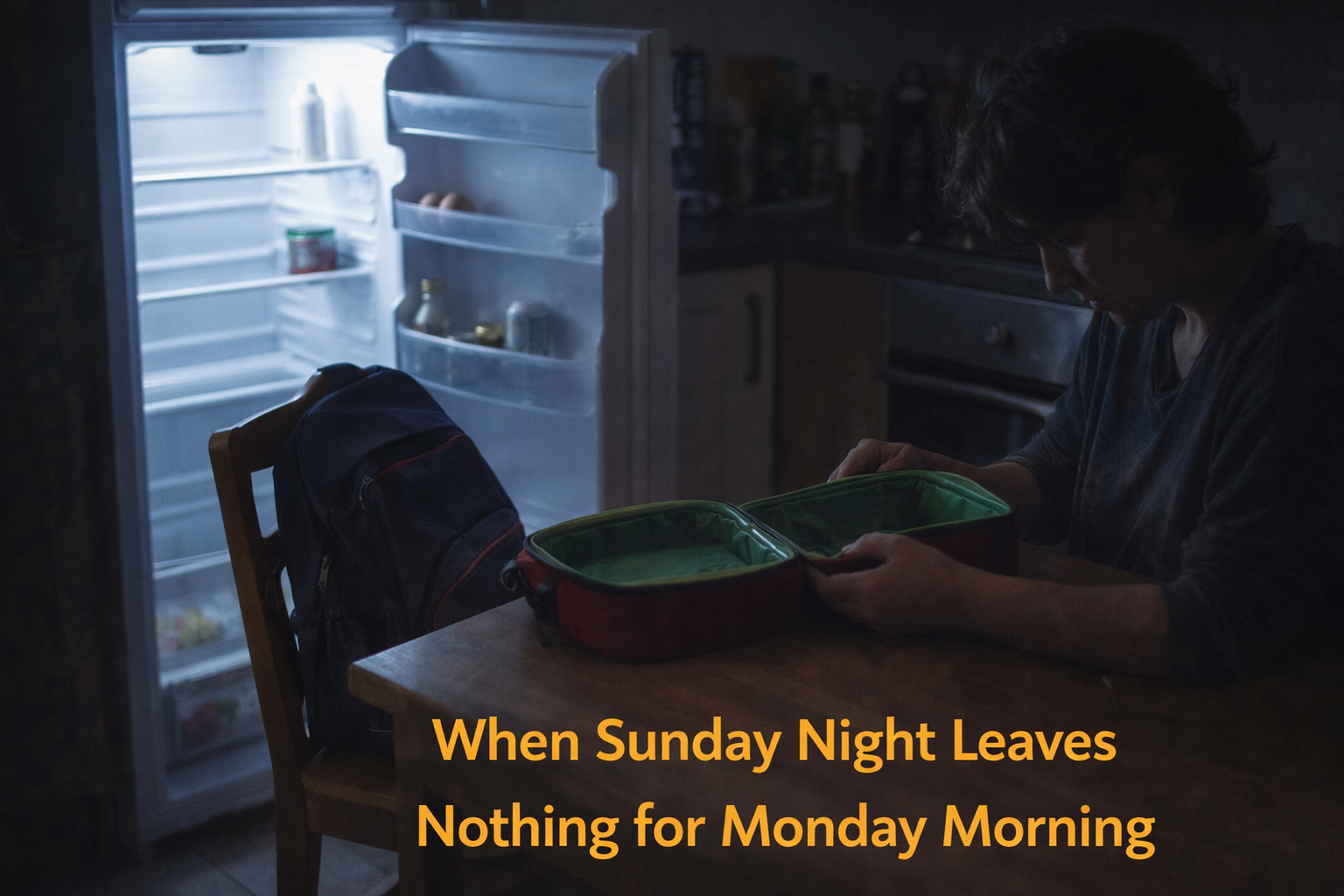
For many households, Sunday night is the hardest moment. Shops are closing earlier, transport is limited, and support services are shut. At the same time, Monday is coming fast: school meals, packed lunches, uniforms, travel, and the need for routine.
If the fridge is thin on Sunday evening, the week starts with hunger and stress.
Weekends Remove Safety Nets
When services close, small problems get bigger. A missed payment, a delayed top-up, a surprise cost, or a child’s appetite spike becomes harder to manage because there’s no quick route to help.
Households that might cope mid-week can fall into crisis at weekends simply because options shrink.
Monday Morning Is Not Flexible
Schools and work restart whether you’re ready or not. If a parent wakes up to an empty cupboard, they still need to get a child fed and out the door. That pressure creates last-minute spending, skipping meals, or relying on the cheapest calories available, often with worse nutrition.
This is where food insecurity becomes a routine disruption, not just a one-off emergency.
The Weekend Gap Creates Hidden Hunger
Many households won’t ask for help on a Sunday night. Shame plays a role, but so does practicality. People assume no one is open. They assume they’ll “sort it tomorrow.” Then tomorrow becomes a stressful scramble, and hunger rides along.
Feed & Flow Can Plan for Predictable Pressure Points
If hunger spikes at predictable times, prevention can be planned. Weekend-friendly partnerships, Friday buffer support, and clear pathways for families can reduce the Sunday cliff. The goal is not only emergency response. It’s stability.
Because if Monday starts hungry, the whole week becomes harder to recover.