
Surplus Food Isn’t A Solution By Itself: How Feed & Flow Thinks About Quality, Consistency, And Fairness
// NO DESCRIPTION DATA
Redistribution
Redistributing surplus food is valuable. It also has limits.
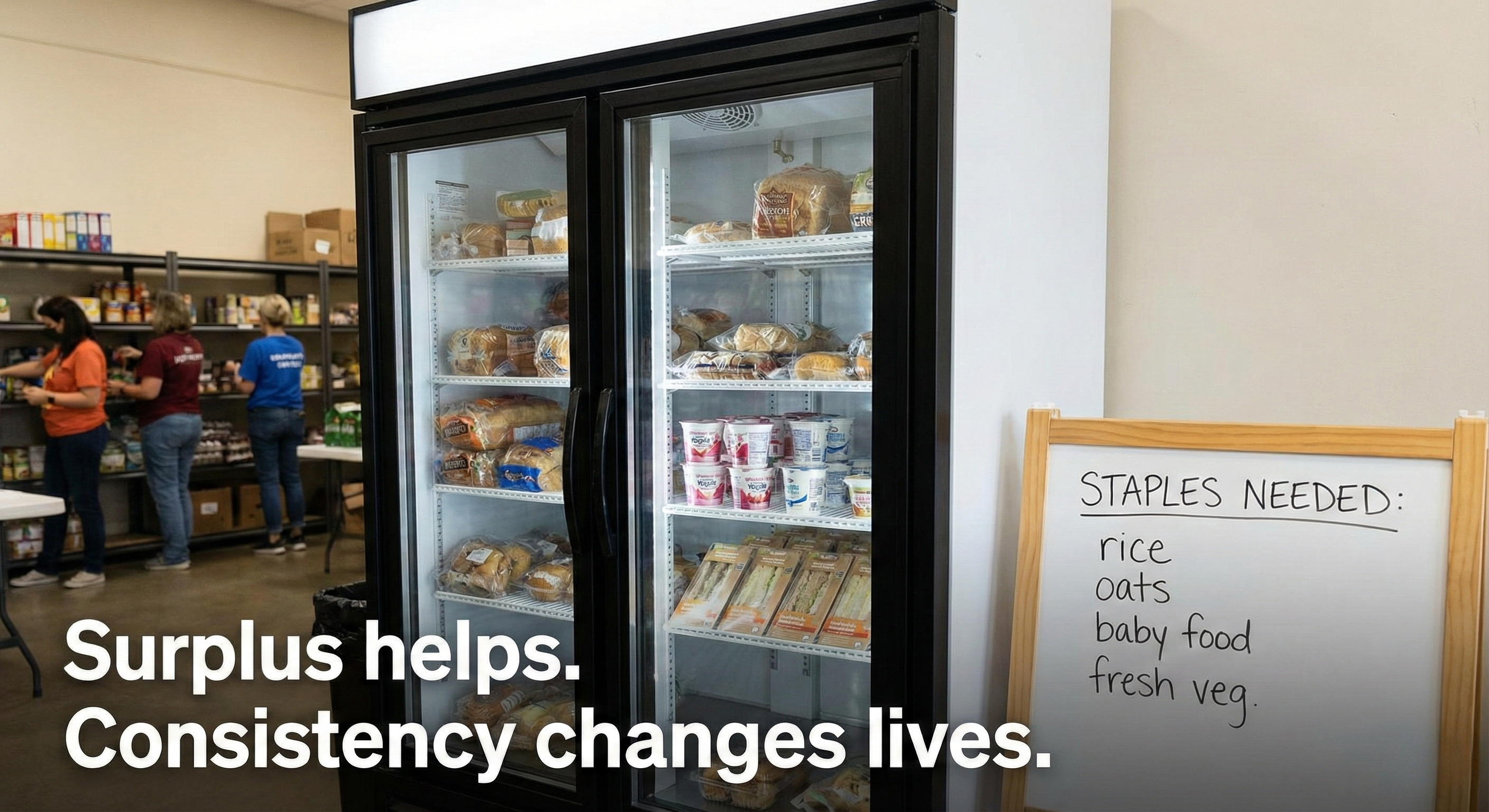
The UK wastes a lot of food, and many projects do important work diverting it to communities. But surplus alone cannot be the full plan for food insecurity because surplus is unpredictable and often not nutritionally balanced.
Feed & Flow supports surplus models while staying honest about what they can and cannot solve.
Surplus supply fluctuates
Surplus depends on supply chains, retail behaviour, and logistics. That means:
- Some weeks there is plenty
- Some weeks there is less
- Certain areas receive more than others
- Quality and variety can be inconsistent
For families needing reliable support, inconsistency creates uncertainty.
Dignity includes food quality and suitability
People deserve food that works for their lives, including:
- Cultural suitability
- Dietary needs
- Family-friendly staples
- Fresh produce where possible
A system that only provides whatever happens to be left over can unintentionally remove choice and dignity.
Why consistency matters for local projects
Food projects need predictable inputs to plan services. Without it, they struggle to:
- Run cooking sessions
- Offer stable community meals
- Support families with planned parcels
- Maintain regular opening hours
That is where funding and coordination can make a major difference.
What a balanced model looks like
Strong local food support often blends:
- Surplus food redistribution
- Purchased essentials to fill gaps
- Partnerships with local suppliers
- Community cooking and meal services
- Referral links to wider support
This reduces waste while increasing stability.
Feed & Flow’s focus
Feed & Flow is being built to strengthen the reliability and fairness of food support. Surplus is part of the picture, not the whole picture. The goal is a system that is stable, respectful, and effective, not one that depends on chance.