
Kettle Meals and Hotel Rooms: Why Cooking Access Is Part of Food Insecurity
// NO DESCRIPTION DATA
Food Insecurity
When people picture food insecurity, they often imagine an empty fridge.
But for many families in temporary accommodation, the problem is worse than cost. It is capability.
You can have food and still be unable to eat properly if you do not have:
- a working kitchen
- storage
- refrigeration
- utensils
- safe space to prepare meals
- the energy budget to cook
In parts of the UK, families placed into temporary accommodation can end up living for long periods in settings designed for short stays. When that accommodation has limited facilities, food insecurity becomes built into daily life.
Food insecurity is not only about money
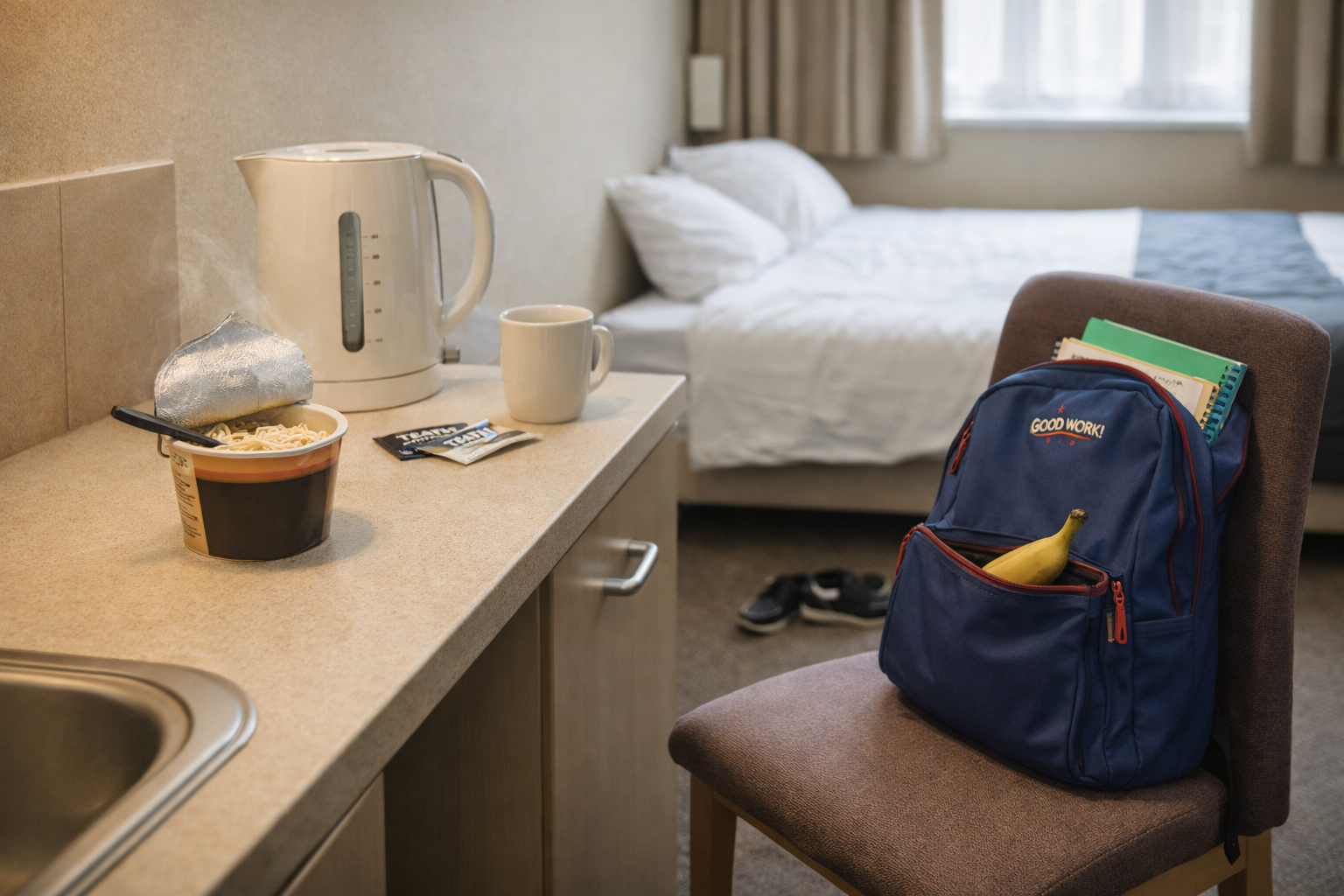
A household can receive food parcels and still struggle if the only cooking device is a kettle.
This leads to “kettle meals” and convenience foods:
- instant noodles
- snack items
- microwaved substitutes when microwaves exist
- low-nutrient meals that fill time rather than nourish people
Over time, this does real damage, especially for children.
Why temporary accommodation creates a nutrition trap
Temporary accommodation often means instability:
- frequent moves
- no consistent place to store food
- long distances from schools and community networks
- poor access to affordable shops
- poor access to cooking tools
Even if a parent wants to cook well, the environment can make it unrealistic.
The result is a trap: more spending on small daily food purchases, less ability to buy bulk, and fewer healthy options.
Children feel this first
Children in temporary accommodation are carrying:
- stress
- disrupted sleep
- disrupted schooling
- disrupted routines
Food becomes another point of instability. And when nutrition drops, everything else gets harder: concentration, mood, resilience, physical health.
Feed & Flow puts children at the centre because once a child’s health and learning slip, the catch-up cost is far higher than the support cost.
What “food support” means when there is no kitchen
In these settings, standard food parcels may not work. Effective support looks different:
- ready-to-eat items that still meet nutrition needs
- vouchers that can be used flexibly
- hot meal projects and community kitchens
- partnerships with hostels, hotels, and council teams
- small “kitchen access kits” where appropriate (basic utensils, storage solutions)
- support with transport to affordable food options
This is not about replacing cooking. It is about acknowledging reality.
How Feed & Flow chooses interventions here
Feed & Flow looks for projects that:
- understand the accommodation constraints
- work directly with housing and homelessness services
- provide more than one-off emergency aid
- reduce daily friction for families
- prioritise dignity and privacy
The strongest work happens where housing teams, schools, and food projects coordinate rather than operating in separate lanes.
The long-term point
Hunger in temporary accommodation is not only a food issue. It is a housing issue.
Feed & Flow supports food interventions that reduce harm now, while staying honest: the deeper fix is decent, stable housing with real facilities.