
Temporary Accommodation Without Kitchens Creates Hunger by Design
// NO DESCRIPTION DATA
A roof is not the same as a home
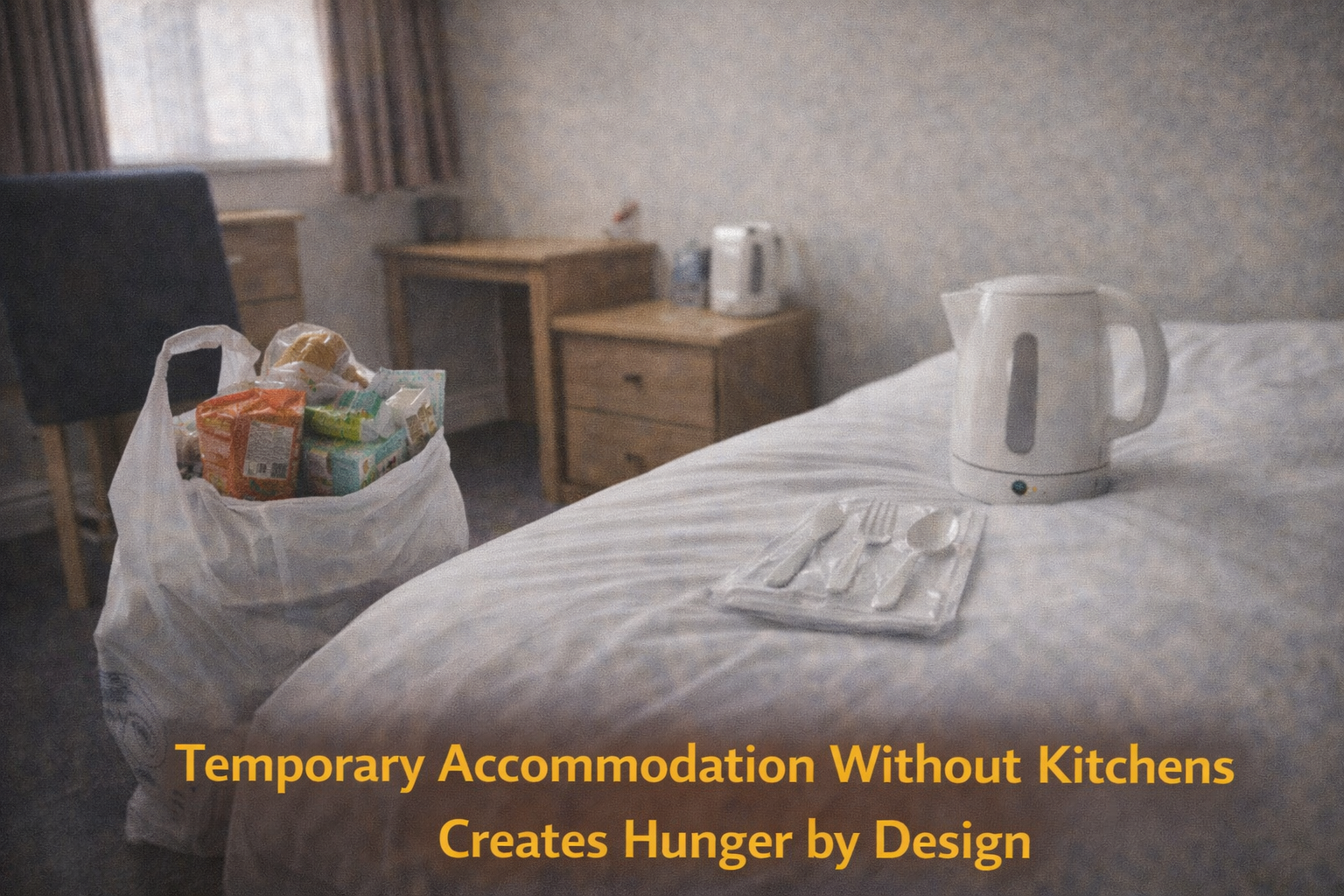
Thousands of families are living in temporary accommodation where cooking a normal meal is difficult or impossible. That does not just create inconvenience. It creates food insecurity.
When your “kitchen” is a kettle, the food environment changes overnight. You can’t store fresh food properly. You can’t batch cook. You can’t rely on cheaper ingredients. You end up paying more for worse nutrition.
No kitchen means higher costs and worse diets
Cooking is the main tool families have to keep food affordable. Remove it and everything becomes more expensive per meal.
People fall into a predictable loop:
- more takeaways or hot food bought daily
- more shelf-stable, ultra-processed options
- more snacking instead of meals
- more waste because storage isn’t safe
This is not a willpower issue. It is a setup problem.
The harm compounds fast for children
For families with children, the impacts stack:
- irregular meals
- weaker nutrition
- higher stress
- worse sleep and focus
- more illness risk
Children cannot “make do” with a broken food environment. They just absorb it.
What effective support looks like
Food parcels are often the wrong tool here. Even good food is hard to use if there is no fridge, freezer, or cooker.
Better support includes:
- community kitchens with hot meals and dignity
- pantry models that include ready-to-eat options
- partnerships that help families access food without extra travel costs
Where Feed & Flow fits
Feed & Flow’s approach includes supporting community kitchens and local food provision, which can bypass the “no cooking” barrier that temporary accommodation creates. The goal is stability, not emergency theatre.