
The Cold Meal Trap: When You Can’t Heat Food, Nutrition Gets Harder
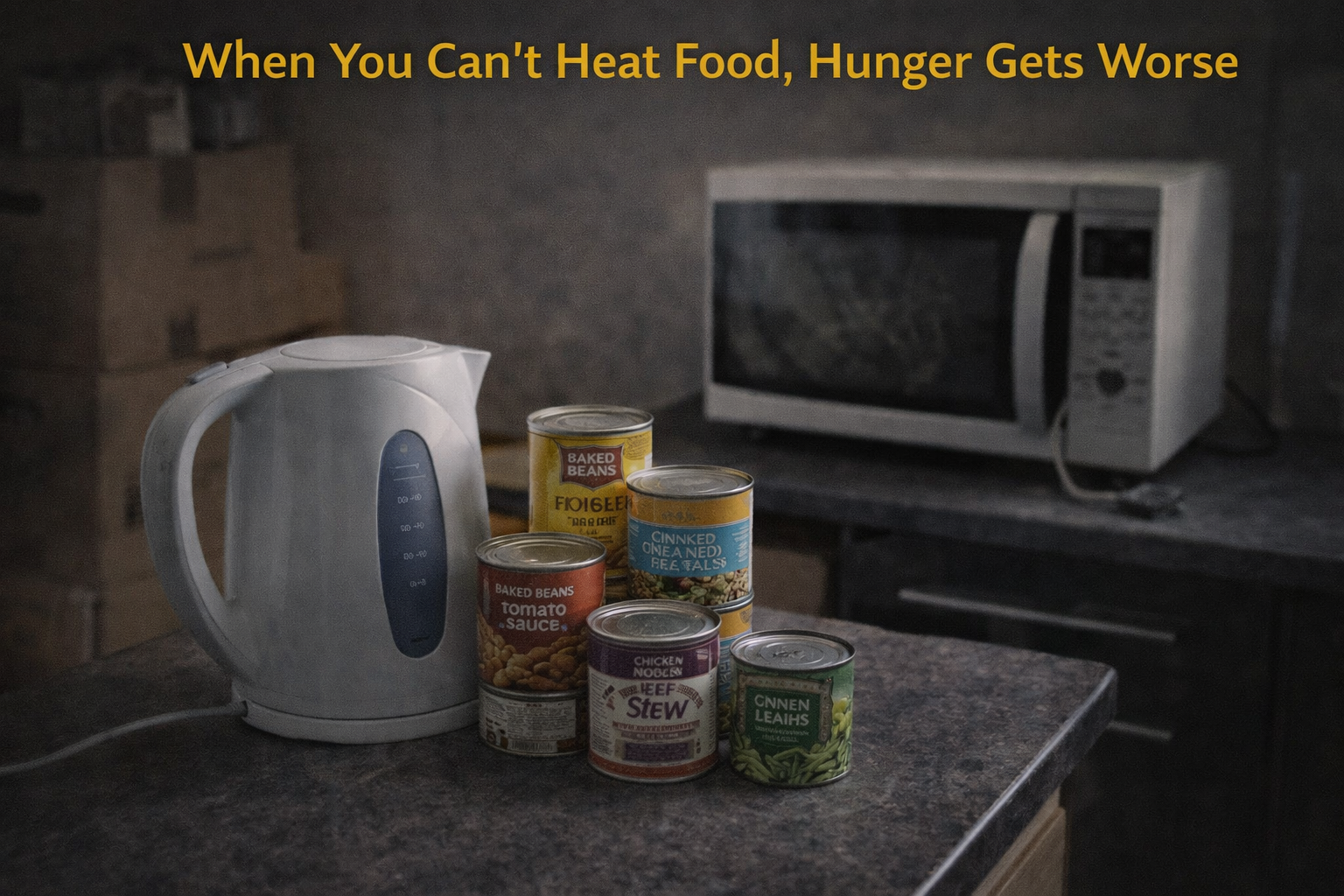
// NO DESCRIPTION DATA
Food insecurity
Food insecurity isn’t only about having food. It’s about being able to prepare it.
Many households and workers live with limited or unreliable access to heating: broken microwaves, unsafe cookers, shared kitchens they can’t use, workplace rules that limit food prep, or temporary living arrangements where cooking is awkward or restricted.
When you can’t heat food, choices narrow fast.
Cold Food Limits Variety
Some foods are fine cold. Many are not. Without heating, a household leans heavily on bread, cereal, snacks, tinned items, and ready-to-eat food. That can reduce protein, vegetables, and proper meals over time.
This isn’t a knowledge issue. It’s an infrastructure issue.
It Changes Spending Patterns
If you can’t heat leftovers, you waste more. If you can’t cook basics, you buy more expensive prepared food. If you can’t safely use a cooker, you rely on items with longer shelf lives and less nutritional payoff.
The result is predictable: higher costs, lower nutrition, more stress.
It’s Common in Places People Don’t Talk About
This trap shows up in temporary housing, overcrowded setups, some shared houses, and certain workplaces. It also appears when appliances break and households can’t replace them quickly.
On paper, the household is “housed.” In reality, normal eating is harder.
Feed & Flow Can Factor Usability Into Support
Food support works better when it matches what people can actually prepare. That means considering heat access, storage, and realistic meal pathways.
Because if a household can’t heat food, “support” that depends on heating can accidentally become unusable. Hunger doesn’t always come from lack of food. It can come from lack of preparation access.