
The Cost of Reaching Help: Why Bus Fares, Phone Data and Queue Time Still Shape Who Eats
// NO DESCRIPTION DATA
Food support
Food support is often described as if the hard part begins at the front door.
But for many people, the hard part is getting there at all.
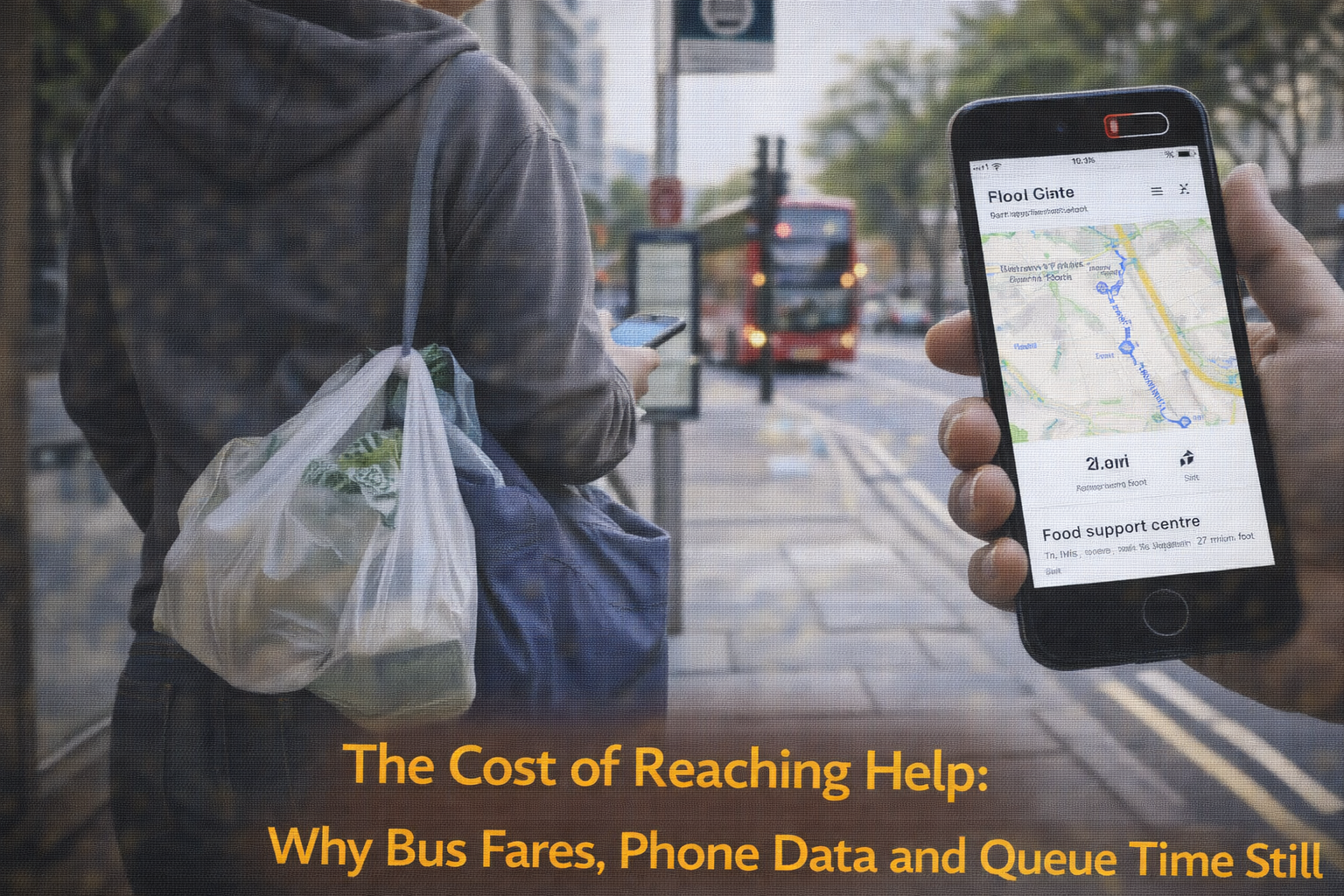
A family may know where help exists and still struggle to access it if they cannot afford the bus, have limited phone data, need childcare, or cannot spend hours travelling and waiting without losing income or falling behind elsewhere. These are not side issues. They shape who gets support and who stays invisible.
Access Has a Price Tag
Even “free” help can carry real costs.
A return bus fare might not sound huge. Neither does topping up phone data to check opening times, fill in forms or call for advice. But for households already cutting food budgets to the bone, those extra costs matter. They add friction to every step.
Then there is time. Queueing, travelling and waiting all take a toll. If someone is paid by the hour, juggling appointments, or caring for children, the cost of seeking help can be much higher than it looks from the outside.
This is how support becomes technically available but practically out of reach.
The People Most Under Pressure Often Face the Highest Friction
That is the cruel part.
The households under the most strain are often the ones least able to absorb access costs. A missed bus, a dead phone battery, a delayed school pickup, a closed office or a long queue can break the chain completely. Many people will simply decide it is too much and try to stretch what little they have at home.
That does not mean the need is lower. It usually means the barriers are higher.
This is one reason hunger can remain hidden even in areas with multiple services on paper. Mapping provision is not enough. The real test is whether people can reach help without spending money, time and energy they do not have.
Better Support Thinks About the Journey, Not Just the Service
Food support needs to be designed with access in mind from the start.
That means location matters. Opening hours matter. Simplicity matters. Clear communication matters. Local partnerships matter. If support is too far away, too hard to understand or too costly to reach, some of the people most in need will still miss out.
Feed & Flow should keep that practical lens. The question is not only what help is offered. It is what someone has to spend to get it.
Hunger Does Not Begin at the Queue
A strong charity response understands that barriers start earlier.
They start with the bus fare someone cannot spare. The phone data someone is saving. The queue someone cannot stand in because the rest of life will fall apart around it.
That is why access costs belong in the hunger conversation. Because support only works when people can actually reach it.
And for too many households, even that first step is already expensive.