
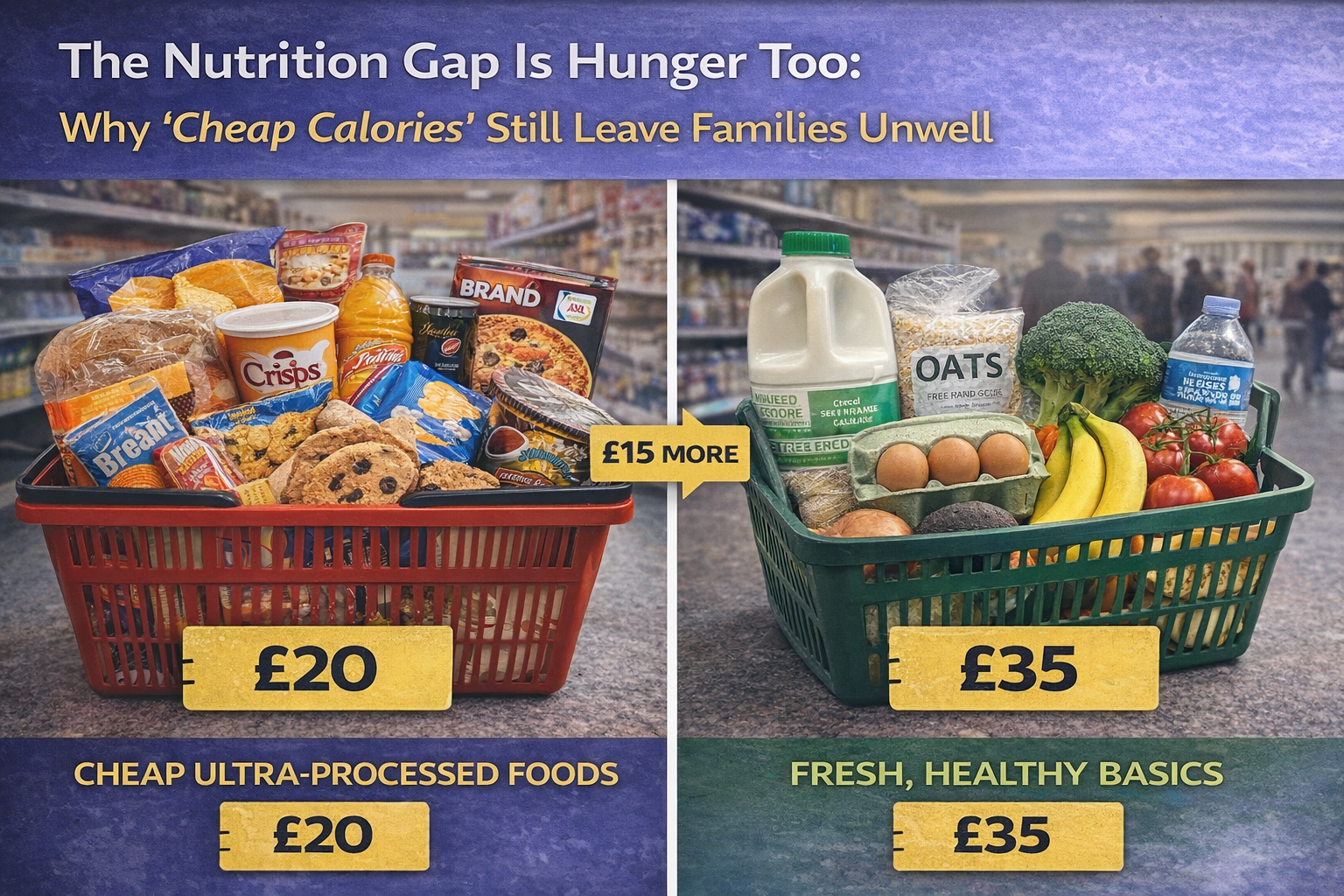
The Nutrition Gap Is Hunger Too: Why “Cheap Calories” Still Leave Families Unwell
// NO DESCRIPTION DATA
Food insecurity is not only “not enough food”
It is also:
- not enough good food
- not enough reliable access to balanced meals
- not enough ability to manage health needs
Dietary inequality has been worsening, with healthier foods becoming more expensive faster than less healthy options.
And for the lowest-income households, the cost of meeting government healthy diet guidance can take an unrealistic share of disposable income, especially for families with children.
Why cheap calories become the default
Households under pressure optimise for:
- fullness
- predictability
- children not feeling hungry
- minimal waste
That often pushes shopping towards foods that are:
- high-calorie
- shelf-stable
- cheap per serving
This is not ignorance. It is survival maths.
The hidden costs show up in health and learning
Poor nutrition links to:
- tiredness and poor concentration
- lower resilience during illness
- stress and low mood
- worse long-term outcomes for children
This is one reason Feed & Flow frames hunger as a public health issue, not a lifestyle debate.
What “nutrition-forward” support looks like
Feed & Flow prioritises models that protect dignity and increase real choice:
- choice-based provision that includes culturally appropriate options
- support for projects that can handle fresh food safely (cold storage, transport, trained staff)
- links with health services where nutrition support fits wider care
- cash-first where appropriate, so households can buy what works for them
Why quality and consistency matter
A bag of mixed surplus food can help today and fail tomorrow if it is unpredictable. That is why Feed & Flow looks for:
- consistency
- fairness
- safety
- reliability
Food support has to work like infrastructure, not like luck.
The point
If a household can only afford food that keeps them full but leaves them unwell, that is still hunger. Just a quieter version.
Feed & Flow exists to fund the fixes that reduce that gap, locally, practically, and with respect.