
Tooth Decay Is a Hunger Metric: Why Sugar and Skipped Meals End Up in Hospital
// NO DESCRIPTION DATA
Tooth decay
Tooth decay isn’t a “brush better” issue. In the UK, it’s one of the cleanest signals we have that a child is living inside food insecurity, cheap calories, and a broken food environment.
When families are stretched, the diet doesn’t just get smaller. It gets more processed, more sugary, more shelf-stable, and more likely to harm teeth. That is not a parenting failure. It’s maths, pricing, and stress playing out in someone’s kitchen.
The data nobody should be comfortable with
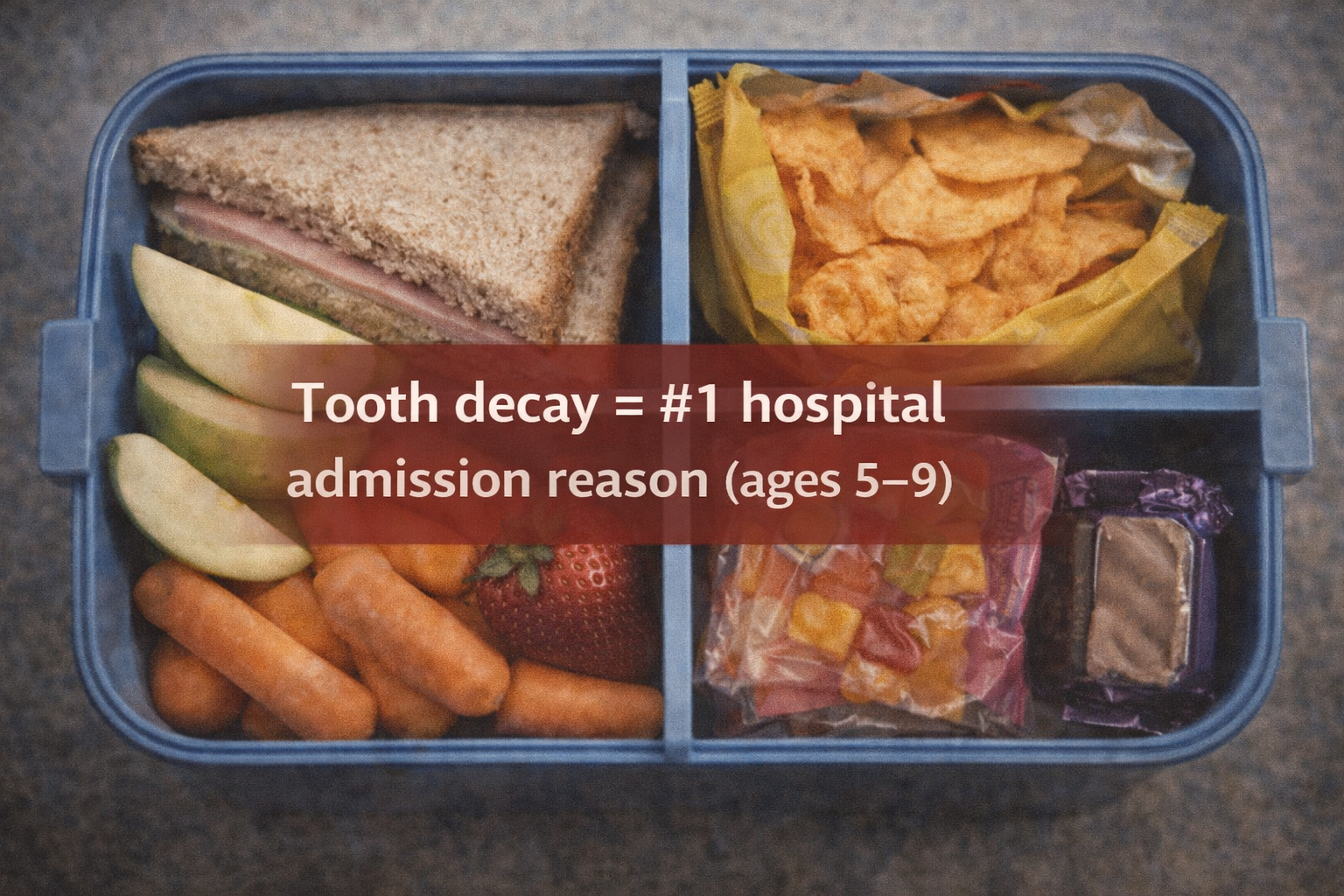
Recent UK figures show tooth decay remains a leading reason children aged 5–9 are admitted to hospital, and there are tens of thousands of tooth extraction episodes for children and young people each year in NHS hospitals in England, with a large share linked to decay.
This is what happens when “preventable” meets “unaffordable”. Prevention still costs money: toothbrushes, toothpaste, routine appointments, and diets that don’t push sugar as the cheapest comfort.
Why food insecurity shows up as rotten teeth
Food insecurity isn’t only “no food”. It’s also:
- irregular meals (skipping then overeating)
- reliance on cheaper high-sugar options
- fewer fresh foods
- more “treat-based” coping when stress is high
Add in a healthcare bottleneck (dentistry access varies wildly) and small problems turn into hospital admissions.
The real fix is boring: reduce sugar pressure and increase stability
Oral health improves when families have stable food budgets and kids have regular access to decent meals. It’s why breakfast clubs, school food, and choice-based pantry models matter even when the goal isn’t “dental health”. Food support changes the baseline.
Where Feed & Flow fits
Feed & Flow isn’t a dentist. It’s a pipeline being built to route funding into community food support, including food banks/pantries, school breakfast clubs, and community kitchens.
Less sugar-by-default happens when the food environment improves, and when families don’t have to play survival Tetris every week.