
Food Deserts In Britain: The Hidden Transport Cost Of Eating Well
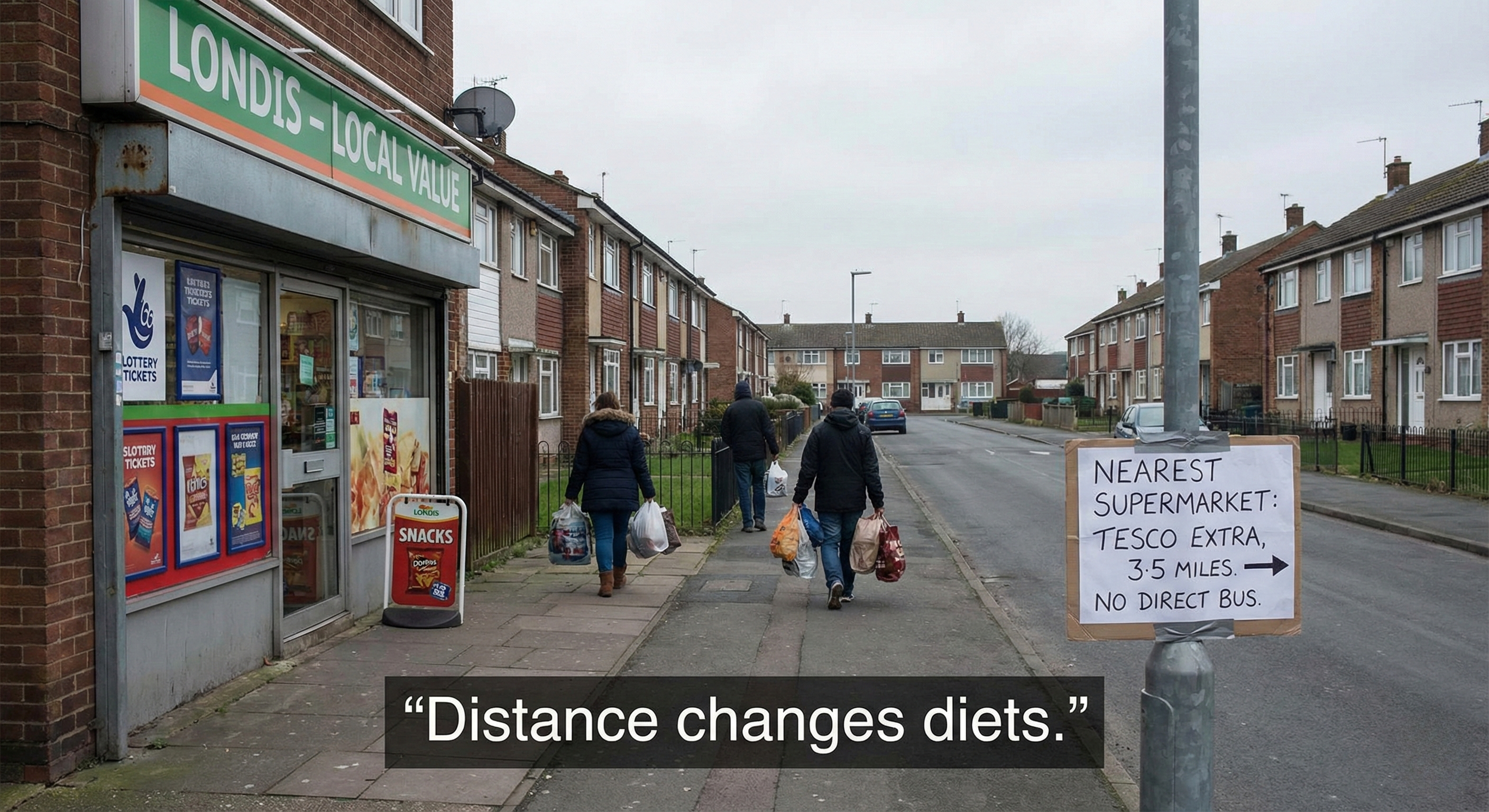
// NO DESCRIPTION DATA
Food insecurity
Food insecurity is not only about money. It is also about geography.
In many UK areas, “cheap” food is not physically close. The nearest supermarket may be far. Bus routes may be limited. Taxis are unaffordable. Local shops can be expensive. Carrying groceries home may be difficult for older residents or parents with children.
Feed & Flow treats food deserts as a real driver of hunger and poor nutrition.
What a food desert looks like in real life
It often looks like:
- Only convenience stores nearby
- High prices for basics
- Limited fresh produce
- Poor public transport to larger shops
- People choosing what they can carry, not what they need
This turns “healthy choices” into a privilege.
Transport is a hidden tax on low-income households
A household might be able to afford groceries, but not:
- The bus fare
- The time cost
- The physical effort
- The repeated trips
So they buy smaller, more expensive items locally. That means the same money buys less food over time, which can push a family into crisis even if their income has not changed.
What helps in food desert areas
Practical solutions often include:
- Mobile food projects that bring produce locally
- Community pantries and social supermarkets
- Local partnerships with farmers and wholesalers
- Pop-up markets at schools and community hubs
- Delivery support for those with mobility limits
Feed & Flow is interested in backing the models that make access local again.
Why this matters for children
Children feel food deserts directly. Families under pressure end up relying on:
- Packaged snacks
- Cheap calorie-dense meals
- Irregular eating patterns
This affects concentration, attendance, and wellbeing. Schools often notice first, but the cause is neighbourhood-level access.
Feed & Flow’s approach
Feed & Flow aims to fund and strengthen projects that close local access gaps, especially outside the obvious city-centre narratives. Hunger does not only exist where the cameras point.
Eating well should not depend on whether a bus shows up.