
Two Paydays, One Assessment: The Universal Credit Timing Shock
// NO DESCRIPTION DATA
Universal Credit is monthly, but many jobs aren’t
Universal Credit is assessed monthly using fixed “assessment periods.” That’s the design.
But plenty of people are paid weekly or every four weeks, and that’s where things get messy.
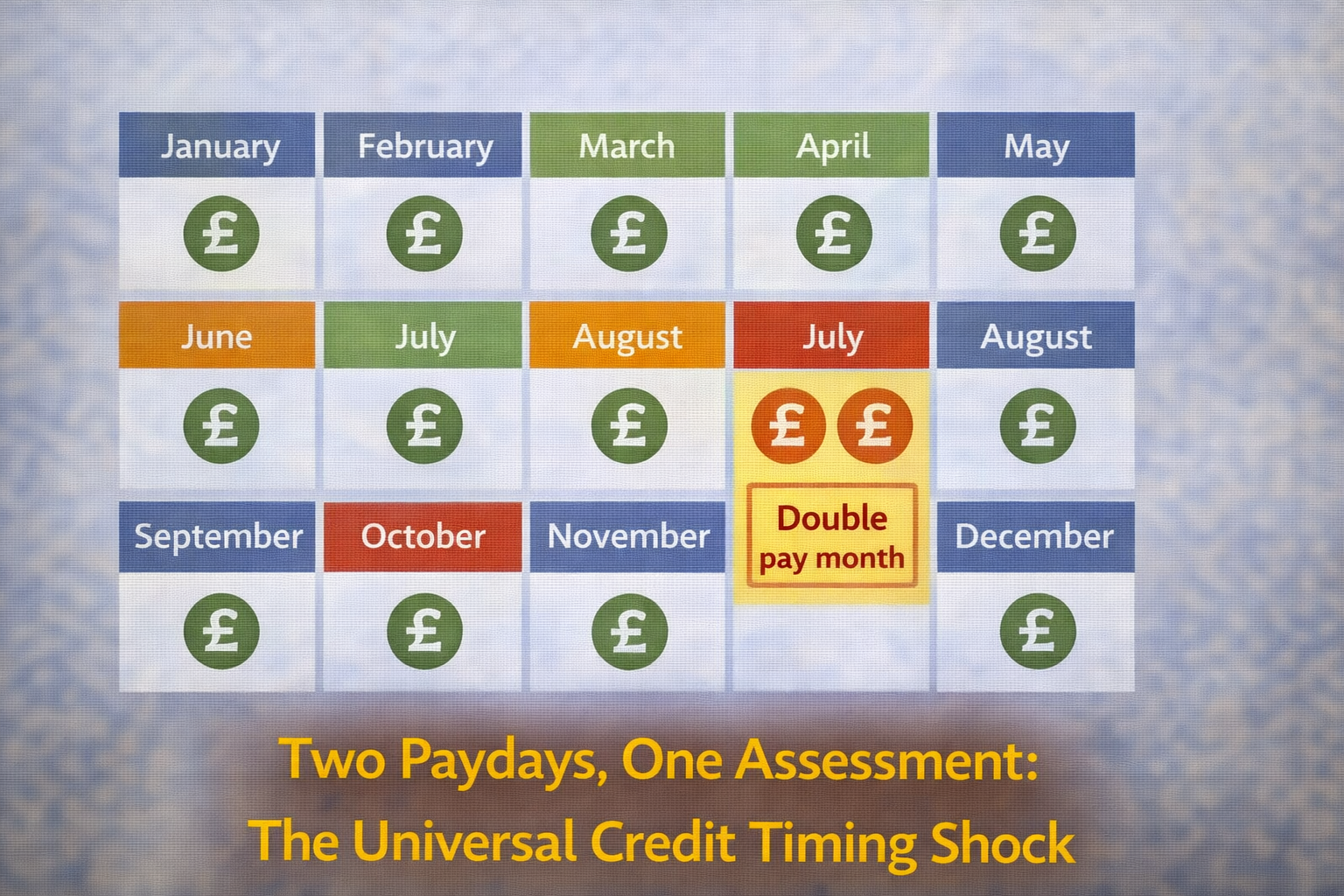
The “two paydays in one month” problem
If you’re paid every four weeks, you can end up with two wage payments landing inside one assessment period once a year. Then the next assessment period can look like you had “no earnings,” but Universal Credit does not always smoothly balance that out.
Some guidance explains how this can lead to reduced awards, loss of a work allowance effect, or knock-on impacts depending on the claimant’s situation.
Why this becomes a hunger issue
This isn’t a spreadsheet problem. It’s a fridge problem.
A household budget built on “same money, same month” gets hit with:
- A sudden Universal Credit drop (because earnings look high)
- Followed by a month where the household still has bills, but support may not rebound the way people expect
That’s how working households end up needing food support. Not because they “can’t budget”, but because the system is hostile to real-world pay patterns.
What good support looks like
Food support systems can reduce harm when they’re designed for predictable shocks:
- A small “timing buffer” offer through pantries or partner projects
- Clear signposting to benefits advice (because this is fixable in some cases)
- Data-led local monitoring, so you can anticipate spikes in demand
Where Feed & Flow fits
Feed & Flow’s role isn’t to “replace the welfare state.” It’s to stop timing shocks turning into skipped meals by reinforcing local front lines at the exact moments households wobble.