
The Five Week Gap: How Universal Credit Delays Turn A Money Issue Into A Food Crisis
// NO DESCRIPTION DATA
Food insecurity
Food insecurity rarely begins with food. It begins with cash flow.
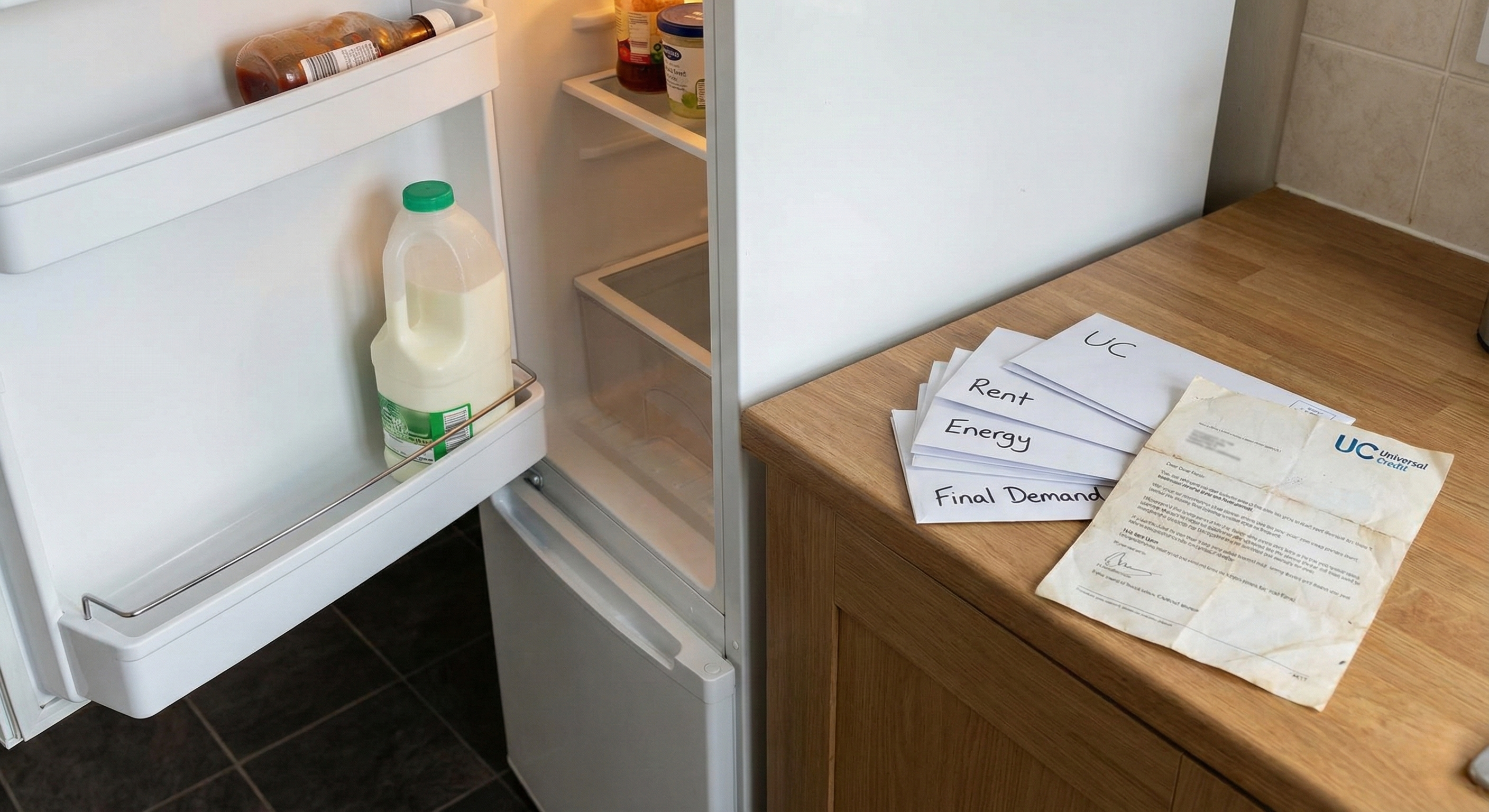
In the UK, one of the most common cash flow shocks is not a sudden disaster. It is the structure of the system itself. The five week wait for a first Universal Credit payment is repeatedly linked to hardship and rising food bank use because it creates a predictable gap between need and support.
Feed & Flow Foundation exists to support food projects, but it also cares about the mechanics that push people toward crisis in the first place. If you want to reduce hunger, you have to understand why so many people hit the same cliff edge.
Why the five week wait matters in real life
A household does not stop needing food because they are “in transition.”
When someone moves onto Universal Credit after job loss, illness, relationship breakdown, or housing change, they are often already under strain. The five week wait then lands on top of rent, bills, travel, children, and debt.
The result is predictable:
- People borrow to cover basics
- Debt deductions follow
- Stress rises
- Food becomes the flexible budget
- Crisis support becomes routine
Trussell has long argued that the five week wait locks people into hardship and drives people to food banks.
The “advance” problem: support that becomes debt
Many people take an advance payment because they have no other option.
But an advance is not extra money. It is a loan that is later repaid through deductions. That means future months become tighter, sometimes for a long stretch.
Deductions are not a side issue. They shape whether people can afford essentials each month. Research and advocacy groups have repeatedly highlighted how deductions can trap people in hardship.
Why food projects feel this pressure first
Food banks, community kitchens, school-linked projects, and pantries see the same stories because they are the last accessible safety net.
They see:
- Parents skipping meals to feed children
- People stretching food across days
- People arriving in shame, not just hunger
- Repeat reliance because deductions keep incomes low
- People needing advice support alongside food
This is why Feed & Flow takes a whole-system view. Food support that ignores the benefit pipeline will always be forced into permanent emergency mode.
What actually helps at community level
Even while national policy debates move slowly, local systems can reduce harm.
Support that makes the biggest difference often includes:
- Rapid crisis grants where available
- Advice partnerships on benefits, housing and debt
- Referral pathways through schools, GPs and community hubs
- Projects that offer dignity and choice, not just parcels
- Consistent support across the month, not only at peak crisis
The goal is to keep households stable enough to avoid repeat crisis.
How Feed & Flow fits into this
Feed & Flow supports food projects, but it also supports the “join the dots” work that prevents hunger from repeating.
A strong local project is not only handing out food. It is reducing the time someone stays trapped in the gap between “support should exist” and “support actually arrives.”
Food insecurity is not always about personal failure. Often it is a predictable system delay. Fixing hunger means designing around that reality.