
Universal Free School Meals: The Anti-Stigma Hunger Fix the UK Keeps Avoiding
// NO DESCRIPTION DATA
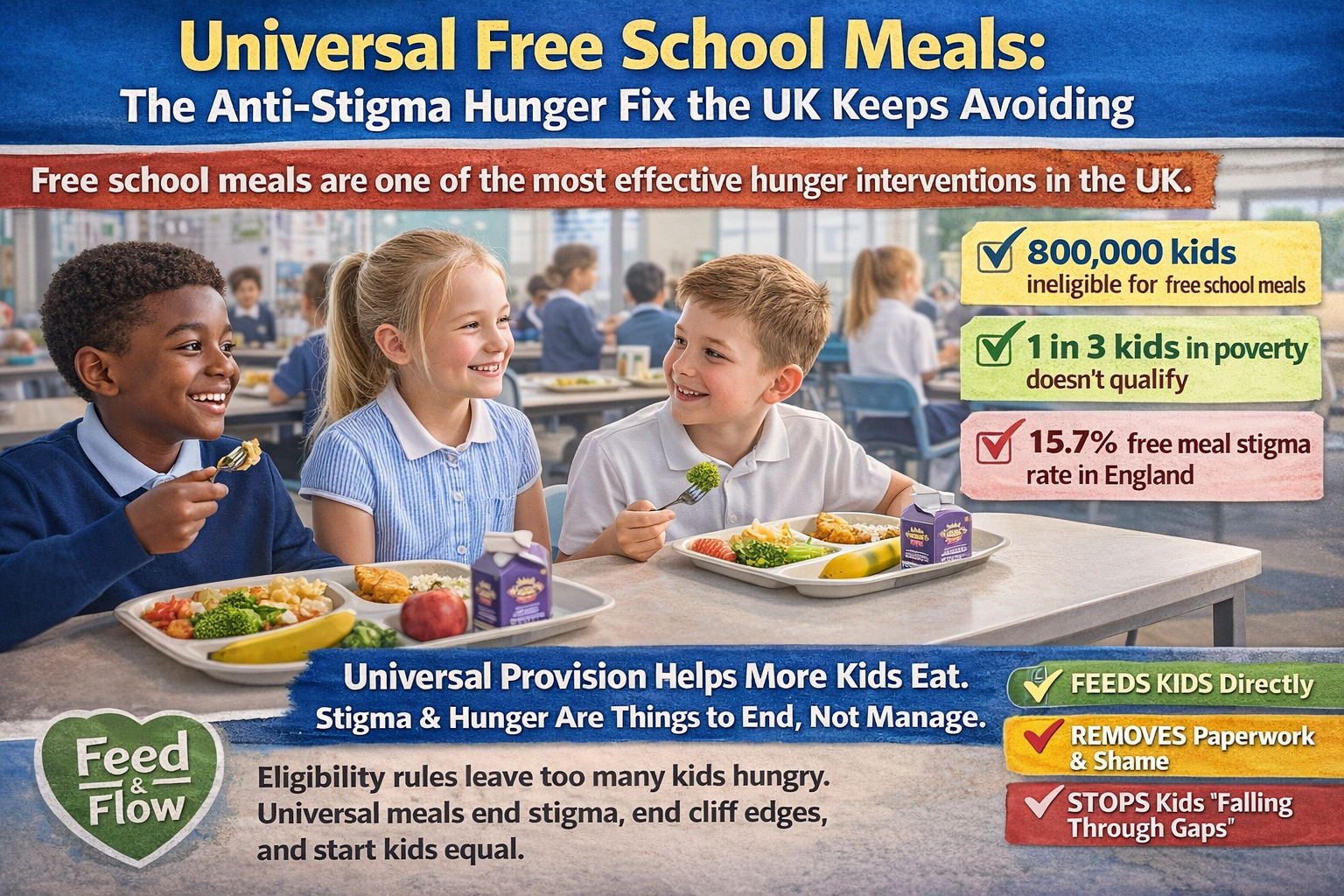
Free school meals are one of the most effective hunger interventions in the UK.
Why? Because they deliver food directly to the child, regardless of what’s happening at home.
But the current system still creates “winners” and “losers”:
- some kids eat reliably
- some kids fall just outside criteria
- some kids get stigma and shame attached to support
Eligibility systems create cliff edges
Means-tested systems sound fair on paper.
In reality, they create household traps:
- slightly higher income
- slightly different benefits status
- slightly different council rules
And suddenly a child loses meals.
That’s why universal approaches matter.
They remove:
- paperwork
- waiting
- stigma
- cliff-edge penalties
Stigma is part of hunger
If a child feels labelled, they’ll avoid it.
If parents feel judged, they’ll disengage.
If it feels like a “poor kid thing,” it becomes socially risky.
Universal meals flip the psychology:
- no one is singled out
- every child eats
- nutrition becomes normal
It’s not just food. It’s belonging.
The UK’s child health context makes it urgent
Child health outcomes in Britain are deeply shaped by diet and poverty.
School meals can improve learning, wellbeing and long-term health, especially in deprived areas.
Universal provision is one of the cleanest ways to reduce inequality fast.
What Feed & Flow does with this reality
Feed & Flow is designed to support the projects that keep children stable:
- breakfast clubs that connect into wraparound support
- holiday provision that doesn’t collapse after funding windows
- community meal spaces that reduce family pressure
- local networks that identify kids before crisis becomes visible
School meals are a foundation.
They should not be a lottery.