
Use-By Panic Creates Hunger: How Date Labels Turn Perfectly Edible Food Into Waste
// NO DESCRIPTION DATA
Date Labels
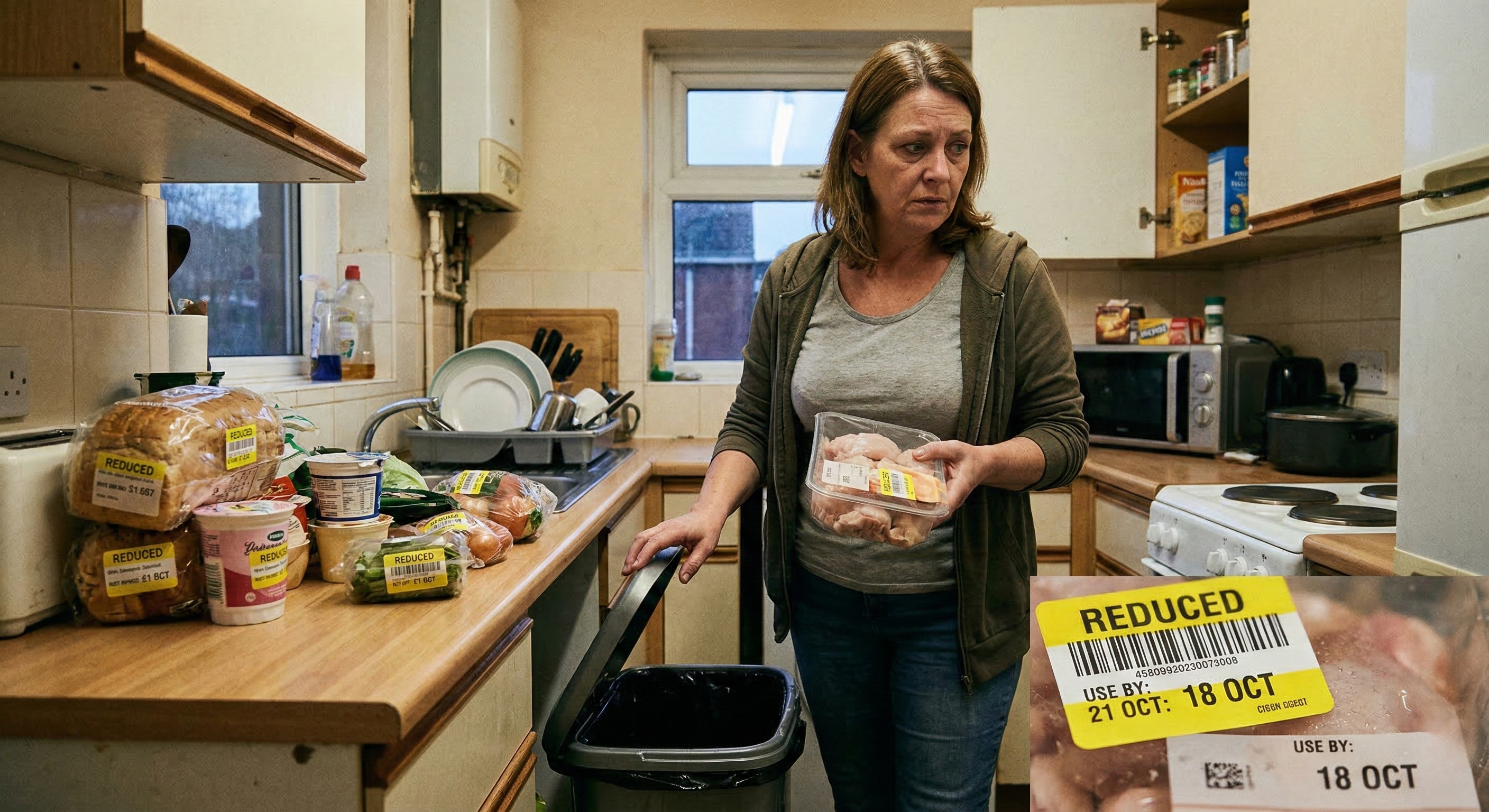
Date labels were meant to protect people. In practice, they often do the opposite for low-income households. When money is tight, people buy what’s reduced, what’s near date, and what they can stretch. If you are then too scared to eat it because the label feels like a threat, you lose both food and money.
This is how “food safety” messaging can quietly contribute to hunger.
Best Before vs Use By Is Not Clear in Real Life
Many people treat all date labels as identical. They are not. But when you’re stressed, rushing, and trying to feed a family, you don’t have time to become a label expert. If the pack says anything that looks like a deadline, the safe move feels like binning it.
For households already walking a tightrope, that fear creates waste they cannot afford.
Risk Fear Hits Harder When You Can’t Replace Food
If a higher-income household throws out a pack of food “just in case,” it’s annoying. If a low-income household does the same, it can wipe out a meal.
That’s the hidden inequality. The more fragile your budget, the more damaging uncertainty becomes. People start defaulting to ultra-processed items with longer shelf lives, not because they want to, but because the risk feels lower and the waste feels less likely.
Hunger Prevention Includes Confidence, Not Just Supply
Food support is not only about providing food. It’s also about making sure people can actually use it without fear. This is especially relevant when support includes surplus or reduced-to-clear items. If the household doesn’t trust it, it won’t get eaten.
Feed & Flow can help by treating food confidence as part of food security: clearer information, practical reassurance, and reducing the shame people feel about asking questions.
A Small Clarity Fix Can Protect a Whole Week
This is one of those boring issues that changes outcomes fast. If people can tell what’s safe, what’s flexible, and what needs priority, they waste less and stretch budgets further.
Hunger is not always the absence of food. Sometimes it’s food that people were too afraid to eat.