
When Work Doesn’t Cover The Fridge: Why Feed & Flow Takes In-Work Poverty Seriously
// NO DESCRIPTION DATA
Food insecurity in the UK
Food insecurity in the UK is not only about people out of work.
More and more, it is about people who work hard and still cannot rely on a full fridge.
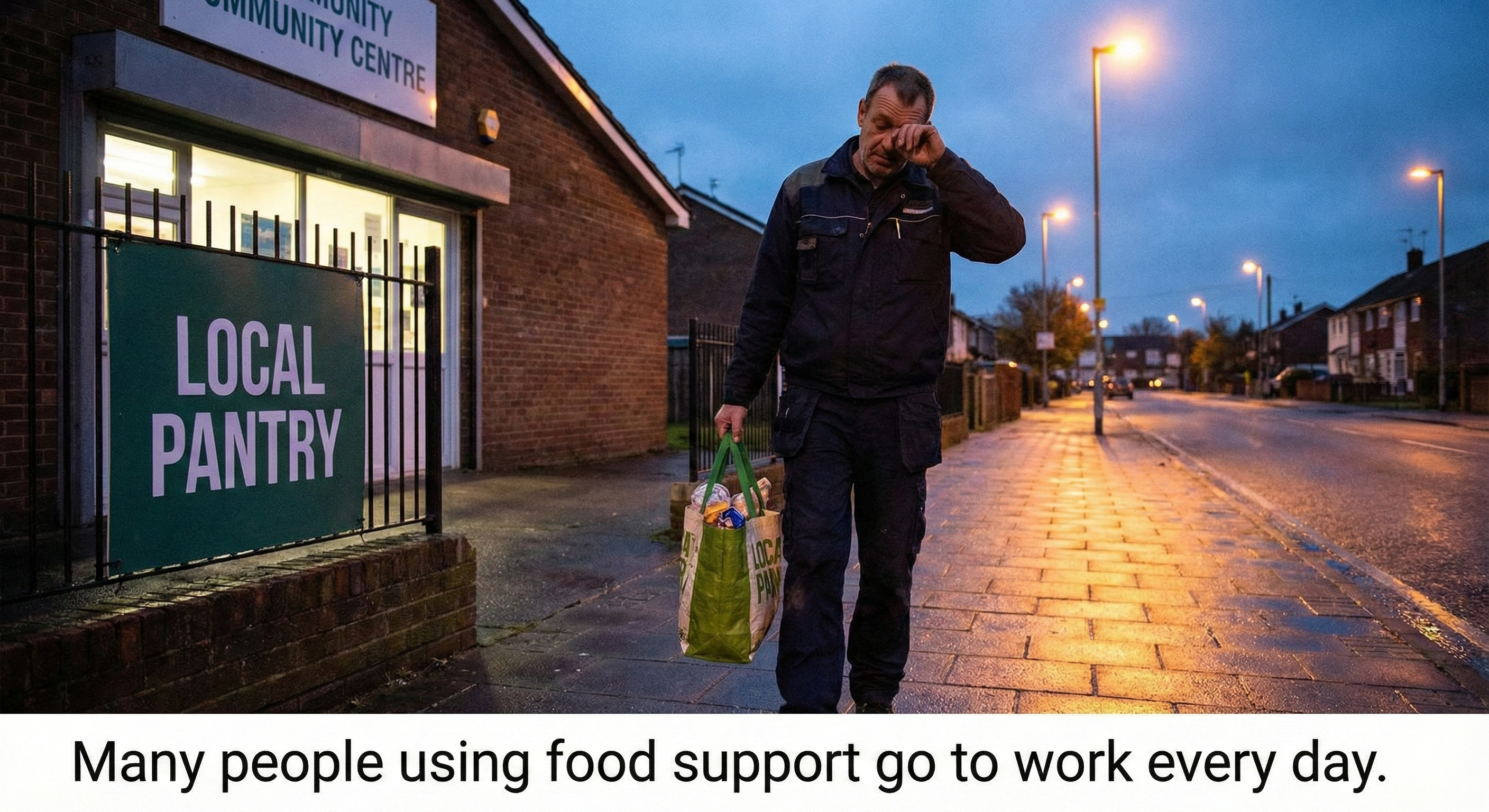
Many of the households turning up at food banks and community meals include at least one adult in paid employment. They may be working full-time, juggling several part-time jobs or stuck on unpredictable hours.
Feed & Flow Foundation treats in-work poverty as a core part of the picture, not an edge case.
When a payslip is not protection
Having a job used to be spoken about as a guarantee of security. That is no longer true.
Households can be in work and still run out of money for food because:
- Wages do not keep up with rent, transport and energy
- Zero-hours or agency contracts mean hours change at short notice
- Childcare costs take a large bite out of income
- Travel or equipment for work has to be paid up front
- Debts from past crises keep draining the budget
By the time food runs short, the problem is rarely about supermarket prices alone. It is about a system where income and outgoings simply do not meet.
What this looks like on the ground
Food projects tell similar stories:
- Parents skipping meals so children can eat before school
- Workers in uniforms quietly asking for help after finishing a shift
- People choosing between topping up a travel card to get to work and buying basics
The shame can be sharper for people in work. They are often told they are “doing the right thing” and still cannot keep up.
Feed & Flow wants funded projects to be places where working households are recognised, not judged.
How Feed & Flow supports projects helping working households
When assessing funding requests, Feed & Flow looks for projects that:
- Offer flexible opening times outside standard office hours
- Are accessible from major workplaces, industrial estates or transport hubs
- Provide food support that works for whole families, not just individuals
- Understand the realities of shift work, caring responsibilities and travel
That might include:
- Evening community meals near large workplaces
- Food support linked to advice on debt, benefits and employment rights
- Partnerships with employers who want to signpost staff discreetly
The aim is not to replace wages. It is to stop a run of bad weeks turning into long-term crisis.
Working with employers, not against them
Feed & Flow is open to working with employers who want to support their staff properly.
That could mean:
- Helping fund on-site or nearby food projects used by workers and local residents
- Supporting emergency food vouchers during short-time working or factory closures
- Backing holiday food programmes for staff families during school breaks
The key test is whether support is offered with dignity and choice, not as a badge of loyalty or a way to avoid paying fair wages in the long term.
Why in-work poverty must stay visible
It can be tempting to talk about food insecurity as if it belongs only to people outside the labour market.
Keeping in-work poverty visible matters because:
- It shows how deep the cost of living crisis really is
- It challenges the idea that hunger is caused by individual failure
- It points to structural issues around wages, rents and insecure contracts
Feed & Flow will keep backing projects that treat working households with the same respect as any other – and will keep saying clearly that a payslip should not have to come with an emergency food referral.
Food support cannot fix the labour market, but it can stop the immediate damage while wider change is argued for.